Helma is one of those Algerian towns that rarely makes it into travel guides, though its history stretches back centuries. Nestled in the eastern part of the country, where the Tell Atlas mountains gradually give way to rolling foothills, the city bears the marks of different eras—from ancient Roman settlements to Ottoman rule and the French colonial period. At its heart stands the prefecture building, a solid structure that has served as the region’s administrative center for over a hundred years. It doesn’t draw crowds of tourists, but it remains a quiet witness to the past, woven into the daily life of the city.
Built in the late 19th century during French colonial rule, the prefecture’s architecture reflects the era’s administrative style: clean lines, symmetrical facades, and high ceilings designed to convey authority and order. While it resembles similar buildings across Algeria, there’s something distinct about it—the use of local stone in the facade, which takes on a warm hue in the afternoon light. Inside, if you catch a glimpse, you might see marble staircases, wooden paneling, and spacious halls, all preserved with a certain care. These details hint at the building’s original purpose: a place where decisions shaping the region were once made.
For decades, the prefecture was the nerve center of colonial administration, overseeing not just Helma but much of eastern Algeria. After independence in 1962, its role shifted, but it never lost its function as a seat of local government. Today, it houses municipal offices, and for most residents, it’s simply a workplace, not a historical landmark. Yet its presence is a reminder of how power has changed hands over time, how borders have been redrawn, and how the lives of ordinary people have been shaped by forces beyond their control.
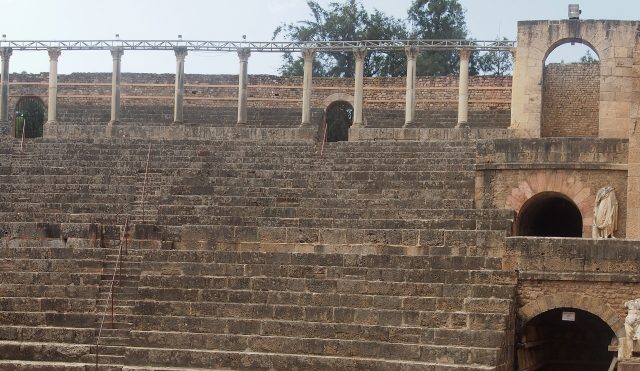
Helma isn’t a city that tries to impress visitors. There are no grand mosques with intricate tilework like in Algiers or Tiaret, and its Roman ruins can’t compare to those in Timgad or Djemila. But that’s part of its charm. The city doesn’t put on a show; it just exists, layering history into its streets without fanfare. The prefecture building is one of the few landmarks that offers a glimpse into how modern Algeria took shape. It doesn’t demand attention, but if you look closely, you can see the echoes of an era in its walls.
The square in front of the prefecture is where the city’s daily rhythm unfolds. In the mornings, vendors set up stalls with fresh produce from nearby farms. Old men gather at café tables to play dominoes, while schoolchildren hurry past on their way to class. Those waiting for appointments with local officials take shelter under the trees lining the sidewalks, seeking respite from the midday heat. The building blends into this scene—it doesn’t tower over the city but becomes part of its flow, as unremarkable and essential as the people who pass by it every day.
Architecturally, the prefecture is a mix of neoclassical and colonial modern styles. Its facade is adorned with pilasters and cornices, giving it a sense of order without being overly ornate. The entrance is framed by tall columns, and above the door, a faded coat of arms hints at its past significance. Inside, wide corridors with mosaic floors and high windows let in soft, diffused light, creating an atmosphere of quiet dignity. It’s the kind of building that doesn’t need to shout to be noticed—its presence is enough.
Helma itself is a small city, easy to explore on foot in a few hours. Surrounded by hills and vineyards, it has a quiet, unhurried feel. Beyond the prefecture, there are a few other places worth visiting if you find yourself here: a small museum with Roman artifacts unearthed in the area, or an early 20th-century mosque that blends traditional Algerian design with European influences. But even if you don’t linger, the prefecture leaves an impression—not as a grand monument, but as a symbol of a city that carries its history lightly.
Like many Algerian towns, Helma is changing. New neighborhoods are springing up on the outskirts, and older districts are slowly being renovated. The prefecture, though, remains a steadfast piece of the past. It doesn’t need restoration or special protection; it simply continues to serve its purpose, as it has for over a century. That might be its greatest value—it’s not a relic behind glass but a living part of the city, bridging the gap between what was and what is.
If you ever pass through Helma, take a moment to stop in front of the prefecture. Look at its facade, imagine the generations of people who have walked through its doors. The city doesn’t offer grand attractions or luxury hotels, but there’s a quiet charm in its unassuming pace. Here, history isn’t put on display; it’s just there, woven into the fabric of everyday life. And the prefecture is one of those places where that connection feels especially real.