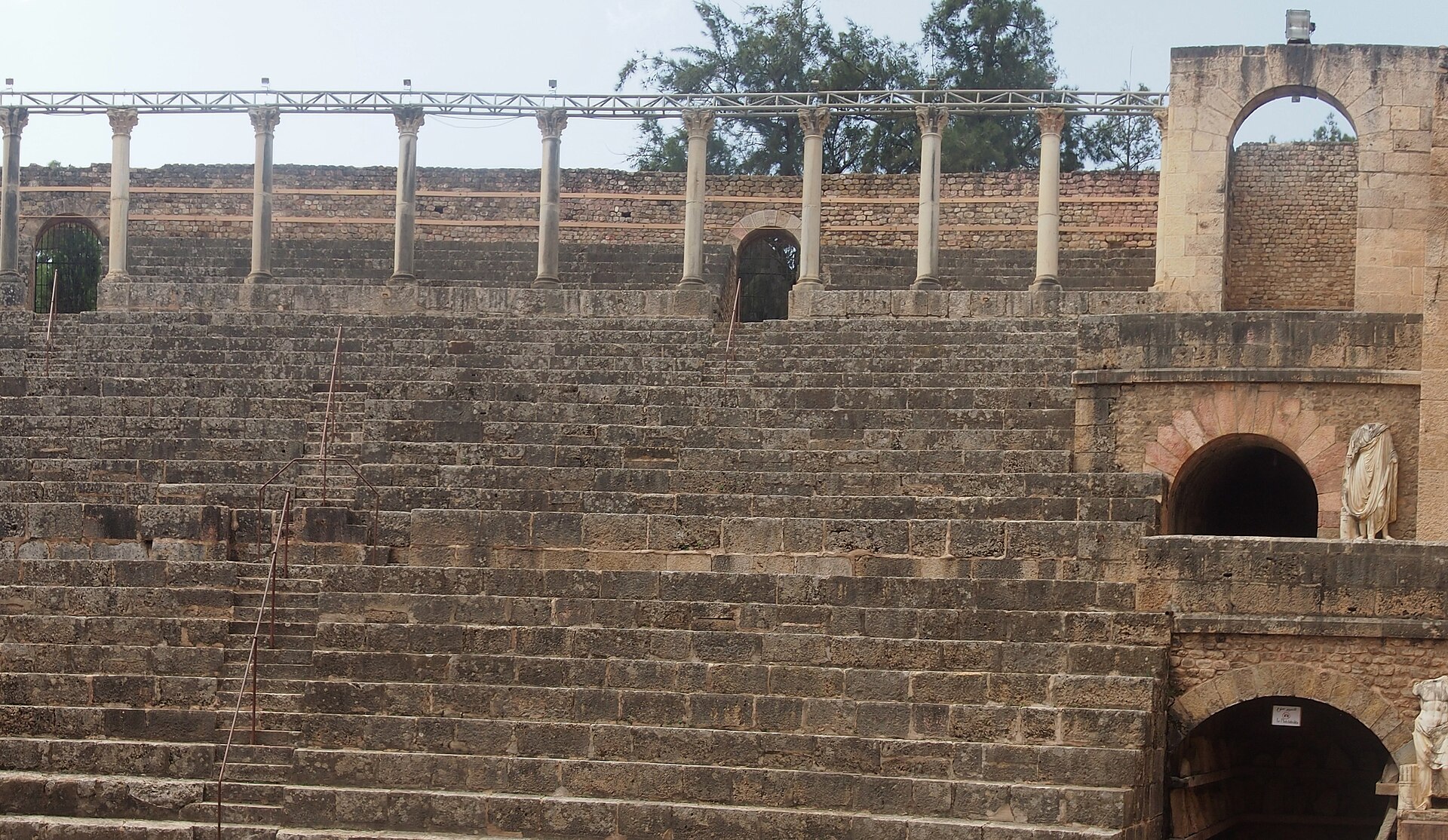
Helma is a quiet town in northeastern Algeria, where the past lingers in the gentle slopes of the Atlas foothills. Among its unassuming streets and low hills lie the remains of Calama, an ancient city that once thrived under Roman rule. Today, only fragments remain, but they carry the weight of a history that shaped this corner of North Africa.
Calama’s origins stretch back long before the Romans arrived, but it was under their influence that the city flourished. Positioned along a key trade route connecting the Mediterranean to the African interior, it became a vital hub in the province of Numidia. The Romans transformed it into a typical provincial center, complete with a forum, temples, baths, and a theater—all the hallmarks of urban life in the empire. By the third century AD, Calama had even earned the status of a colony, a testament to its growing importance.
What survives of Calama today feels more like an open-air museum than a tourist attraction. There are no crowds here, just the occasional visitor drawn by the quiet allure of North Africa’s layered history. The most striking remnant is the Roman theater, carved into the hillside, where thousands once gathered for performances. Its stone steps still echo with the faint sounds of long-ago audiences, though the voices have long since faded.
Nearby, the scattered remains of the forum hint at the city’s bustling heart. This was where deals were struck, news was shared, and public life unfolded. Fragments of the baths also endure, places where Romans not only washed but socialized, their conversations blending with the murmur of flowing water from the aqueducts that once supplied the city. The aqueducts themselves, though crumbling, can still be traced in the surrounding landscape.
The architecture of Calama reflects the Roman approach to urban design in North Africa. Buildings were constructed from local stone, their facades adorned with columns and reliefs. Over the centuries, many structures were dismantled for materials, but enough remains to imagine the city’s scale. What’s particularly fascinating is how Roman traditions merged with local customs—visible in the decorative motifs, street layouts, and even religious practices.
After the fall of Rome, Calama didn’t vanish overnight. The Byzantines and later the Arabs used it as a strategic outpost, but its significance waned over time. Earthquakes and the slow march of history reduced the city to ruins, leaving only scattered stones where grand buildings once stood. Today, Helma is a modest town where life moves at an unhurried pace, and the remnants of Calama serve as a quiet reminder of a different era.
Visiting Calama isn’t about ticking off a checklist of sights. There are no flashy signs or reconstructions, just the raw authenticity of the past. Walking among the ruins, it’s easy to imagine the footsteps of Roman soldiers, the hum of the marketplace, or the applause ringing through the theater. The history here hasn’t been erased—it’s simply softened by time, waiting to be rediscovered.
For those fascinated by antiquity, Calama offers something rare. It’s not Pompeii or Rome, but that’s part of its charm. There’s no tourist hype, just the quiet persistence of history. The city doesn’t demand attention; it simply exists, a silent witness to the rise and fall of civilizations. If you find yourself in Helma, take the time to wander these ruins. They don’t shout their stories—they let you listen.