Sežana sits in southwestern Slovenia, where the Karst hills roll softly under the sky. The town moves slowly, and so does its castle—no towers, no moats, nothing to shout about. But step inside, and you’ll find the marks of merchants, soldiers, and nobles who passed through long before borders divided the land.
The building first appears in records in the 13th century, built by the Patriarchs of Aquileia as a fortified estate. Later, the Habsburgs took it over. Back then, it was a stop for travelers heading toward the Adriatic, a place to rest and feel safe. Over time, the walls lost their sharp edges, and the castle became a home for the wealthy. What stands now is a two-story structure with thick stone, tall windows, and a courtyard that once held stables, workshops, and the daily bustle of servants.
The ground floor keeps its medieval shape—vaulted ceilings, heavy and low. Upstairs, the rooms open up, their fireplaces and plasterwork added in the 1700s and 1800s. In one chamber, faint paintings remain. Most frescoes in the region show saints or biblical scenes, but these are different: hunting parties, fields, people at work. They tell you what the nobles who lived here cared about.
The Montecuccoli family owned the castle in the 17th century. Count Raimondo Montecuccoli, a military leader, may have stayed here between battles. No one knows if he wrote his famous books within these walls, but the place feels right for it—thick stone, a quiet courtyard, a spot to think far from the noise of war.
The Windisch-Graetz family took over in the 1800s. They were powerful, and the castle changed with them. Gardens grew, new buildings rose, and the place became a social center. Balls and dinners brought guests from across the empire. Today, only small things remain—a chandelier, a staircase—hints of the life that once filled these rooms.
After World War II, the state took the castle. For years, it held schools, a library, an agricultural college. In the 1990s, the town got it back and began to peel away the layers of later use. Now, the castle hosts exhibitions, concerts, lectures. In summer, the courtyard fills with music—jazz, classical—and the sound carries into the evening.
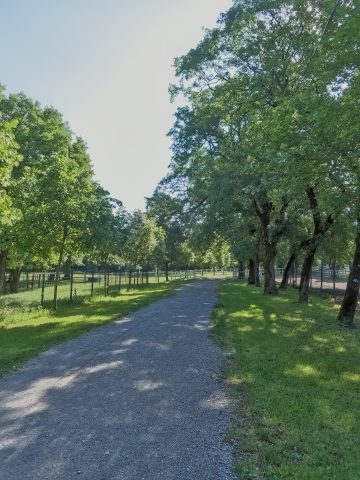
There are no crowds here. No stalls selling trinkets. No guide rushing you through the rooms. You can walk at your own pace, touch the worn steps, listen for the rustle of old dresses or the crack of firewood. Outside, the park with its old trees gives you space to sit and think.
Sežana is the door to the Karst region—caves like Postojna and Škocjan, vineyards that make Teran wine. The castle doesn’t compete with them. It doesn’t need to. It stands quietly, its walls holding stories, its courtyard holding silence. In a place built for show, that’s enough.