Kyiv’s past clings to this hill like mist to the Dnieper. It rises above the right bank, overlooking Podil—the city’s oldest district. From here, the river bends into the distance, bridges stitch its waters together, and green slopes roll toward the horizon. No crowds, no souvenir stands, just crumbling earthworks, wild grass, and a few old trees that have watched Kyiv change for centuries.
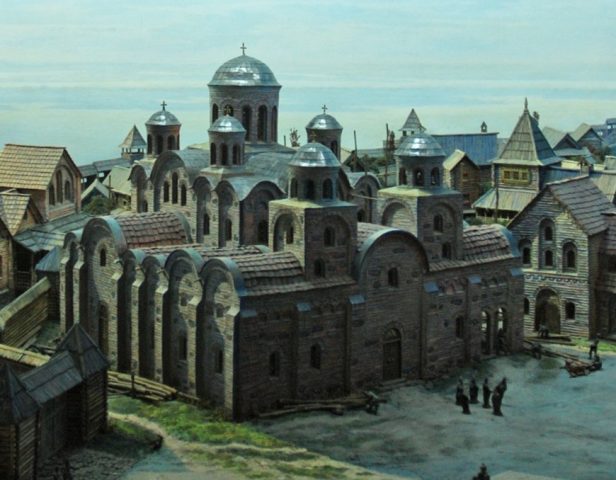
The hill gets its name from the fortress that once crowned it. Fortifications first appeared in the 9th and 10th centuries, when Kyiv was the capital of a powerful state. The location wasn’t just high—it was strategic. Steep slopes made attacks difficult, while the summit offered views for miles. By the 12th and 13th centuries, a wooden castle stood here, part of the city’s defenses. Kyiv thrived as a trade and political hub, and Castle Hill was central to its survival.
Now, only fragments remain. Low ramparts and shallow ditches hide among the grass. Excavations have uncovered traces of walls, towers, and underground passages. The fortress was rebuilt and destroyed repeatedly, often during invasions. The Mongol sack of 1240 was the worst—Kyiv burned, and the hill’s defenses turned to ash. After that, the fortress was never fully restored, and the hill slipped into obscurity.
In the 17th and 18th centuries, the slopes changed. Houses appeared, and a cemetery took root. It lasted until the mid-20th century, when the graves were cleared. Now, trees grow where headstones once stood. During the Soviet era, the hill was mostly forgotten. Only recently have archaeologists begun to uncover its layers, one shard of pottery at a time.
This isn’t a place for guided tours or postcards. It’s quiet, almost forgotten. From the top, the view is unfiltered—church domes catch the light, Podil’s rooftops spread below, and the Dnieper cuts through the city. Come at sunset, when the sky turns amber and shadows stretch long.
Legends cling to Castle Hill like ivy. One claims a secret tunnel once led from the fortress to the river, an escape route for defenders. Another whispers of buried treasure, hidden during wars. No one’s found proof, but the stories persist. On still evenings, some swear they hear echoes—the clatter of hooves, the shout of a guard, the ring of a sword.
More famous landmarks overshadow Castle Hill. That’s part of its charm. Here, you can walk without a crowd, without a script. The neighborhood around it is just as quiet—narrow streets, old houses, small squares. Kyiv’s history isn’t just in museums; it’s in places like this.
If you want to see Kyiv differently, climb Castle Hill. It’s not a viewpoint or a museum. It’s just a place where the past lingers in the stones, the trees, the wind.