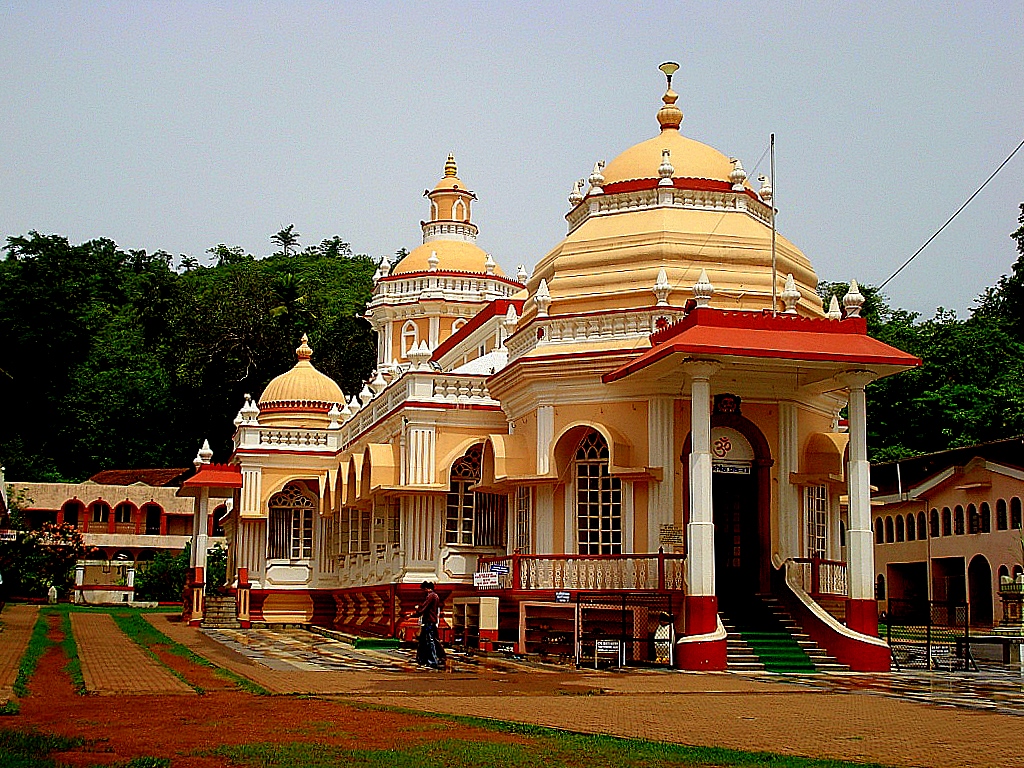
Shri Mangueshi Temple is one of those quiet places in Goa that doesn’t announce itself with neon signs or crowds of tourists, yet it holds the essence of the region in a way few other sites do. Tucked away in the small village of Priol, a short distance from Panaji, it stands apart from the bustling beaches and resort life, as if gently reminding visitors that Goa is more than just sun, sand, and cocktails—it’s also a land with a deep spiritual past. Dedicated to Manguesh, a form of the Hindu god Shiva, the temple is one of the most revered in the state. There’s no grandiosity here, no overwhelming scale like in the famous temples of South India. Instead, there’s a quiet sense of peace that settles over you the moment you step inside.
The temple’s history stretches back to the 16th century, a time when Portuguese colonizers were actively spreading Christianity across Goa. Many Hindu temples were destroyed or repurposed during this period, and sacred idols were moved to safer locations. According to local tradition, the murti of Manguesh was secretly transported from its original site in Goa Velha to the interior, away from the coast. The current structure was built in the 18th century, when tensions had eased, and it has since been restored multiple times while preserving its original character. The architecture is typical of Goan temples from that era—whitewashed walls, a tiled roof supported by wooden beams, and a tall flagpole at the entrance, symbolizing the connection between earth and sky.
Though the temple isn’t large, its interior carries a distinct atmosphere. The main hall, where the murti of Manguesh is enshrined, is adorned with intricate woodwork, and the ceiling is painted with scenes from Hindu mythology. The black stone statue of the deity is striking in its simplicity, depicting Manguesh as a youthful figure with four arms, each holding symbols of divine power. Outside, a small garden surrounds the temple, with a pond where sacred fish swim and peacocks roam freely under the shade of trees. The whole setting feels like a place where time moves differently—slower, more deliberately, untouched by the rush of the modern world.
Beyond its religious significance, Shri Mangueshi Temple plays a vital role in Goa’s cultural life. It hosts several festivals throughout the year, the most important being Jatra, an annual celebration in honor of Manguesh that draws pilgrims from across India. During these festivities, the temple transforms—garlands of flowers adorn the structure, thousands of oil lamps flicker in the night, and the air fills with the sound of drums and prayers. Even those unfamiliar with Hinduism can’t help but be moved by the sense of devotion and joy that permeates the atmosphere. For locals, Jatra is more than just a festival; it’s a time to honor ancestors, strengthen community bonds, and reconnect with traditions that remain strong in Goa despite its reputation as a tourist destination.
The temple is also a place where different cultures intersect. Goa has long been a crossroads of civilizations, blending Indian, Portuguese, and even Arab influences. While the temple’s architecture remains true to Hindu traditions, subtle traces of other eras can be found in its details. Some decorative elements hint at the Portuguese colonial past, and certain rituals reflect the unique Goan tradition that absorbed aspects of the cultures that once ruled here. In this way, Shri Mangueshi isn’t just a temple—it’s a living witness to history, showing how different peoples and beliefs have coexisted on this land over centuries.
Visiting the temple offers more than just a chance to see a beautiful building or observe a ritual. It’s an opportunity to experience Goa as locals know it—not as a resort, but as a place where spirituality and daily life are so intertwined that one cannot exist without the other. There are no strict rules for visitors; you can enter, sit in silence, or watch as people pray or rest under the trees. Of course, it’s respectful to follow certain customs, like removing your shoes before entering or dressing modestly, but the atmosphere is warm and welcoming. Locals are often happy to share stories about the temple if you show interest, and sometimes they might even offer you tea or prasad, the blessed food offered to the deity.
What makes Shri Mangueshi Temple special is its ability to leave a lasting impression without trying too hard. Some come seeking spiritual solace, others for quiet reflection, and some simply to see a side of Goa that isn’t defined by tourism. There are no pushy vendors, loud announcements, or souvenir stalls here—just a peaceful courtyard where you can sit on a bench, listen to birdsong, and let your thoughts wander. Perhaps that’s why the temple draws people in: it doesn’t need to impress. It simply exists, as much a part of the land as its history and its people. And in that quiet presence, it reveals something true about Goa.