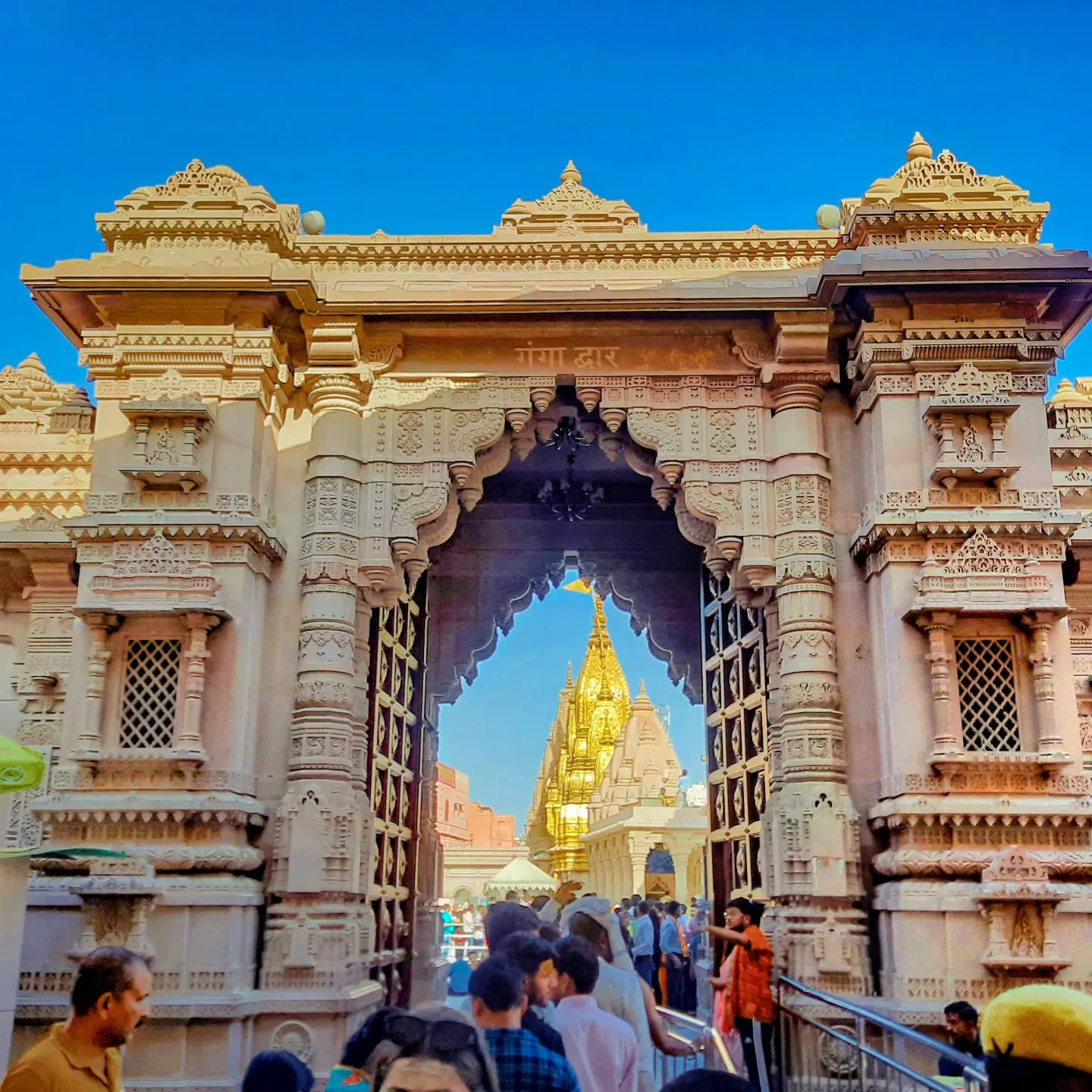
Durga Temple in Varanasi is one of those places where time seems to slow, where history and faith intertwine so deeply that the boundaries between them blur. Built in the 18th century, it stands beside a sacred pond, its high walls creating a quiet enclosure that feels worlds away from the city’s bustle. The temple’s origins are wrapped in layers of legend—some say it was founded by a Bengali Brahmin, while others insist the goddess Durga herself appeared in a dream to reveal the spot where it should be built. As with so much in Varanasi, the truth has long since dissolved into myth, leaving only stories that shift with each telling.
The temple’s architecture is a classic example of North Indian design from that era. Its red sandstone walls, carved pillars, and narrow passageways leading to the inner sanctum are unassuming yet solid, built to endure. The main structure is low but imposing, its dome crowned with a traditional spire. Inside, the air is cool and dim, pierced only by slivers of light filtering through lattice windows. The walls are adorned with depictions of gods and goddesses, scenes from ancient epics, but the eye is always drawn to the central statue of Durga, seated atop her lion. Her expression is stern, almost fierce, befitting a warrior goddess who defends the world from darkness.
Though less famous than the Kashi Vishwanath or Sankat Mochan temples, Durga Temple holds a special place in the lives of locals. Here, devotees worship not only Durga but also her manifestations—Lakshmi, the goddess of wealth, and Saraswati, the goddess of wisdom—making it a place of refuge for those seeking protection, prosperity, or knowledge. The temple comes alive during Navratri, the nine-day festival in her honor, when it is draped in flowers and filled with the murmur of prayers from dawn till dusk.
The pond beside the temple is almost a character in its own right. Its waters are considered sacred, and many pilgrims perform ritual ablutions before entering the temple. In the dry heat of summer, the pond shrinks to little more than a muddy basin, but during the monsoon, it swells to the brim, its surface mirroring the temple’s silhouette as if the structure were floating above the earth. There are stories of crocodiles once living here, creatures dedicated to the goddess, though today only turtles and fish linger near the edges, drifting lazily in the shallows.
Varanasi is a city of contrasts, where ancient rituals and daily life coexist in an uneasy but natural balance. Durga Temple is no exception. In the mornings, women arrive with baskets of flowers to adorn the altar. By afternoon, schoolchildren stream past on their way home, their laughter cutting through the quiet. In the evenings, vendors gather near the entrance, selling candles and incense. The sacred and the ordinary move side by side, neither intruding on the other.
For visitors, the temple might seem modest compared to the grand palaces or towering mosques elsewhere in India. But that simplicity is part of its charm. There are no crowds of guides, no loud explanations, no pushy souvenir sellers—just the stillness of the inner courtyard, the scent of sandalwood and marigolds, and the rustle of leaves overhead. If you’re lucky, you might hear the low chant of monks reciting mantras, a sound that seems to carry the weight of centuries.
Varanasi is often called the heart of Hinduism, and Durga Temple is one of the places where that heartbeat is strongest. It doesn’t aim to dazzle with opulence or scale, but within its walls, you can sense the living faith that has sustained this city for generations. That’s why people return—not for photographs or stories, but for the quiet certainty that here, among the stone and the statues, something greater than themselves endures.