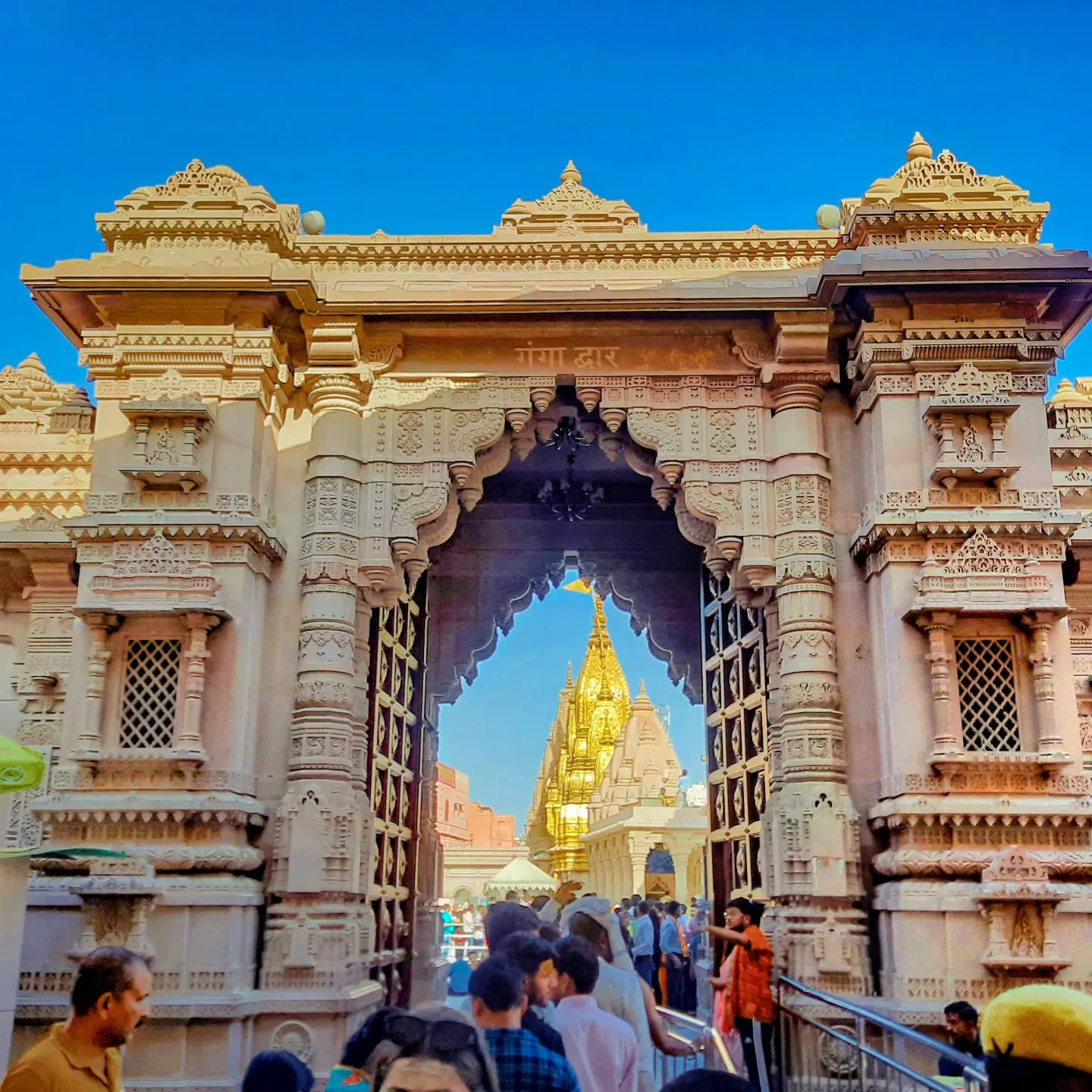
Varanasi isn’t a city you find on maps. It’s a place where time feels both ancient and immediate. On the banks of the Ganges stands the Kashi Vishwanath Temple, a site that has drawn pilgrims for centuries. The temple isn’t just stone and gold—it’s a living symbol of devotion, its history woven into India’s spiritual life. No one knows when the first shrine was built here, but its story is one of resilience: destroyed and rebuilt countless times, surviving wars and empires.
The temple doesn’t tower like those in southern India. Its significance isn’t in size but in meaning. Dedicated to Shiva, one of Hinduism’s most revered deities, its golden spire glows against the skyline. Inside, the sanctum is small, almost intimate, designed for those who come with quiet reverence. The carvings on the walls are simple, more suggestive than ornate.
For Hindus, this is one of the twelve jyotirlingas, sacred sites where Shiva manifested as a column of light. Pilgrims believe a visit here washes away sins and brings them closer to moksha, liberation from rebirth. Varanasi is a city of death and renewal, where the Ganges carries ashes and the living perform rituals along its banks. The temple is part of this cycle, where faith is both personal and communal.
Reaching the temple is an experience. The narrow lanes leading to it are a sensory overload—incense and spices in the air, bells and chants rising above the crowd. Vendors sell marigolds and sweets, priests offer blessings, and pilgrims press forward, each step part of a journey that may have taken years. Foreign visitors can’t enter the inner sanctum, but the atmosphere outside is charged with devotion. Here, the sacred and the mundane coexist.
The temple’s history is marked by violence. Invaders targeted it to erase Hindu faith. The most devastating blow came under Aurangzeb, who ordered its destruction and replaced it with a mosque. Today, remnants of older structures remain in the complex. Yet, like Varanasi, Kashi Vishwanath has endured.
The temple is part of the city’s daily life. Mornings begin with rituals and offerings. Evenings see the Ganges lit by thousands of lamps. The river, considered a goddess, is inseparable from the temple’s significance. Pilgrims bathe in its waters before touching the sacred lingam of Shiva. This act is a moment of connection, a step in a spiritual journey.
The area around the temple pulses with energy. Sadhus in saffron robes meditate. Women balance baskets of flowers on their heads. Children sell garlands. The air smells of sandalwood and fried snacks. Mantras and bargaining blend into a single hum. Time seems to stand still, though modern buildings rise beside ancient shrines.
Some visitors feel its pull immediately. Others remain observers. Even those who come without belief often leave with something—an impression, a question. Varanasi lingers in the mind, and its most sacred temple is no exception. Whether you seek a glimpse into India’s soul or simply wonder what draws people here, this place stays with you.