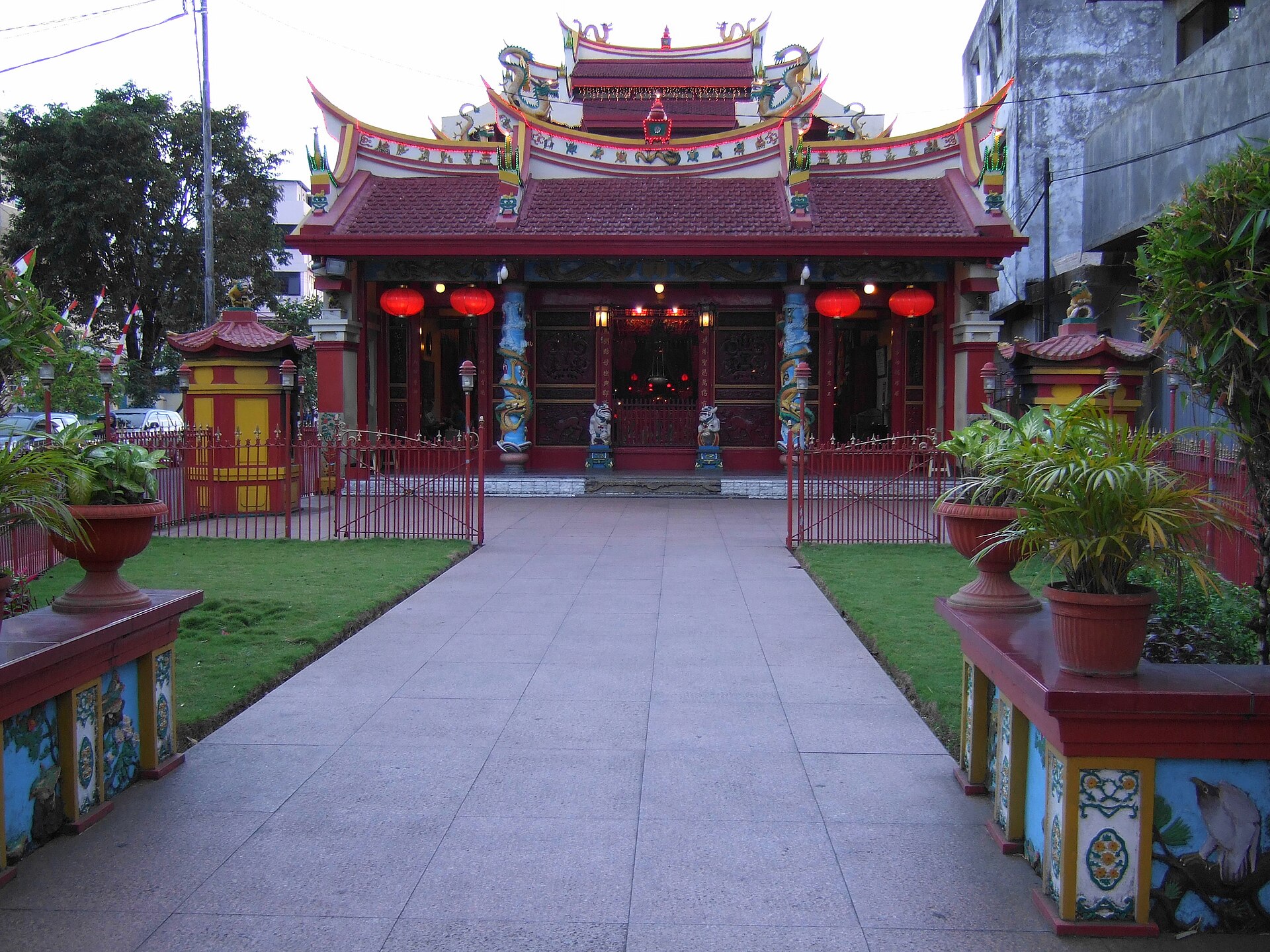
Ban Hin Kiong Temple in Manado is one of those quiet places that doesn’t demand attention but lingers in the mind long after you’ve left. Tucked away in the heart of the city, it sits among the bustle of markets and narrow streets, yet stepping through its gates feels like entering another world. The noise of the city fades, replaced by a stillness that seems almost deliberate. As the oldest Chinese temple in North Sulawesi, it has stood here for over two centuries, witnessing the ebb and flow of life in this corner of Indonesia.
The temple’s architecture tells a story of cultural layers. Traditional Chinese elements dominate—elaborately carved wooden beams, red lanterns swaying from the eaves, and stone lions guarding the entrance—but look closer, and you’ll notice subtle local touches. Some of the woodwork uses native timber, and the patterns in the carvings occasionally echo the motifs of the Minahasa people. The space is small but carefully composed, every detail serving a purpose, from the intricately turned columns to the altars where incense curls into the air.
Inside, the temple is dimly lit, the scent of sandalwood and candle wax thick in the air. Unlike some of the more flamboyant Chinese temples in Southeast Asia, Ban Hin Kiong feels restrained, almost austere. The main altar is dedicated to Mazu, the goddess of the sea, revered by fishermen and sailors. Her statue is surrounded by offerings—fruit, flowers, and sometimes miniature boats—left by those seeking protection or good fortune. Locals come here not just to pray but to find a moment of peace, to light a stick of incense and sit in quiet reflection. On festival days, the temple comes alive with dragon dances and the rhythmic beat of traditional music, but even then, the atmosphere remains one of reverence rather than spectacle.
The temple hasn’t always looked as it does today. Over the years, it has been restored multiple times, particularly after earthquakes and fires that have struck Manado. The most recent renovation in the early 2000s repaired damaged murals and reinforced the wooden structure, yet the temple retains its original character. There are no modern flourishes here, no concessions to contemporary tastes. Even the inscriptions on the plaques are in classical Chinese, though many of the younger worshippers no longer understand the language. It’s a place where the past is preserved not as a museum piece but as something still very much alive.
For Manado, Ban Hin Kiong is more than just a religious site—it’s a piece of the city’s identity. During the colonial era, when North Sulawesi was under Dutch rule, the Chinese community played a vital role in trade and craftsmanship. The temple became a gathering place for immigrants from China, a hub where traditions were kept alive across generations. Today, it remains a bridge between the old and the new, drawing not only elderly worshippers but also younger people curious about their heritage. It’s a reminder of how communities adapt without losing what makes them distinct.
Visiting Ban Hin Kiong offers a striking contrast to the energy of the city outside. Just beyond its walls, vendors sell fresh produce, motorbikes weave through crowded streets, and the aroma of spicy Manado cuisine drifts from nearby stalls. But inside the temple, time slows. You can sit on a wooden bench, watching the smoke from incense coils upward, or simply listen to the murmur of prayers. For travelers, it’s a rare chance to see how different cultures coexist in a modern city without one overshadowing the other.
The temple isn’t grand like the famous shrines of Bali or Java, and it’s not the kind of place that makes it into every guidebook. That’s part of its charm. It wasn’t built for tourists but for the people who have kept it alive for generations. If you’re lucky, you might visit during a festival, when locals decorate the temple with garlands, prepare offerings, or practice traditional dances. On those days, the atmosphere is warm and welcoming, and even a casual visitor can feel like part of the community, if only for a little while.
Ban Hin Kiong is more than an architectural relic—it’s a living testament to history. It stands as proof of how people from different backgrounds can find common ground while holding onto their own traditions. In an age where globalization often blurs cultural lines, places like this become all the more precious. They remind us to value the past without losing sight of the present. If you ever find yourself in Manado, take a moment to step inside. You might just find the quiet you didn’t know you were looking for.