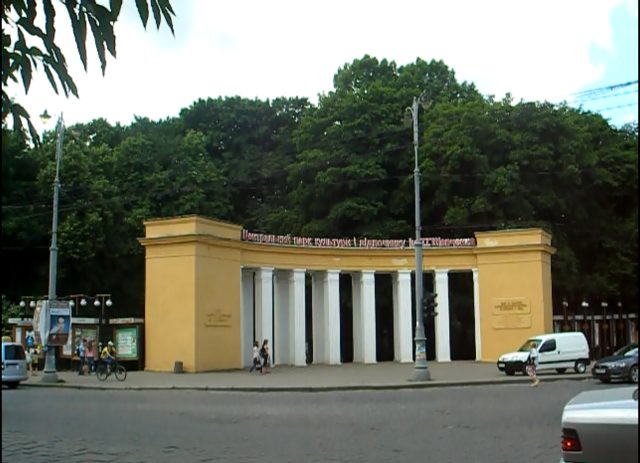
Housed in a quiet corner of Khotyn, the local history museum feels less like a formal institution and more like a conversation with the past. The building itself, a merchant’s home from the late 19th century, carries the weight of its own story. Its high ceilings and thick wooden doors, the delicate plasterwork on the walls, and the way sunlight spills through tall windows all suggest a time when this was a place of daily life, not just a relic. The architecture is unassuming but telling—wide staircases, tiled stoves, and the occasional piece of original furniture hint at the tastes and routines of the people who once lived here. Even the air inside seems to hold something of the past, a quiet persistence of memory.
The museum’s collection spans centuries, beginning with archaeological finds that ground the region’s history in tangible objects. Stone tools, fragments of pottery, and coins from distant trade routes speak of early settlements along the Dniester. These are not just artifacts behind glass; they are the first chapters of a story that continues through the ages. The exhibits dedicated to Khotyn Fortress, one of Ukraine’s most formidable medieval strongholds, bring that story into sharper focus. Weapons, maps, and personal belongings of those who defended the fortress offer a glimpse into a time when Khotyn was a contested crossroads, its walls witnessing battles that shaped the fate of empires.
A separate section is devoted to the everyday life of the region’s people. Here, traditional embroidered shirts, woven rugs, and hand-thrown clay vessels reveal the craftsmanship that defined local culture. The textiles, in particular, are striking—not just for their intricate patterns, but for what those patterns represent. Each stitch carries meaning, a silent language of symbols passed down through generations. The pottery, too, tells its own story: the shape of a jug, the glaze on a bowl, the way a handle curves—all of it reflects the practical needs and aesthetic sensibilities of the people who made and used them. These objects are not just relics; they are evidence of lives lived with care and intention.
The museum also turns its attention to more recent history, particularly the upheavals of the 20th century. Photographs, letters, and personal effects from the world wars and the Soviet era humanize the broader narratives of conflict and change. A soldier’s diary, a child’s toy, a ration card—these small, personal items make history feel immediate, almost intimate. They remind visitors that behind every historical event were real people, with their own fears, hopes, and daily struggles. The exhibits don’t shy away from difficult subjects, but they present them with a quiet dignity, letting the objects speak for themselves.
What makes the museum special, though, is its sense of continuity. Temporary exhibitions often explore themes that bridge past and present—family histories, local traditions, or contemporary art inspired by the region. Sometimes, the displays feature work by Khotyn’s own artists and photographers, capturing the town as it is today. These rotating exhibits keep the museum from feeling like a static archive; instead, they make it a place where history is still unfolding. Visitors might find themselves standing in front of a 19th-century wedding dress one moment and a modern photograph of Khotyn’s streets the next, the contrast prompting reflection on how much—and how little—has changed.
There’s a certain rhythm to visiting the museum, one that encourages slowing down. Unlike larger institutions where crowds rush from one exhibit to the next, here there’s space to linger. The staff, often locals with deep knowledge of the area, are approachable and willing to share stories that aren’t on the plaques. A conversation might lead to learning about a forgotten craftsman, a family legend, or the origins of a particular tradition. It’s this personal touch that makes the experience feel less like a tour and more like a discovery.
For anyone curious about Khotyn, the museum offers more than just facts—it offers context. It doesn’t claim to tell the whole story of the region, nor does it need to. Instead, it focuses on the details that make history feel real: the texture of a handwoven cloth, the weight of a centuries-old coin, the faded ink of a letter written in haste. These are the things that connect visitors to the people who came before, not as distant figures in a textbook, but as neighbors, ancestors, or fellow travelers through time.
The museum’s greatest strength may be its restraint. There’s no grand narrative imposed on the exhibits, no attempt to force a single interpretation. Instead, the objects are allowed to speak for themselves, their stories unfolding gradually. A visitor might come for the fortress, stay for the pottery, and leave thinking about the faces in an old photograph. In that way, the museum mirrors Khotyn itself—a place where history is layered, complex, and still very much alive.