Wrocław University is one of those rare places where history isn’t just preserved in books or archives but lingers in the very stones, the quiet hum of lecture halls, and the echoes of student conversations drifting across the courtyard. Founded in the early 18th century, when this region was still under Habsburg rule, it began as more than just an educational institution—it became a symbol of the transformations that shaped Silesia over the centuries. Originally conceived as a Jesuit college, it quickly expanded into a major academic center, where theology shared space with law, medicine, and philosophy. Today, its main building on University Square isn’t merely an architectural landmark; it’s a living chronicle, each detail whispering stories of the eras that have passed through its halls.
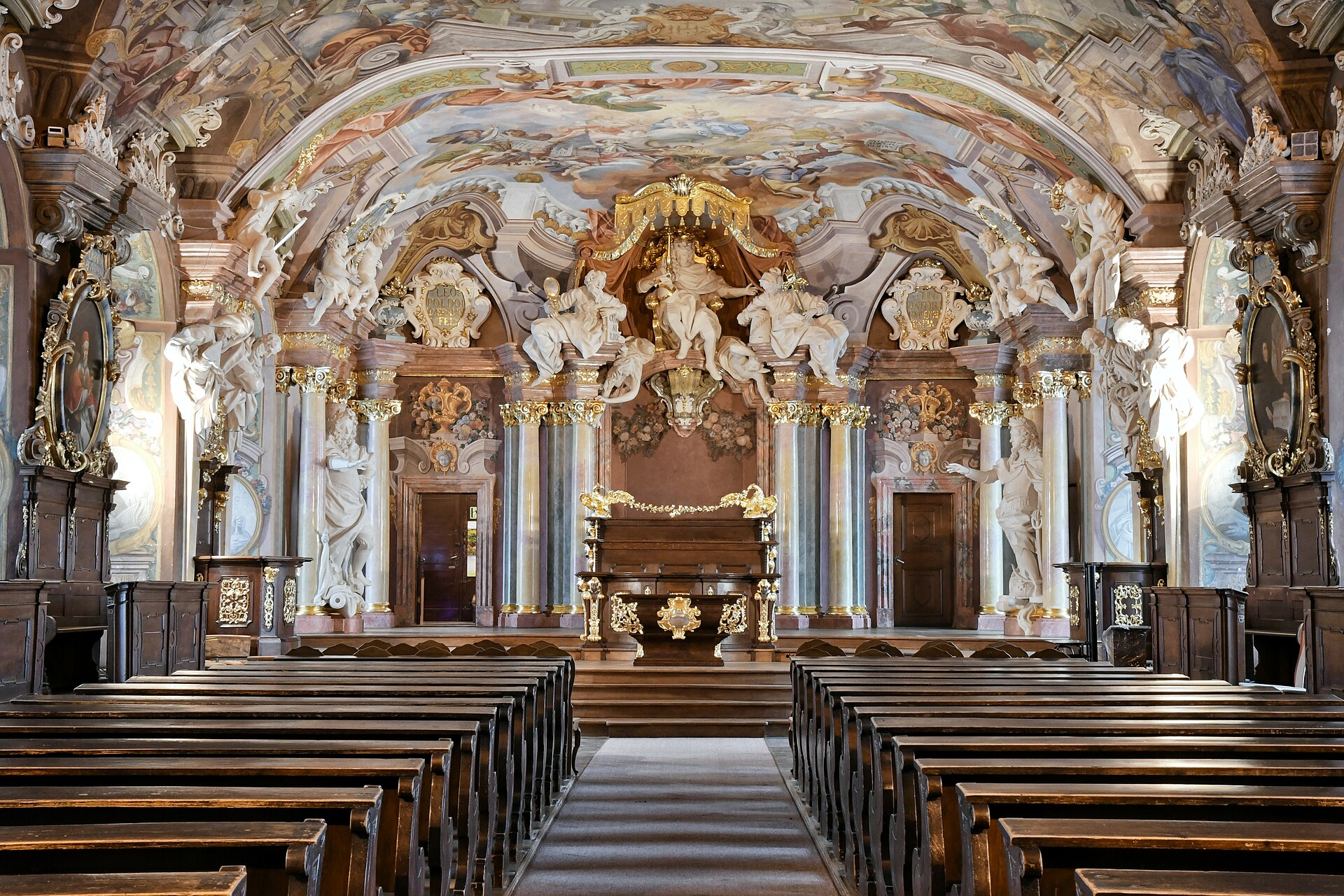
The architecture is what first captures the eye. The main building, a masterpiece of Baroque design, stands as if frozen in time, its ornate facade adorned with statues and coats of arms. The most breathtaking space within is the Aula Leopoldina, a grand ceremonial hall named after Emperor Leopold I, the university’s founder. Stepping inside feels like entering a different century—gilded stucco work, ceiling frescoes depicting allegories of science and art, and towering windows that bathe the room in soft, golden light. Even now, the hall hosts formal events, and it’s easy to imagine the walls remembering every oath sworn and every toast raised beneath them. Nearby, the university church preserves its old-world charm, with antique organs and intricately carved wooden pews, a reminder that this was once a place where prayers mingled with lectures.
Wrocław University has always been more than just a place of learning; it has shaped the intellectual elite of the region. In the 19th century, when Wrocław—then known as Breslau—was part of Prussia, the university became one of the leading centers of German scholarship. Nobel laureates walked its corridors, and its library amassed rare manuscripts and editions. After World War II, when the city became part of Poland, the university underwent a rebirth. It was rebuilt and adapted to new realities, yet it retained the spirit of old Europe. Today, students from across Poland and beyond fill its classrooms, and the campus remains a vibrant blend of tradition and modernity.
A walk through the university is like flipping through the pages of history. One wing might reveal medieval vaults, while another houses cutting-edge laboratories. The university museum offers a fascinating glimpse into the past, with displays of antique scientific instruments, globes, maps, and even anatomical specimens that trace how human understanding of the world has evolved. Among its treasures is the famous Jagiellonian Globe, one of the oldest in existence, which was the first to depict the Americas. Each artifact isn’t just an object; it’s a testament to the curiosity that has driven progress.
The university courtyard is the heart of the campus, a place where students gather between classes, debate ideas, or simply soak in the atmosphere. In summer, it buzzes with life—laptops on laps, impromptu photoshoots against the historic walls, and groups lounging in the sun. Winter transforms it into a quieter, almost magical space, snow dusting the statues and cornices, slowing time to a gentle pace. From the second-floor balcony, the view stretches over the Oder River, and on clear days, the city’s bridges come into focus, linking the university to the rest of Wrocław.
Traditions run deep here, passed down through generations. One of the most cherished is the annual freshman ball, where students in formal attire waltz in the Aula Leopoldina to the strains of classical music. Another is the celebration of Saint John of Capistrano, the university’s patron saint, marked by concerts and fairs in the square outside the main building. These events bring together students and faculty, reinforcing the idea that the university is more than just a collection of buildings—it’s a community bound by shared history and a pursuit of knowledge.
Today, Wrocław University stands as a major research hub, with scholars working across disciplines from physics and chemistry to the humanities. Its reputation extends far beyond Poland, with students participating in international projects and conferences. Yet, it remains deeply connected to the city, its doors open to anyone who wants to explore its history or admire its architecture. Public lectures, exhibitions, and concerts make it an integral part of Wrocław’s cultural life.
As you wander through the city, the university’s buildings blend seamlessly into the urban landscape. They don’t demand attention with ostentatious grandeur, yet there’s an unmistakable sense that this is a special place. Perhaps it’s because history breathes through every corner, yet it never feels like an open-air museum. It’s alive, evolving with the city and the country while staying true to its roots. That’s why Wrocław University isn’t just a landmark—it’s a place you’ll want to return to, time and again, to feel its unique rhythm and spirit.