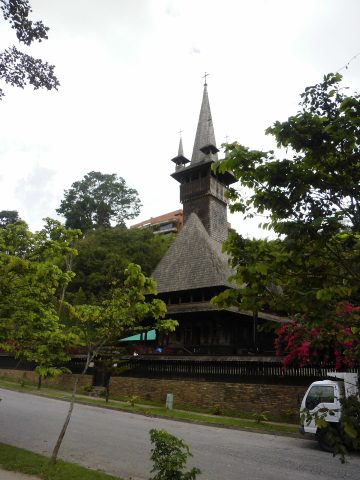
East Park in Caracas is one of those places that doesn’t announce itself at first glance. Tucked away in the eastern part of the city, it sits where modern urban sprawl meets pockets of greenery, where the hum of traffic fades into the quiet rustle of leaves and the soft crunch of gravel underfoot. Unlike the grand plazas or historic landmarks that draw crowds, East Park offers something simpler: space, air, and the sense that time moves just a little slower here.
Built in the mid-20th century, the park was conceived as a retreat for city dwellers weary of Caracas’ relentless pace. As the capital expanded rapidly, urban planners sought to create green lungs for the metropolis, and East Park was designed with the natural contours of the land in mind. Rolling hills give way to flat clearings, and winding paths meander between trees, avoiding the rigid symmetry of formal gardens. There’s no grand design here—just a quiet coexistence of nature and city, where the landscape feels organic rather than imposed.
What makes East Park stand out is its diversity. The grounds are a mix of native vegetation and exotic species brought from elsewhere, their branches forming a canopy over small ponds where ducks drift and turtles sun themselves along the banks. During the rainy season, the water rises, turning the park into a lush, almost dreamlike space—paths glisten with moisture, the air smells of damp earth, and sunlight filters through dripping leaves. In the dry season, the landscape takes on a different character, parched and subdued, yet still offering quiet corners where the shade feels like a small refuge.
For locals, East Park is more than just a place to walk. It’s a social hub where the rhythm of daily life unfolds without pretense. On weekends, families gather to feed the ducks or let children ride bikes along the paths. On weekdays, the park fills with students lounging on the grass, office workers taking a midday stroll, and retirees sitting on benches, watching the world go by. There’s no strict etiquette here—just an unspoken understanding that this is a space for slowing down. Some bring guitars, others spread out picnics, and a few simply lie back to watch the clouds drift over the city skyline.
The park’s architecture is understated but practical. Small pavilions offer shelter from sudden rain or the midday sun, while wooden bridges over the ponds add a touch of whimsy. In one corner, an old gazebo still stands, its paint peeling but its structure intact—a relic from the park’s early days. Artists often set up easels nearby, capturing the play of light through the trees, while photographers frame shots of the ponds or the way the paths curve out of sight. It’s a place where creativity feels at home, even if no one is paying much attention.
East Park is woven into Caracas’ history, particularly the boom years of the 1960s and 70s when Venezuela’s oil wealth fueled rapid urban growth. Back then, parks like this one were vital, offering a respite from the city’s expansion. Workers from the oil industry came here to unwind, families spent weekends picnicking under the trees, and artists found inspiration in its quiet corners. The park was a symbol of an era when Caracas was a city of promise, and though its popularity has faded, it still carries echoes of that time.
Like many urban green spaces, East Park has faced challenges in recent decades. Funding shortages, vandalism, and encroaching development have left some areas looking neglected—cracked pathways, worn benches, and patches of overgrowth. Yet the park endures, in part because the people who use it refuse to let it fade. Locals organize cleanup days, and the city occasionally steps in with minor repairs. There’s something fitting about its imperfections; East Park doesn’t pretend to be pristine. It’s a lived-in space, shaped by the people who care about it.
For visitors, East Park might not seem like an obvious destination. There are no grand monuments to photograph, no plaques detailing its history, and no guided tours to explain its significance. But that’s precisely what makes it worth a visit. Here, you can see Caracas from a different angle—not as a bustling capital, but as a city where even in the heart of the urban sprawl, there’s room to breathe. You can wander the paths, listen to the birds, watch locals going about their day, and get a sense of the city’s unhurried side.
East Park doesn’t demand attention. It doesn’t need to. It exists quietly, offering a place to pause, whether you’re a resident looking for a moment of calm or a traveler seeking something beyond the usual sights. In a world where so much is designed to impress, places like this feel increasingly rare. They remind us that sometimes the most meaningful experiences aren’t the ones that shout the loudest, but the ones that invite you to slow down and notice the small things.