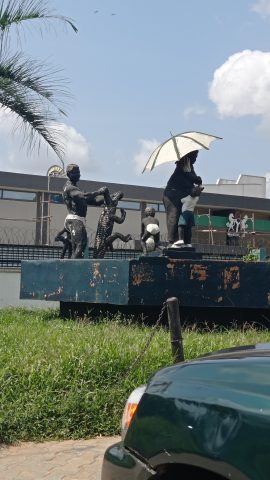
The Iya Gates in Benin City are one of those rare places where the past feels almost tangible. Standing at the intersection of history and the present, they serve as a quiet reminder of the time when the Benin Kingdom was one of the most powerful states in West Africa. These gates are more than just an architectural relic—they are a symbol of a once-great civilization that endured despite the passage of centuries. Their massive walls and intricate designs speak of the skill of ancient craftsmen who built not just fortifications, but a legacy that still resonates today.
The gates were once part of an extensive defensive system that encircled the capital of the Benin Kingdom. In the medieval period, the city was protected by earthen ramparts and moats stretching for miles, a testament to the kingdom’s strength and strategic foresight. These fortifications were not merely for defense; they were a display of power, a way for rulers to assert their dominance over the region. The Iya Gates were one of the main entrances, a threshold through which traders, diplomats, and warriors passed. Today, only fragments of this once-imposing structure remain, but even in their diminished state, they command attention.
The architecture of the gates reflects the distinctive style of Benin craftsmanship. Built from clay and terracotta, materials that have been used in the region for generations, the walls are adorned with reliefs depicting scenes from the kingdom’s life. These carvings are not just decorative—they are a visual chronicle of important events, rituals, and daily existence. Over time, many of these reliefs have eroded or been lost, but the surviving fragments offer a glimpse into the artistry of the period. The craftsmanship is evident in the way the designs blend functionality with storytelling, turning stone and earth into a narrative of a people’s history.
The Iya Gates are deeply tied to the history of the Benin Kingdom, which reached its peak between the 15th and 17th centuries. During this time, the kingdom controlled vast territories, engaged in trade with European powers, and became renowned for its bronze works. Benin City was the heart of this empire, and its defensive structures were a symbol of its might. However, the kingdom’s fortunes changed in the late 19th century when British colonial forces sacked the city, looting many of its treasures, including the famous bronze plaques. The gates survived, but they lost much of their former grandeur, a silent witness to the violence of that era.
Today, the Iya Gates stand as both a historical monument and a place where the past feels alive. They are surrounded by the modern city, where life moves at its own pace, but as you approach the gates, time seems to slow. There are no crowds of tourists, no guided tours, no souvenir stalls—just the quiet rustle of the wind and the occasional murmur of locals going about their day. For many in Benin City, the gates are a source of national pride, a reminder of the achievements of their ancestors. They represent a connection to a time when the kingdom was a center of culture, trade, and innovation.
Visiting the Iya Gates is not just about seeing a landmark; it’s about stepping into history. Standing before them, it’s impossible not to wonder about the countless people who passed through these arches over the centuries—the traders, the warriors, the messengers, each playing a part in the kingdom’s story. This is a place where history is not confined to books but felt in the air, in the texture of the walls, in the weight of the past. Unfortunately, the gates are showing their age. Time and the elements have taken their toll, and restoration efforts are often limited by resources. Yet even in their weathered state, they leave a lasting impression.
For anyone interested in African history, the Iya Gates are a must-visit. They offer a window into the culture and traditions of the Benin Kingdom, which was one of the continent’s great civilizations. Here, art, architecture, and politics intertwined to create a society that was both sophisticated and resilient. The gates are not just stone and earth; they are a living piece of history, one that continues to inspire and intrigue. They remind us that the past is never truly gone—it lingers in the places we preserve and the stories we tell.
Benin City today is a bustling urban center, where modern buildings stand alongside ancient relics. The Iya Gates serve as a bridge between these two worlds, a reminder that beneath the surface of everyday life lies a rich and complex history. They have endured wars, colonization, and the relentless march of time, standing as silent witnesses to the changes that have shaped the region. Perhaps that resilience is what makes them so compelling. When you visit, you realize that history is not just a series of dates and events—it’s a living thread that connects us to those who came before.