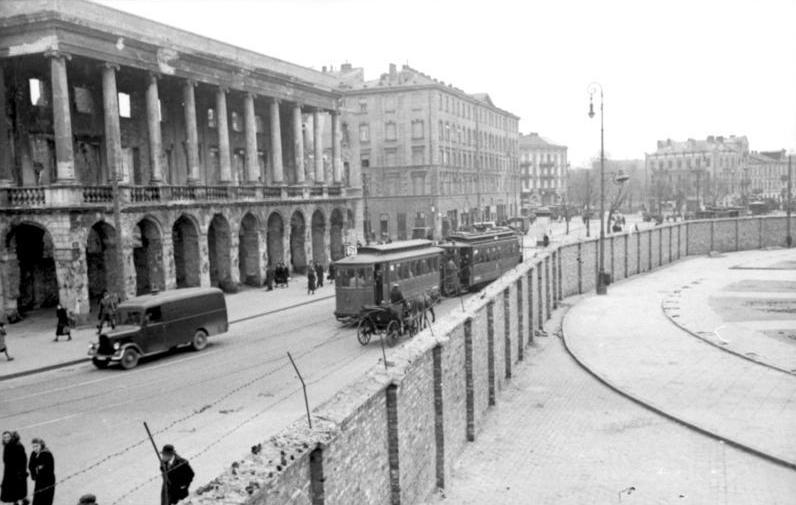
Warsaw’s former Jewish ghetto is one of those places where history feels heavier than the air. Established by Nazi occupiers in 1940, it became a prison for nearly half a million people, confined to a small area of the city center. The walls that enclosed it were three meters high, topped with barbed wire and broken glass. Inside, homes, synagogues, hospitals, and schools were cut off from the rest of the city. Residents were stripped of basic rights, forbidden to leave without permission, denied medical care, and left to survive on rations that were barely enough to keep anyone alive.
The conditions were unbearable. Before the war, around 160,000 people lived in these streets. By 1941, that number had swelled to over 400,000. Families shared single rooms; others slept in basements or attics. Food was scarce, and what little made it inside was often smuggled in at great risk. Those caught bringing in supplies were executed. Disease spread rapidly, especially typhus, which thrived in the overcrowded, unsanitary conditions. Winter brought freezing temperatures; summer turned the ghetto into a stifling trap. The Nazis deliberately starved the population.
Yet life did not stop. People organized underground schools, secret hospitals, and cultural events. There were theaters, newspapers, and a clandestine archive. A group led by Emanuel Ringelblum documented daily life in the ghetto, hiding records in milk cans and metal boxes. Some of these archives were recovered after the war, offering a glimpse into what happened behind those walls. It was a way of ensuring that the truth would survive.
By 1943, most of the ghetto’s inhabitants had been deported to extermination camps. Those who remained knew what awaited them. In April, a small group of young Jews, armed mostly with homemade weapons, rose up against the Nazis. The Warsaw Ghetto Uprising lasted nearly a month. The Germans responded by burning buildings, blowing up streets, and executing anyone they found. When the uprising was crushed, the ghetto was destroyed.
Today, little remains of the ghetto’s physical presence. Warsaw has rebuilt itself. A short stretch of the original wall still stands on Sienna Street, marked by a plaque. Another memorial is on Zamenhofa Street, where a grand synagogue once stood before the Nazis demolished it. In 2010, the POLIN Museum of the History of Polish Jews opened nearby. The museum chronicles centuries of Jewish life in Poland, including the community’s influence on the country’s culture and politics.
Walking through these streets is unsettling.
On Próżna Street, a few pre-war buildings still stand. Their facades are a silent reminder of what was lost. Some leave flowers or light candles at the memorials. Others stand quietly, reading the plaques. For many, especially those with family ties to the ghetto, these places are more than historical sites—they’re a connection to personal stories.
The ghetto was also a place of defiance. The uprising, though doomed, became a symbol of resistance against oppression. It showed that even in the darkest moments, people refused to be erased without a fight. That legacy is still felt today, not just in Warsaw but around the world. The ghetto forces us to ask: How do people endure when everything is taken from them? What does it mean to hold onto humanity when the world has turned against you?
Warsaw has changed since those years. The past is never far away. The ghetto’s story is woven into the fabric of the city. Visiting these sites isn’t just about remembering the dead; it’s about understanding how easily the world can fracture.
There’s no easy way to process what happened here. The suffering was vast, the cruelty deliberate. The ghetto wasn’t just a chapter in a history book—it was a real place, where real people lived, loved, and fought to survive. Their stories deserve to be remembered. In a world that still struggles with hatred, that memory feels urgent.