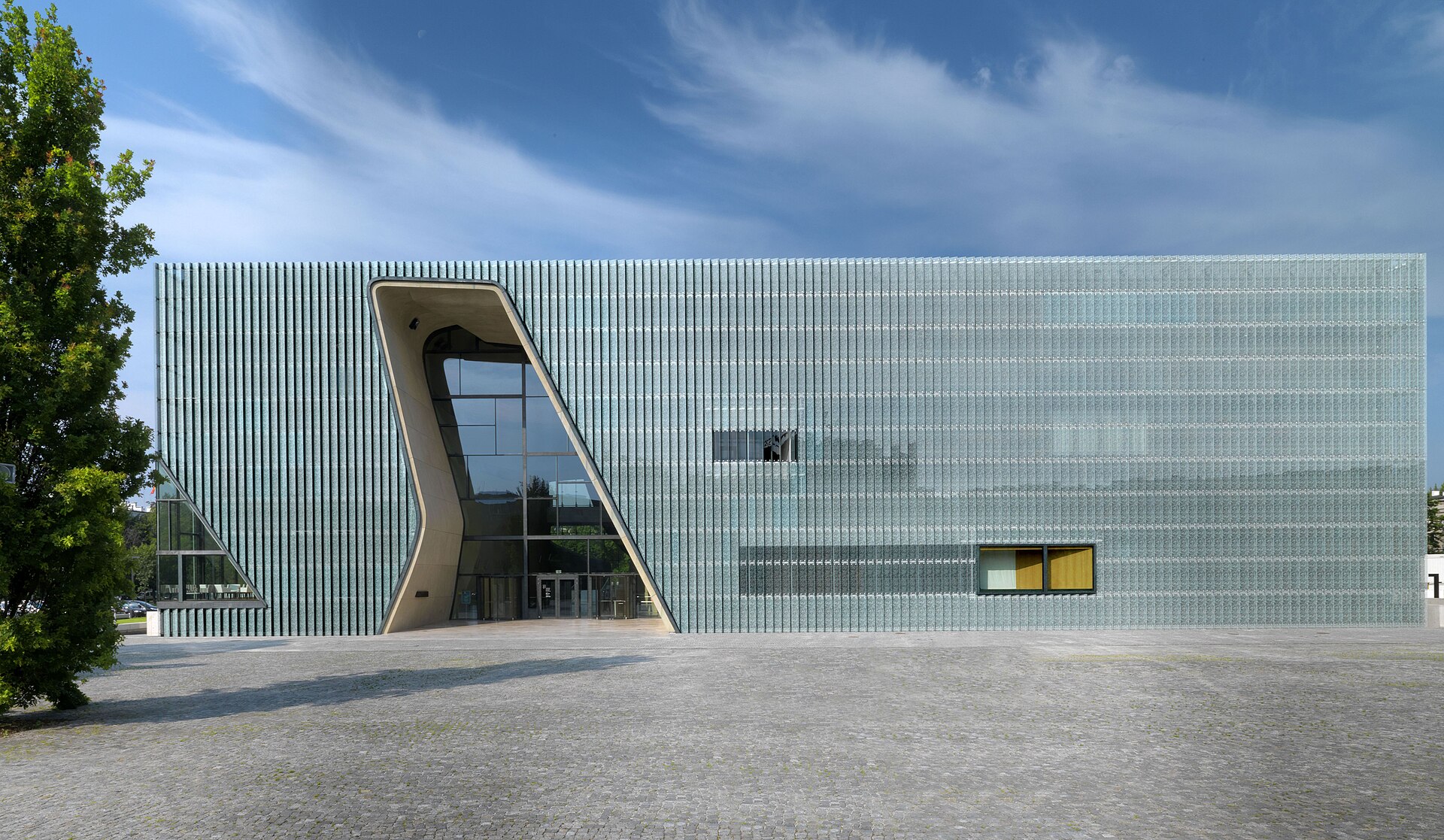
The POLIN Museum stands where Warsaw’s Jewish district once thrived. For centuries, this ground pulsed with Jewish life—synagogues, markets, debates, and daily routines. The museum traces that culture: how Jews shaped Poland’s intellectual and artistic life, how their fates intertwined with their neighbors, and how their legacy endured even after the Holocaust.
The building, designed by Finnish architects, suggests a torn book and a traditional Jewish home. Its glass facade bears Hebrew and Polish words. Inside, the space unfolds as a journey through time—from the first Jewish settlements to the present. Interactive exhibits, reconstructions, and personal testimonies replace dusty display cases.
The exhibition starts in the Middle Ages, when Jews arrived in Poland. The country was then one of Europe’s most tolerant, and Jewish communities thrived. Synagogues, schools, and printing houses emerged. Relations between Jews and Poles evolved. The 16th to 18th centuries marked a golden age: Poland became a hub of Jewish scholarship, where religious texts were written, philosophy debated, and a unique culture took shape.
The interwar period saw extraordinary cultural flourishing. In Warsaw, Łódź, and Kraków, Jewish theaters, Yiddish newspapers, films, and literature flourished. The museum recreates this atmosphere with photographs, newsreels, diaries, and everyday objects. A reconstructed street from Warsaw’s Jewish quarter immerses you in the sounds and energy of the time. But the exhibition also shows rising antisemitism, economic instability, and the tensions that foreshadowed catastrophe.
The Holocaust is central but told through individual stories. Letters, photographs, and last diary entries make the loss personal. The Warsaw Ghetto uprising and resistance are given their due. The narrative doesn’t end in 1945. It continues with survivors returning, rebuilding, and facing new hostility. Despite everything, Jewish life persisted in different forms.
Postwar decades are shown through emigration, memory struggles, and the slow revival of Jewish culture. Some stayed in Poland; others left for Israel or the U.S. The museum explores shifting attitudes toward Jewish heritage in a country that once held the world’s largest Jewish community. No idealization—just the messy reality of loss, displacement, and history’s weight.
POLIN is more than a museum. It hosts lectures, concerts, festivals, and contemporary art exhibitions. The building feels like a bridge between past and present. For some, it’s a first encounter with Jewish history; for others, a reconnection with roots.
A visit takes several hours. The stories linger. Each exhibit makes you reflect on memory’s fragility, how easily it slips away, and why it matters. The museum doesn’t offer easy answers. It invites questions, encourages personal meaning, and confronts history many prefer to forget. That refusal to let the past fade quietly may be its greatest value.