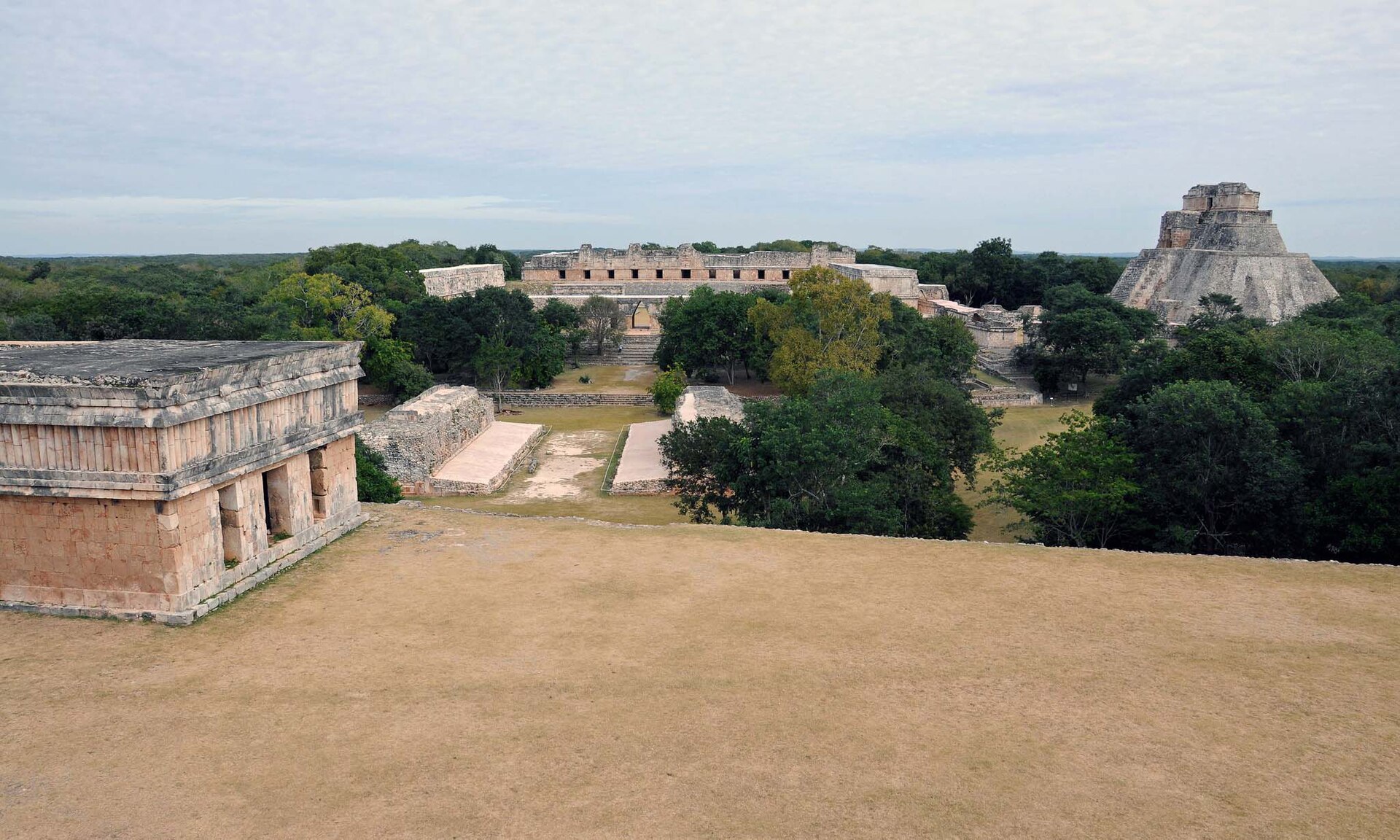
Uxmal lets you walk into the quiet grandeur of the Maya civilization. This archaeological site lies near Mérida, and fewer visitors come here than to Chichén Itzá or Palenque. The stone structures, draped in vines and moss, blend with the landscape—ancient secrets half-hidden by the jungle.
The site dates to the Classic Maya period, between the 6th and 10th centuries. It was a political and cultural hub in the Puuc region, known for its architecture. Unlike other Maya cities with towering pyramids, Uxmal’s buildings are long and low. Their facades carry geometric patterns, masks of the rain god Chaac, and serpents—symbols of power and fertility. The Governor’s Palace stands out; its stonework resembles lace, each element holding meaning.
The Pyramid of the Magician, or the Pyramid of the Dwarf, is the most famous structure. A legend says a dwarf born from an egg built it in one night to prove his right to rule. In truth, the pyramid grew in stages. Its oval shape differs from other Maya buildings. Climbing its steps gives you a view of the hills and ruins. On clear days, the Sierra Nevada de Mérida rises in the distance.
The Nunnery Quadrangle—a complex of four buildings around a courtyard—was named by Spanish conquistadors. They thought it looked like a convent. It was likely an administrative or ceremonial center. At sunset, light and shadow make the carved figures seem to move.
The Maya watched the sky closely. Many buildings align with celestial events. During the summer solstice, the sun rises over one corner of the quadrangle. At the equinoxes, shadows on the walls create moving serpents. Local guides talk about how their ancestors read the heavens.
After the Classic Maya civilization fell, people still lived here. Later, the Spanish took over. The jungle covered the ruins until the 19th century, when they were cleared and studied.
Today, Uxmal is a place where history feels close. Without crowds, you can walk its paths quietly. Leaves rustle, birds call in the distance.
Visiting Uxmal isn’t about checking off a list. It’s about stepping into a world where myth and reality meet. The stones hold memories of people who lived, built, prayed, and vanished. These ruins let you touch them, feel the rough walls, and imagine the voices that once filled the air.
Mérida’s climate makes timing matter. The dry season, from November to April, is best. The heat is gentler, and the landscape is green. Locals suggest arriving early, when the sun is soft and flowers scent the air. Wear sturdy shoes—the paths are uneven, and the pyramid steps are steep.
Uxmal doesn’t shout for attention. It lets you wander, listen to leaves, and wonder about the mysteries in these stones. Here, you might feel how fragile—and how enduring—history is.