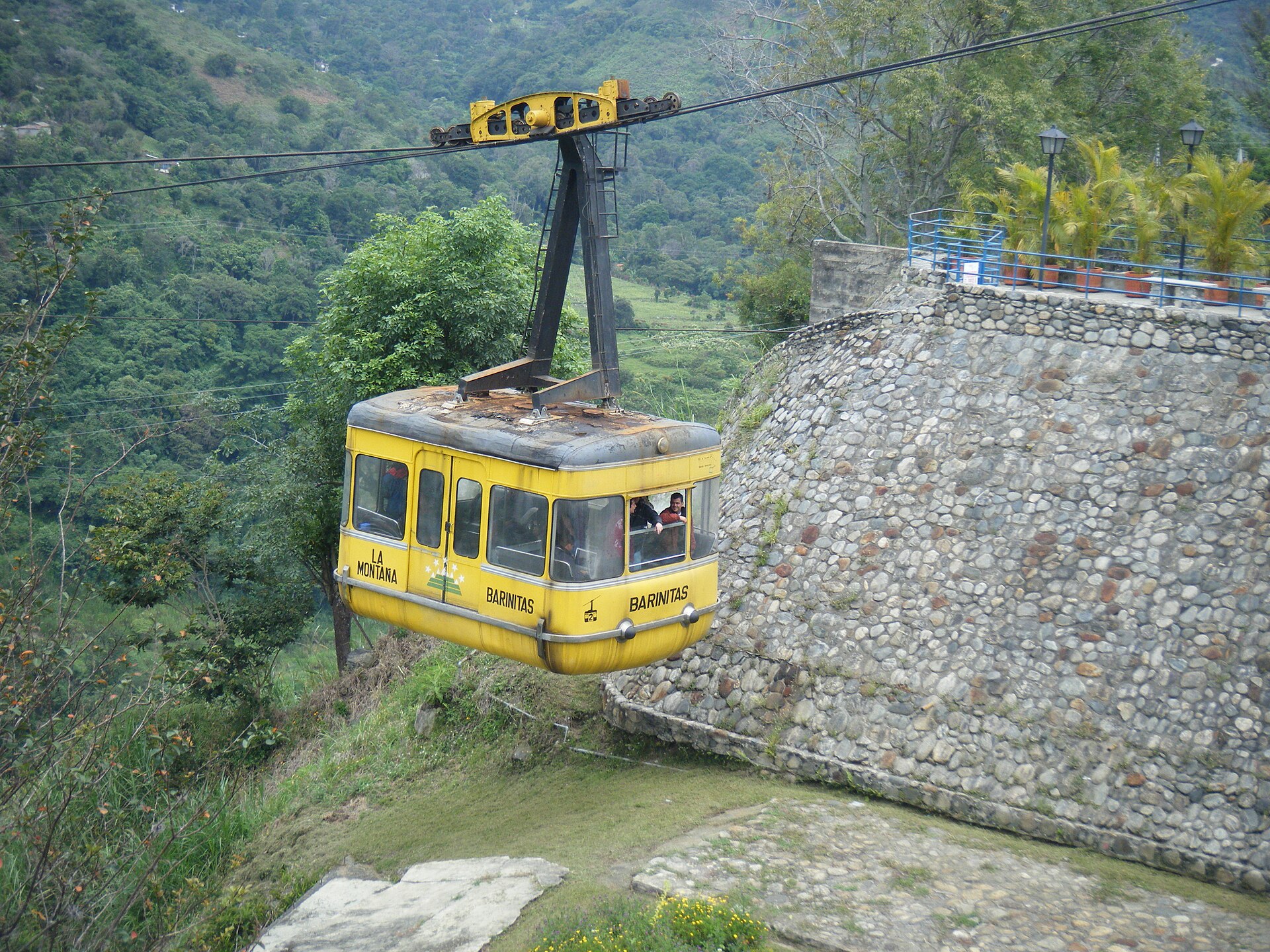
The Teleférico de Mérida doesn’t just transport you—it lifts you into the Venezuelan Andes, where the air thins and the horizon expands beyond expectation. From Mérida’s valley, framed by towering peaks, the cable car ascends nearly five thousand meters to Pico Espejo, one of the country’s highest accessible points. Built in the mid-20th century, it once claimed the titles of longest and highest cable car in the world. Though newer systems have since surpassed it, the ride retains its original magic.
The concept emerged in the 1950s, when Mérida’s rugged landscapes—snow-capped mountains, deep valleys, and untouched wilderness—began drawing travelers. Reaching these heights was difficult, often requiring grueling hikes or unreliable transport. Local authorities envisioned the cable car as both a solution and an attraction. Construction spanned years, with engineers battling steep terrain and erratic weather. When it opened in 1960, the Teleférico instantly became a regional landmark, though its journey hasn’t always been smooth.
The ascent unfolds through distinct climate zones. At the base, Mérida’s warm, humid air carries the scent of tropical flowers and rustling palms. Higher up, cool mist clings to dense forests, then gives way to highland pastures where cows graze and farms cling to hillsides. By the upper stations, the landscape turns alpine—rocky slopes and hardy plants dominate. If conditions allow, the view from the top reveals snow-capped peaks in every direction, including Pico Bolívar, Venezuela’s highest mountain.
The cable car operates in sections, each leading to a station where passengers can disembark. Barinitas, the lowest, sits at 1,500 meters; Pico Espejo, the highest, reaches nearly 5,000. The full trip takes about an hour, with cabins gliding over gorges and forests. Below, roads and houses shrink to threads in the landscape. Clear days offer extraordinary visibility, but clouds often obscure higher elevations—an unpredictability that keeps the experience grounded.
The stations are functional, designed in a mid-century style with large windows and open terraces. At higher altitudes, the thin air can leave you lightheaded, a reminder of the altitude gained. Even stopping at an intermediate station offers a sense of the Andes’ vastness, where the world below feels distant.
For mountain communities, the cable car is essential. It’s the most reliable link to Mérida, especially during the rainy season when roads wash out. Farmers transport produce, students commute to school, and workers travel to the city. The cabins buzz with conversation, blending Spanish and local dialects. Despite its age, the Teleférico remains a daily lifeline.
The system has been renovated, but its character endures. It bridges human ingenuity and the Andes’ raw beauty, where city noise fades into mountain silence. Mechanical delays and unpredictable weather are part of the experience—no pretense, just wind, altitude, and the feeling of stepping beyond the ordinary.
For visitors, the cable car offers more than a sightseeing checkbox. It’s a rare perspective on Venezuela, a chance to grasp the Andes’ scale and why these mountains have long captivated people. Catch a sunrise or sunset from the top, and the sky paints the peaks in gold and pink. Even on an ordinary day, the journey lingers—one of those moments when you realize how small you are against something much greater.