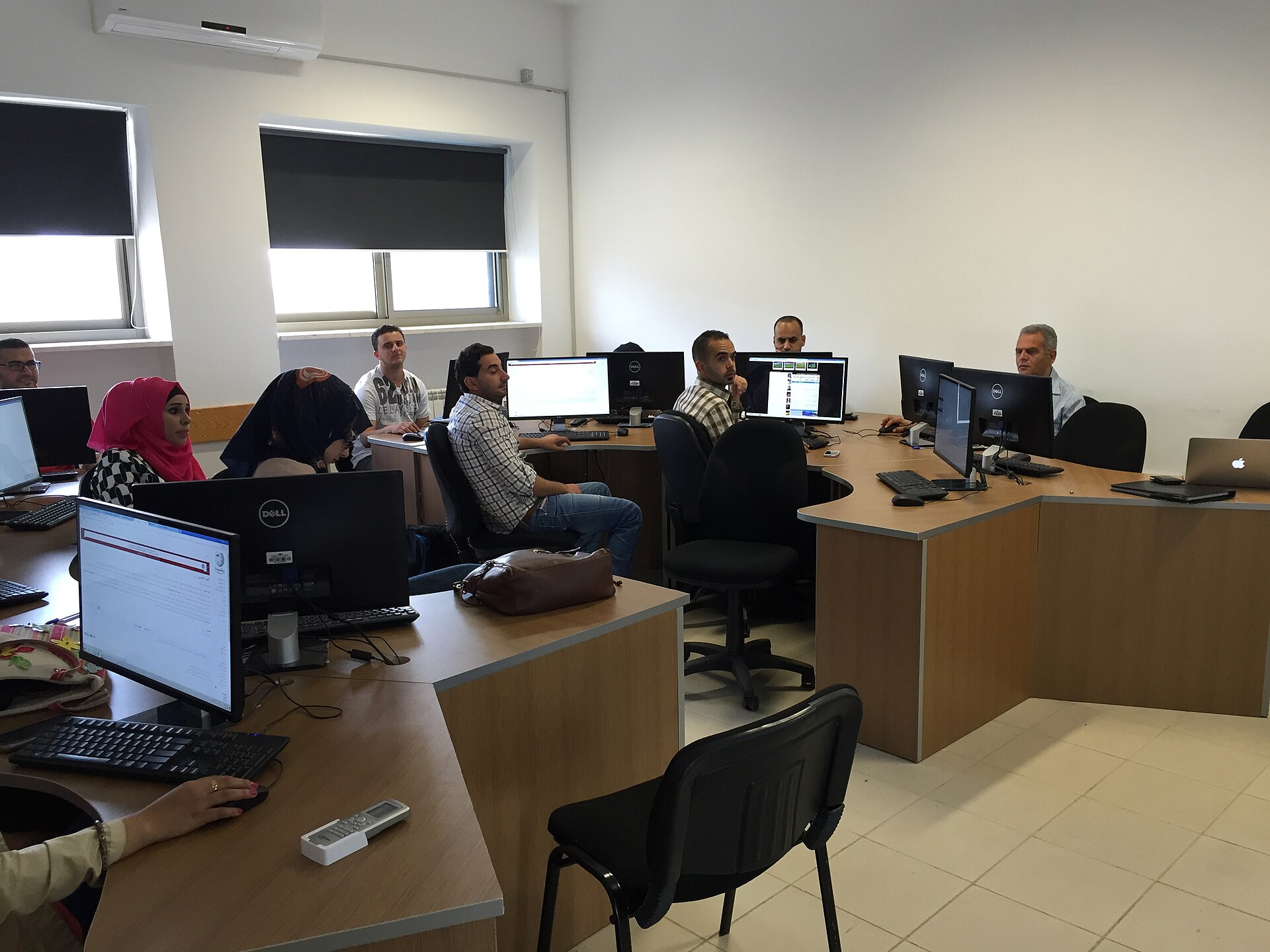
Birzeit University sits in a quiet town just outside Ramallah, where the past and present blend so seamlessly it feels almost tangible. More than just an academic institution, it has become a symbol of Palestinian resilience and the enduring value of education. Students from across the West Bank, and occasionally from farther afield, come here not only to study but to be part of something larger—a place where learning and resistance have walked hand in hand for decades.
The university’s origins trace back to 1924, when it began as a small school for girls. Over the years, it evolved, first into a college in the mid-20th century, then into a full-fledged university by the 1970s. This growth mirrored the turbulent history of the region. During the First Intifada, Israeli authorities shut it down for four years, yet the closure only strengthened its resolve. When it reopened, the university emerged not as a victim of circumstance but as a testament to persistence.
The campus itself tells this story through its architecture. Older buildings, with their stone facades and wooden shutters, stand alongside modern structures of glass and concrete. The contrast isn’t just aesthetic—it reflects the university’s journey from a modest institution to a leading academic center. The library, one of the largest on the West Bank, holds rare manuscripts and books in Arabic, English, and other languages. It’s a place where students come not just to read but to think, to engage with ideas that extend beyond the pages.
Birzeit has always been more than a place of learning. It’s a hub for dialogue, activism, and cultural exchange. Lectures, debates, and exhibitions on Palestinian history, human rights, and social issues are common here. Students and faculty often take part in community projects, from educational programs for children to initiatives that preserve local heritage. The campus buzzes with energy—artists setting up exhibitions, musicians rehearsing, activists organizing. This spirit of engagement makes the university feel alive in a way that few academic institutions do.
Despite the challenges it faces, Birzeit continues to expand. It offers programs in sciences, humanities, engineering, medicine, law, and the arts, with a particular focus on research that addresses local needs—water conservation, agricultural innovation, urban development, and cultural preservation. Many of its graduates go on to become leaders in their fields, both within Palestine and abroad. The university doesn’t just measure success by academic achievements; it values qualities like solidarity, perseverance, and a commitment to justice.
The town of Birzeit adds to the university’s character. It’s a typical Palestinian community, with narrow streets lined with cafés serving strong coffee and fresh pastries, and markets selling olive oil and spices. Students often spend their free time here, lingering over conversations or simply soaking in the atmosphere. In the evenings, families stroll through the streets, and the town takes on a relaxed, almost village-like charm. For visitors, it’s a reminder that life here moves at its own pace, unhurried and deeply rooted in tradition.
To outsiders, Birzeit University might seem like an oasis of stability. But its true strength lies in its ability to thrive despite instability. There’s no grandiosity here, just the quiet determination of people who believe in the power of education to change lives. The campus has its own rhythm—students rushing to classes in the morning, gathering in cafés during the day, playing football or lounging on the grass in the evenings. It’s a rhythm that feels almost ordinary, which makes it all the more remarkable given the realities beyond its walls.
For some, Birzeit is a place to earn a degree. For others, it’s a platform for debate, a space to challenge ideas and shape the future. For many, it’s a symbol of hope—a reminder that even in difficult times, dignity, knowledge, and progress are possible. It’s not just a university; it’s an idea that has endured, adapted, and grown stronger with time. And for those who pass through its gates, it leaves an impression that lasts long after they’ve moved on.