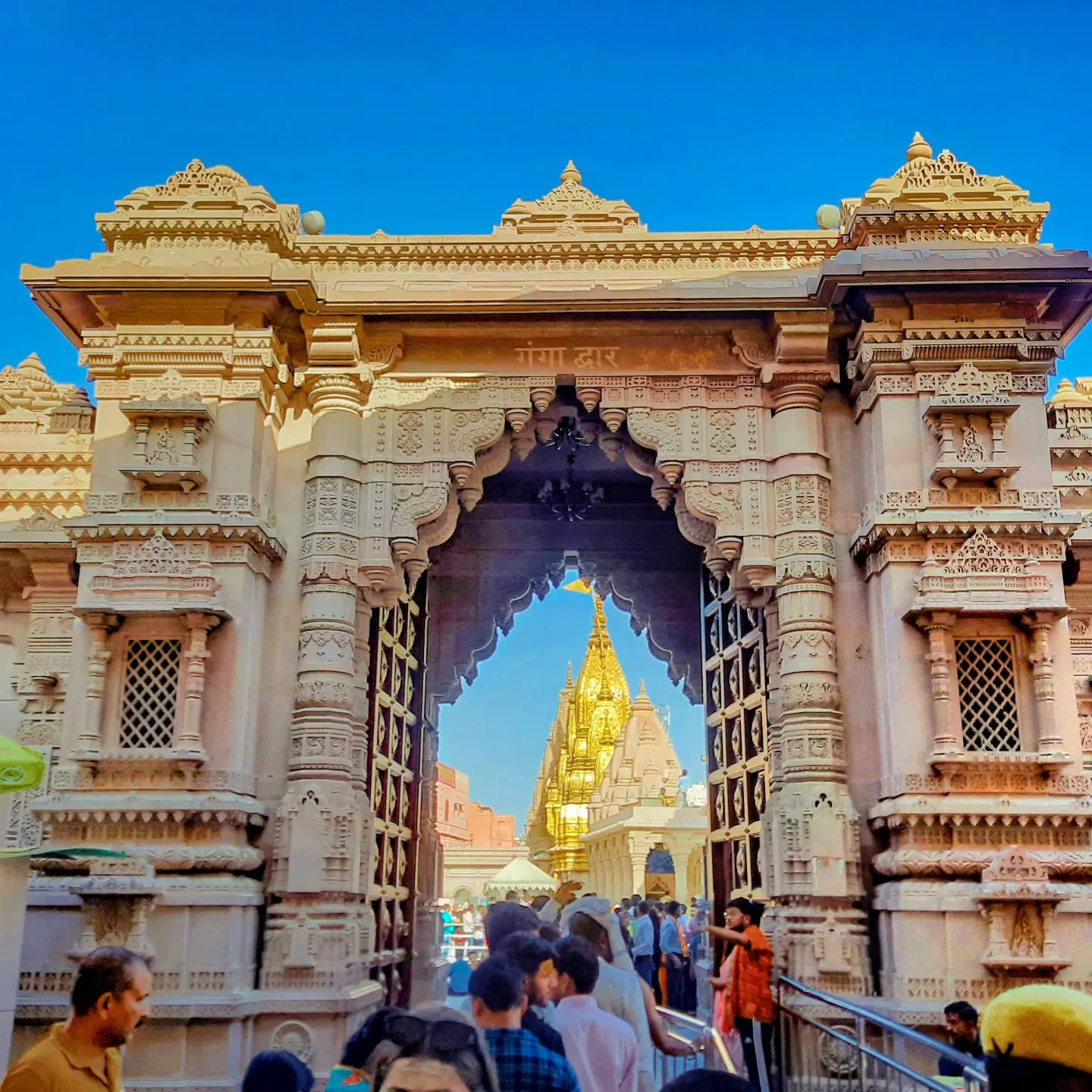
Banaras Hindu University, known as BHU, stands apart in Varanasi. Wide avenues shaded by old trees, red sandstone buildings, and quiet corners where students read or debate—these define its character. Founded in 1916 by Madan Mohan Malaviya, a leader in India’s independence movement, the university was designed to merge tradition with modernity. Here, science and spirituality share space, and Indian culture engages with global knowledge without losing its roots.
The campus architecture reflects this vision. Buildings draw from Mughal design but incorporate European classicism in their proportions. The Shri Vishwanath Mandir, a towering complex of white marble domes, anchors the campus. Faculties, hostels, and laboratories spread around it, blending into the landscape. Even newer structures follow this aesthetic, using matching materials to maintain harmony. The grounds feel organic, as if they grew naturally over time.
BHU functions like a small city within Varanasi.
Thousands of students, faculty, and staff live here. Shops, cafes, sports fields, and a hospital support daily life. Mornings begin with temple bells, the scent of chai, and students hurrying to lectures. Evenings bring soft lamplight and the fragrance of flowers and spices from nearby eateries.
Festivals transform the campus. Diwali lights up the grounds with lamps and fireworks. Holi turns it into a burst of colors. Students organize concerts, art exhibitions, and plays, making BHU a cultural center for the city.
Academically, BHU bridges disciplines. It offers courses from Sanskrit and philosophy to engineering and medicine. It was among the first Indian universities to teach contemporary subjects alongside traditional ones. Research thrives in biotechnology, physics, history, and linguistics. Yet, temples remain part of the campus, and students can study yoga, meditation, or classical Indian music. This mix of old and new defines its approach—education here doesn’t exist apart from culture.
For many, BHU becomes home. Students from across India and abroad come for an education rooted in tradition. Hostels have their own cultures, with customs like communal tea gatherings, debate clubs, or poetry readings. Life extends beyond academics: sports tournaments, theater productions, and charity events build community. The friendships formed here often last decades.
Visitors are welcome. Tourists can explore the grounds, visit temples, or browse libraries. The start of the academic year and graduation ceremonies offer the liveliest experiences. Locals often walk here in the evenings, especially when the day’s heat fades. For many in Varanasi, BHU is more than an institution—it’s where they spent their youth or where they bring their children to show them learning in action.
Banaras Hindu University is where past and present meet. You can feel India’s reverence for knowledge, its respect for history, and its push toward the future. The campus changes with the country but retains a timeless quality. For those who come to Varanasi to understand modern India, BHU offers a quiet, deliberate glimpse into how the nation’s future is shaped by its past.