Kyiv is a city that doesn’t just exist on a map—it breathes history. Stretching along both banks of the Dnipro River, this waterway has always been its lifeline, connecting north and south, east and west. Here, time feels layered, with ancient burial mounds standing near modern skyscrapers and golden-domed churches reflecting in the glass facades of office buildings. Kyiv doesn’t try to mimic other capitals; it sets its own pace, where the hustle of a metropolis coexists with the quiet of old streets.
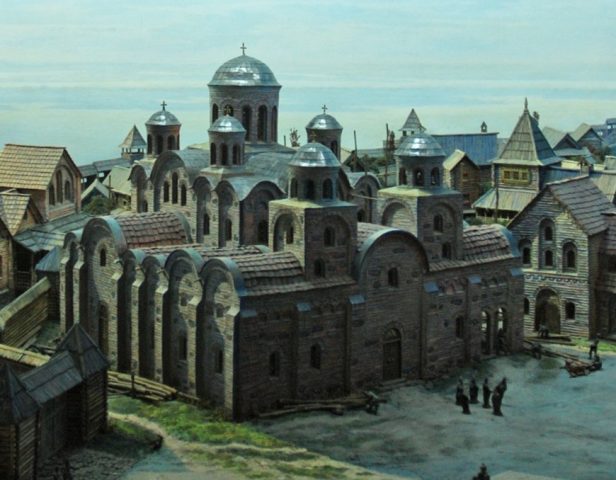
The city’s origins are wrapped in legend—the tale of three brothers and their sister who founded a settlement on the hills above the Dnipro. Archaeologists confirm human presence here as far back as the fifth millennium BCE, but Kyiv’s story as a true center began in the ninth century, when it became the capital of Kyivan Rus. This was an era of flourishing culture: its own coins were minted, the first stone churches rose, and chronicles were written that would shape Eastern Slavic identity. The Saint Sophia Cathedral and the Golden Gate are among the few surviving monuments from that time, enduring invasions, fires, and revolutions to preserve the memory of a lost empire.
After the fall of Kyivan Rus, Kyiv passed through many hands—Mongols, Lithuanians, Poles, and Russians—each leaving their mark on its architecture, language, and traditions. By the sixteenth century, it was part of the Polish-Lithuanian Commonwealth, later joining the Russian Tsardom after Bohdan Khmelnytsky’s uprising. These shifts brought new styles: Baroque replaced Byzantine, and Catholic churches stood alongside Orthodox ones. Nowhere is this more visible than in the Kyiv Pechersk Lavra, where underground caves with the relics of saints lie beneath grand cathedrals adorned with Ukrainian frescoes.
The nineteenth century was a time of rapid growth. Kyiv became a major trade and industrial hub, connected by rail and filled with multi-story buildings in Art Nouveau and neoclassical styles. It wasn’t just an economic center but a cultural one, too—universities, theaters, and the first Ukrainian-language newspapers appeared. Landmarks like St. Volodymyr’s Cathedral, with its stunning mosaics, and the opera house, where the empire’s finest singers performed, became symbols of the city’s new identity. Kyiv was a place where aristocrats, students, merchants, and revolutionaries all crossed paths.
The twentieth century brought trials that reshaped the city forever. Revolutions, civil war, famine, and World War II—Kyiv endured them all, only to rise again. Under Soviet rule, it became the capital of the Ukrainian SSR, with metro lines, factories, and residential districts transforming its skyline. The architecture of that era—monumental and functional—still defines many neighborhoods. Yet even in the hardest times, the city retained its spirit: Podil’s cafés served the best coffee in the country, jazz bands played in parks, and artists and poets gathered on Andriyivskyi Descent.
Today, Kyiv is a city of contrasts, where past and present stand side by side. You can walk along cobblestone streets lined with ornate facades, then turn a corner and find yourself among modern cafés and galleries. The tradition of public gatherings lives on: Maidan Nezalezhnosti, the central square, hosts everything from political protests to music festivals. At night, the city comes alive—bars hum with live music, couples stroll along the riverfront, and from the hills, the lights of bridges spanning the Dnipro glow against the dark.
Kyiv is also one of Europe’s greenest cities, with parks and gardens offering an escape from urban life. Hydropark, the Botanical Garden, and Volodymyrska Hill are places to wander among ancient trees, picnic by lakes, or simply sit and watch the world go by. In summer, the parks buzz with activity—cyclists, football games, and families enjoying the outdoors. Winter turns them into quiet, snow-covered retreats, where the only sound is the crunch of footsteps on frozen paths.
Food is another way Kyiv reveals itself. The city’s cuisine is a mix of traditions passed down through generations—borscht with pampushky, cherry varenyky, garlic-infused salo. Markets overflow with fresh produce from across Ukraine, while restaurants serve both classic dishes and modern interpretations. And then there’s the Kyiv cake, a dessert invented in the mid-twentieth century that remains a beloved symbol of the city.
But what truly makes Kyiv special are its people. They remember the Soviet past and shape the future, speaking Ukrainian, Russian, or a mix of both. They complain about traffic, prices, and politicians, yet defend their city fiercely against outsiders. Kyiv isn’t just a capital—it’s a place where everyone finds something of their own. For some, it’s a childhood memory; for others, a dream; and for many, home.