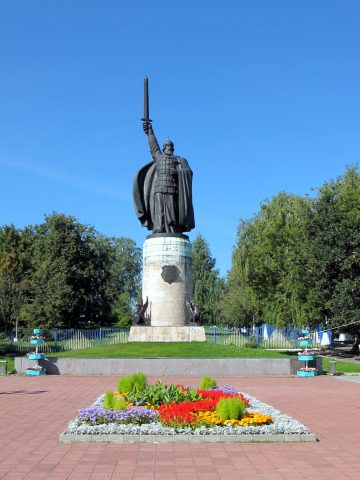
The Trinity Monastery in Murom is one of those rare places where history doesn’t just exist in books—it lingers in the air, heavy with the weight of centuries. Perched on the high banks of the Oka River, its white-stone walls rise above the landscape like a silent guardian, visible from afar. For travelers approaching the city, the monastery appears almost as an invitation, a pause in the journey where time seems to slow. Founded in the 17th century, it has stood through the rise and fall of empires, wars, and revolutions, remaining not just a spiritual center but a living witness to Murom’s past.
The architecture here is a study in contrasts—severe yet graceful, grounded yet reaching toward the sky. The Trinity Cathedral, the monastery’s heart, dominates the complex with its golden domes glinting in the sunlight. Its bell tower, slender and tall, seems to bridge the earth and heavens. Inside, the cathedral preserves the quiet grandeur of old Russian art: faded frescoes, icons darkened by time, and an iconostasis so intricate it feels like a tapestry woven from faith and craftsmanship. Even those unfamiliar with religious art can’t help but feel the presence of something enduring in these walls.
The monastery is deeply tied to the story of Prince Peter and Princess Fevronia, a couple whose love and devotion have made them the patron saints of marriage and family in Russian Orthodoxy. Their relics rest here, drawing pilgrims from across the country who come to seek blessings for their own relationships. The legends surrounding them—tales of loyalty, sacrifice, and miracles—are woven into the very fabric of the place. Many believe that praying before their relics can mend broken bonds or bring peace to troubled hearts. Whether one sees these stories as history or folklore, there’s no denying the sense of reverence they inspire.
Life within the monastery moves to its own rhythm, untouched by the rush of the outside world. Services fill the air with the deep resonance of chants, while monks go about their daily routines—tending gardens, restoring icons, or simply praying in silence. The grounds are a quiet refuge, especially in summer when linden trees bloom and the scent of herbs drifts through the air. Winter transforms the monastery into something out of a fairy tale, its domes and walls dusted with snow, the whole scene softened by the hush of falling flakes. It’s easy to imagine that here, time doesn’t just pass—it lingers.
Beyond its religious significance, the Trinity Monastery is a piece of Russia’s cultural heritage, a survivor of fires, wars, and political upheavals. It has seen the country change around it, yet it remains steadfast, its stones holding memories of the past. Visitors don’t just see ancient buildings; they feel the layers of history in the worn thresholds, the faded murals, the very stillness of the place. For some, a visit here is more than sightseeing—it’s a chance to step outside the present, to reflect, or simply to breathe in the quiet.
Murom itself is a city where the past and present coexist, and the monastery is one of its most striking landmarks. If you find yourself here, take the time to climb the riverbank for a view of the Oka’s wide, slow waters and the monastery rising above them. There’s something about the way the light falls on its walls at different times of day—soft in the morning, golden in the afternoon, almost ethereal at dusk—that makes it feel like a place apart. You might not find answers to all your questions here, but you’ll likely leave with a sense of stillness that’s hard to come by in the modern world.