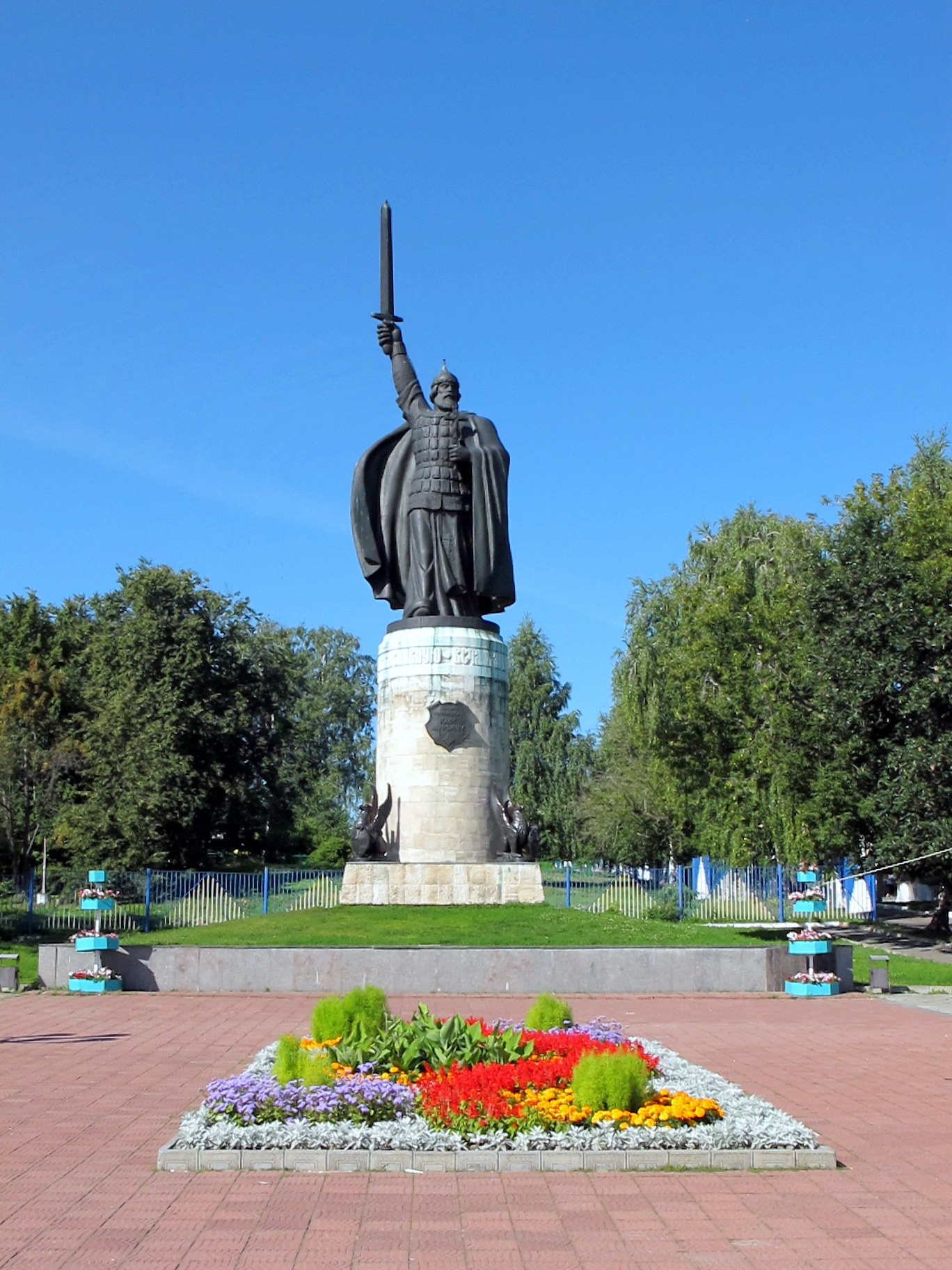
Murom’s monument to Ilya Muromets is more than a statue—it’s a quiet testament to the city’s deep ties to one of Russia’s most enduring legends. Perched on the high bank of the Oka River, the sculpture overlooks the water and the distant landscapes beyond, a setting that feels almost deliberately chosen to echo the epic tales of old. Ilya Muromets, the mythic bogatyr, is said to have been born in a nearby village, and though his existence remains unproven, his story has taken root here, in the land that bears his name. The monument doesn’t just commemorate a figure from folklore; it anchors him to a place where history and legend blur.
The idea of honoring Ilya Muromets in Murom isn’t new. For generations, the city has claimed him as its own, embracing the ambiguity of his story—the fact that he may never have lived, yet remains undeniably real in the cultural imagination. The statue itself, erected in the late 20th century, captures the essence of the bogatyr tradition: a towering figure standing firm, his sword at rest, his gaze fixed on the horizon as if still guarding the land. There’s no grand theatrics in the pose, just a sense of steadfastness, the kind that feels both ancient and timeless.
What makes Ilya Muromets particularly fascinating is his dual legacy. He isn’t just a hero of epic poetry; he’s also a revered saint in the Orthodox Church. His relics were moved to Kyiv Pechersk Lavra in the 12th century, where they remain a point of pilgrimage. This blending of the mythic and the sacred gives the monument in Murom an added layer of meaning. The city, one of the oldest in Russia, has long been a crossroads of faith and folklore, and the statue stands as a bridge between the two. Here, on the banks of the Oka, where trade routes once hummed with activity and warriors gathered for campaigns, that connection feels almost tangible.
The location of the monument wasn’t chosen at random. The high bluff overlooking the river was historically a strategic point, marking the boundary between the settled lands of Rus and the open steppe. It was from places like this that expeditions set out, where the line between safety and danger was drawn. Today, the spot offers more than just a sweeping view. Visitors can descend to the riverbank, stroll along the embankment, or simply sit on a bench, watching the water flow past. The quiet here is almost palpable, broken only by the occasional murmur of voices or the cry of a bird. It’s easy to imagine how this place might have looked centuries ago, when the river was a lifeline and the horizon held both promise and threat.
Murom itself is a city where the past lingers in unexpected ways. Its narrow streets, old churches, and weathered buildings all hint at a long and layered history. But the monument to Ilya Muromets feels like a focal point, a place where the stories of the past come alive in a way they don’t elsewhere. In summer, the area around the statue is bright with flowers; in winter, snow dusts the figure’s broad shoulders. Yet no matter the season, it remains a gathering place for those who want to step outside the present, if only for a moment.
For locals, the monument is more than a tourist attraction—it’s a part of daily life. Some come to reflect, others to take photographs, and a few simply to stand in silence. Occasionally, the city holds festivals or events nearby, but even on ordinary days, the statue feels alive in its own way. There’s no pressure to engage with it in any particular manner; it exists as a quiet presence, offering a connection to something larger than the here and now.
If you find yourself in Murom, the monument is worth seeking out. Whether you’re drawn by the legends, the history, or just the chance to stand in a place where the past feels close, it offers a moment of reflection. Walk along the embankment, visit one of the nearby churches, then return to the statue and look out over the Oka. The river has seen countless seasons come and go, and in its steady flow, there’s a sense of continuity—one that ties the mythic hero to the land and the people who still remember him. The truth of Ilya Muromets may always be a matter of debate, but his place in the story of this city is undeniable. The monument doesn’t just mark a spot; it keeps a legend alive.