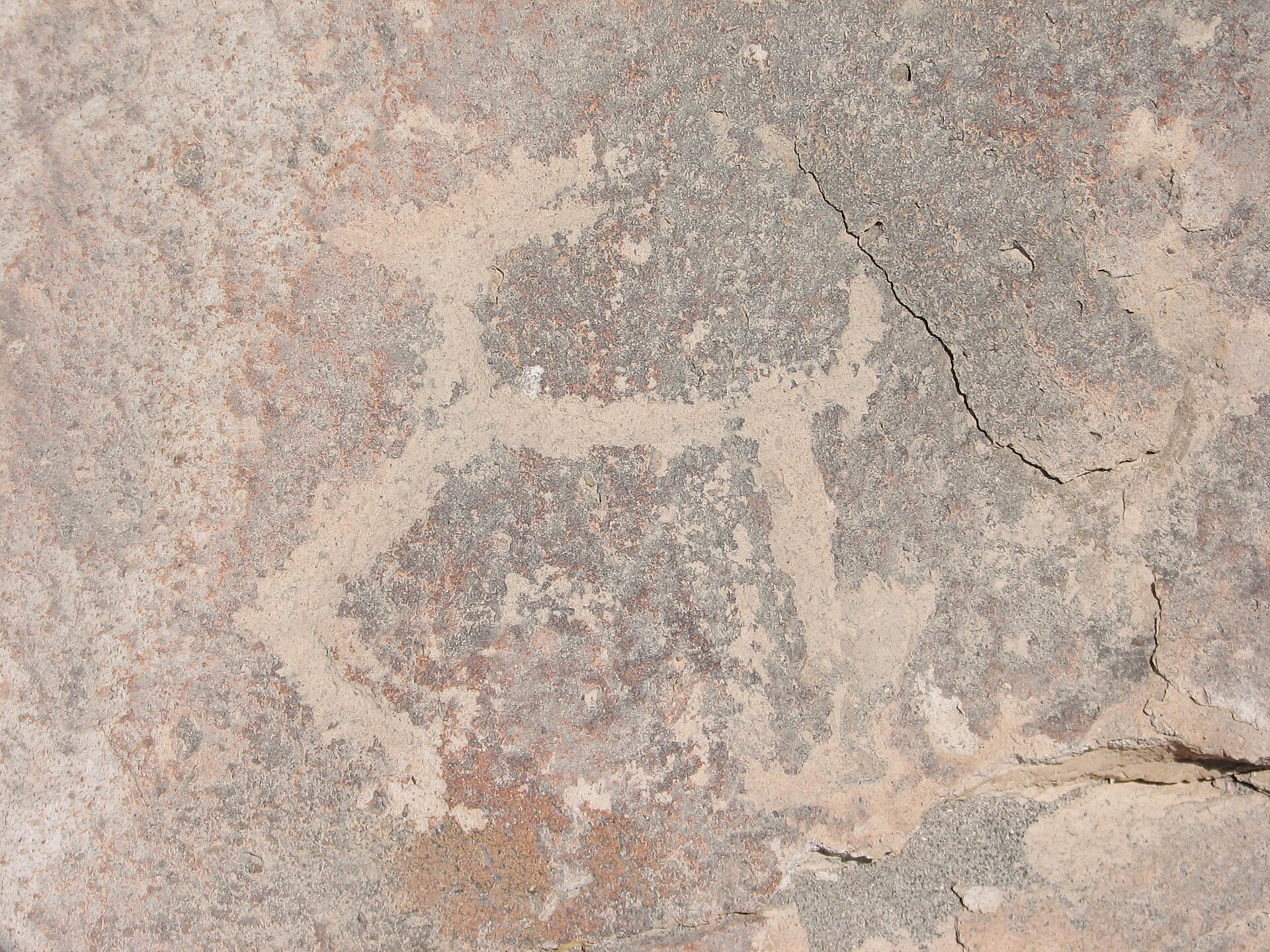
Photo: AgainErick, CC BY-SA 3.0
Toro Muerto
out of 5 0 ratingsToro Muerto is one of those rare places where time seems to have paused, leaving behind a silent record of civilizations that vanished long before written history began. Tucked away in the arid La Pampa valley, a few hours from the Peruvian city of Arequipa, this vast plateau is covered in thousands of petroglyphs—ancient carvings etched or hammered into volcanic boulders. Some of these images are believed to be thousands of years old, though their exact purpose remains a mystery. What they offer instead is a fleeting connection to people about whom almost nothing is known, their lives and beliefs preserved only in these enigmatic markings.
The petroglyphs at Toro Muerto vary widely in style and subject. Geometric patterns—spirals, zigzags, and intricate lines—share space with depictions of animals: llamas, snakes, birds, and creatures that seem almost mythical. Human figures appear too, some with raised arms, others wearing masks or elaborate headdresses, possibly representing shamans or participants in rituals. A few stones tell entire stories, with figures interacting in ways that suggest movement or ceremony. Among the most striking are the dancing figures, which researchers speculate may have been tied to fertility rites or hunting traditions.
The site sprawls across roughly five square kilometers, with petroglyphs scattered unevenly across the landscape. Some boulders stand alone, while others cluster together, as if marking a gathering place or sacred space. The terrain itself is harsh—sunbaked stones, sparse shrubs, and almost no shade. Yet despite the unforgiving conditions, the carvings have survived remarkably well, though erosion has blurred some details over time. Many of the images are positioned on the lower parts of the boulders, as if their creators deliberately chose spots shielded from wind and rain.
No one knows for certain who made these carvings or why. Some scholars suggest they were the work of pre-Inca cultures, perhaps even dating back to a time before pottery. Others link them to the Wari civilization or earlier hunter-gatherer societies. One theory proposes that Toro Muerto was a kind of open-air sanctuary, a place where people came to perform rituals tied to the cycles of nature or significant communal events. The site’s remote location, far from any major settlements, lends weight to this idea—it feels like a place meant for solitude, where one could commune with ancestors or the unseen forces of the world.
Archaeological excavations in the area have yielded few definitive answers. The lack of concrete evidence only deepens the mystery, leaving visitors to piece together their own interpretations. There are no museums or informational plaques here, no guided narratives to explain what each image might mean. That absence, in a way, is part of the experience. Walking among the stones, you’re left to wonder—or simply to absorb the weight of the past, which lingers in the stillness of the valley.
Toro Muerto isn’t a typical tourist destination. There are no crowds, no souvenir stands, no guides shouting facts over the wind. It’s a place for those willing to slow down, to examine the carvings closely, to feel the dry heat and imagine the people who once gathered here, leaving behind messages we’re still trying to decipher. The journey isn’t easy—from Arequipa, it takes hours by road, with the last stretch requiring a walk across uneven terrain. But those who make the trip rarely regret it.
The landscape itself is striking. The valley is ringed by volcanoes, and the volcanic rock that bears the petroglyphs gives the area an almost otherworldly feel. On clear days, the snow-capped peaks of the Andes rise in the distance, while at night, the sky overhead becomes a vast, star-filled expanse. It’s easy to see why this place might have held spiritual significance for ancient peoples—the connection to the land is palpable, even now.
Officially, Toro Muerto is protected as part of Peru’s cultural heritage, though conservation efforts remain modest. Authorities have restricted vehicle access to limit damage, but erosion and the occasional careless visitor still pose threats. For now, the site’s relative obscurity works in its favor, allowing it to retain the quiet, untouched atmosphere that has defined it for millennia.
A visit here isn’t so much a tour as it is a step back in time. There are no set paths or must-see photo spots, no rules about how to spend your time. You can sit on a boulder, tracing the lines of a carving with your fingers, or wander the valley in search of the most intriguing images. The key is to move slowly, to let the place reveal itself at its own pace. In the end, that’s what makes Toro Muerto special—not the answers it provides, but the questions it leaves you with.
Day around this place
Where else to go on the same day
Building the day…
Where it is
-16.22220, -72.50780