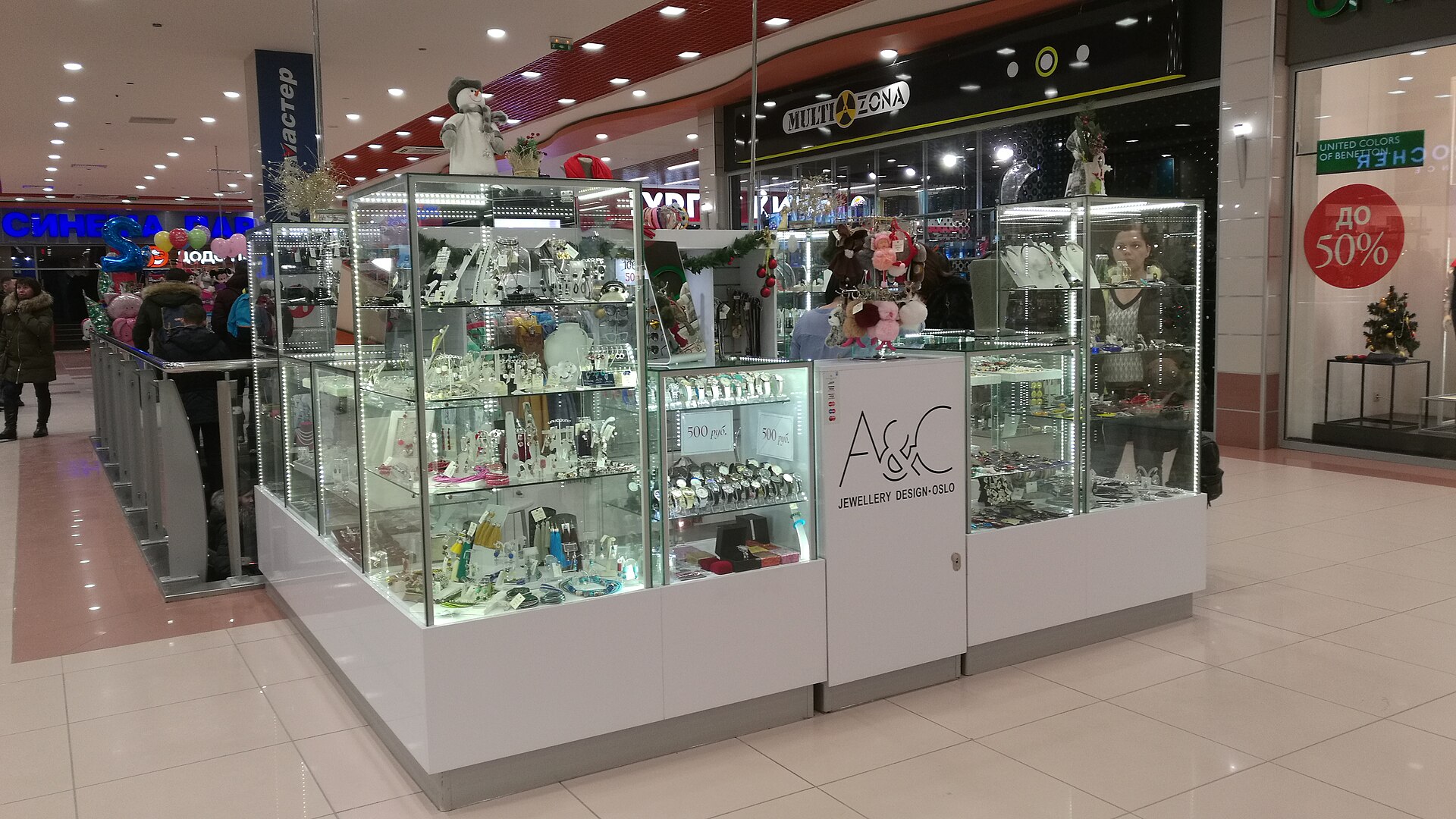
Goodwin isn’t the kind of place that makes it into glossy travel brochures or inspires dramatic photographs. It doesn’t dominate the skyline, nor does it boast a grand history or striking architecture. Instead, it quietly occupies a corner of Tyumen’s daily life, blending into the rhythm of the city without demanding attention. Opened in the early 2000s, when Tyumen was expanding rapidly, Goodwin arrived at a time when the city needed more than just shops—it needed a space where people could gather, linger, and take care of the small, practical things that make up everyday existence.
The building itself is unassuming, with large windows that let in plenty of natural light and a layout that feels intuitive rather than forced. There are no flashy facades or over-the-top decorations, just a clean, functional design that prioritizes comfort. Inside, the high ceilings and wide walkways create a sense of openness, even when the mall is busy. It’s the kind of place where you can wander without feeling rushed, whether you’re there for a quick errand or a longer visit. The absence of aggressive advertising or cluttered displays makes it feel more like a public square than a commercial space, a quality that sets it apart from many modern shopping centers.
What makes Goodwin different from other malls in Tyumen isn’t any single feature, but rather the way it fits into people’s lives. On weekdays, it’s filled with students grabbing a bite between classes, young parents pushing strollers, and office workers stopping by for lunch. On weekends, families take over—kids drag their parents toward the play area, while adults browse bookstores or settle into cafes. There’s no pressure to spend money; some visitors come just to walk around, others to meet friends, knowing they’ll always find an open table. The food court, with its mix of local and chain options, is a reliable spot for a casual meal, while the small shops offer everything from clothing to electronics to household goods.
Entertainment here is low-key but well thought out. The cinema screens both new releases and older films, catering to different tastes, and there’s a bowling alley and arcade for those who want something more active. In the summer, the rooftop occasionally hosts small concerts or workshops, though these events are sporadic rather than scheduled. For many in Tyumen, Goodwin has become a default destination—a place to go when there’s nothing else to do, or when you need something simple and predictable. It’s not a destination for special occasions, but for the ordinary moments that make up most of life.
Architecturally, Goodwin doesn’t stand out, but it doesn’t clash with its surroundings either. The exterior is neutral, blending into the city’s mid-range commercial district without drawing attention. Inside, the design is practical: escalators are placed logically, seating areas are scattered throughout, and the layout avoids the maze-like feel of some larger malls. Even during peak hours, the space never feels cramped, which is a rare quality in shopping centers. The lighting is bright but not harsh, and the overall atmosphere is one of quiet efficiency.
What Goodwin lacks in glamour, it makes up for in reliability. There are no luxury boutiques or exclusive brands, just a solid selection of stores that cover the basics. Prices are reasonable, and the mix of tenants ensures that most needs can be met under one roof. This isn’t the place for a high-end shopping spree, but for everything else—from last-minute gifts to school supplies to a quick coffee—it’s more than adequate. Over the years, it has become a kind of urban anchor, a place that doesn’t change much but is always there when needed.
In some ways, Goodwin feels like a throwback to an earlier era of retail, when shopping centers were as much about socializing as they were about buying things. It’s a place where different generations cross paths: students, retirees, young families, and professionals all share the same space, each with their own reasons for being there. Some come with a specific purpose, others just to pass the time. The mall’s food court, in particular, has a communal feel, with people lingering over meals or catching up with friends. It’s not quite a town square, but it serves a similar function—a neutral ground where the city’s routines play out.
For all its ordinariness, Goodwin has managed to carve out a niche in Tyumen’s urban landscape. It doesn’t compete with newer, flashier malls, nor does it try to be something it’s not. Instead, it does what it was designed to do: provide a comfortable, convenient space for shopping, dining, and casual socializing. In a city where development is constant and change is the norm, Goodwin offers a sense of continuity. It’s not the most exciting place in Tyumen, but it’s one of the most dependable—a place where you can always find what you need, without fuss or fanfare. That might not sound like much, but in a world where everything seems to be getting more complicated, it’s a quality worth appreciating.