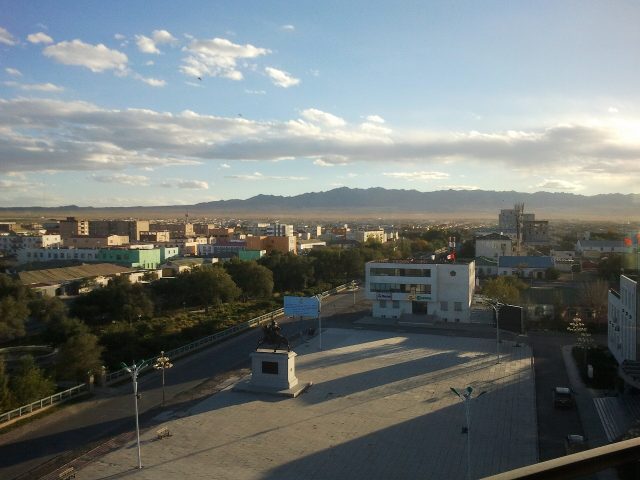
Tyumen
Russia · 18 places
Photo: Igor Nikolajeviĉ Pivovarov, CC BY-SA 3.0
Tymenz is the kind of city that doesn’t reveal itself all at once. It doesn’t clamor for attention with flashy signs or crowds of tourists, but quietly exists where Europe blurs into Asia, where Western Siberia begins to stretch into its vast, open spaces. There are no mountains or seas here, just the Tura River—wide, calm, and steady—flowing past an old center lined with merchant mansions and churches that whisper of the days when this was the gateway to Siberia. Often called the first Russian city beyond the Urals, Tymenz wears that title lightly, though it lingers in the stones of the embankment, in the narrow lanes where traces of its trading past still surface unexpectedly.
Life here moves at its own pace, unhurried but never dull. In summer, the embankment becomes the city’s living room—families stroll with children, cyclists weave along the paths, and picnics unfold by the water. When winter arrives, the river freezes over, dotted with fishermen on the ice, while snow softens the outlines of wooden houses, turning them into something out of a fairy tale. The city center still holds entire blocks of historic wooden architecture, a rarity in larger Russian cities where old buildings often give way to concrete. Walking these streets feels like stepping into the early 20th century, when Tymenz was not just a trading hub but a cultural one. Small workshops, cozy cafés serving homemade food, and little shops selling birch bark boxes or mammoth ivory carvings keep that spirit alive.
Tymenz doesn’t try to imitate other cities. It has no ambition to become a tourist hotspot, nor does it hide from visitors. There’s no big-city rush here, just a different sense of time. Mornings start slowly—markets fill with fresh fish and berries, parks buzz with the clink of coffee cups and the scent of pastries, and trams rattle along the streets, one of the few places in Russia where this kind of public transport still feels untouched by modernization. By evening, life shifts toward theaters and museums. The Tymenz Drama Theater is one of Siberia’s oldest, while the Museum of Northern Exploration tells the story of how this city became the starting point for expeditions deep into the continent. Locals aren’t in a hurry, but they’re not idle either—they understand that their city isn’t just a dot on the map, but a place where history and the present coexist.
What makes Tymenz special is that it doesn’t rely on grandeur or spectacle. There are no skyscrapers or grand boulevards, just an atmosphere you won’t find elsewhere. This is where you can feel the pulse of Siberia without venturing far from civilization. The city isn’t polished or perfect—it has its share of old industrial zones, modern developments, and quiet residential neighborhoods where life follows its own rhythm. But that very unevenness is what makes Tymenz feel real. It’s not a place for those seeking instant thrills, but for those willing to pause, look around, and realize that beauty often lies not in grand monuments, but in the quiet, everyday details.
See & Do
16 places



Places on the map
Marker colour follows the categoryClimate and weather
Detailed weather: Tyumen- Average temperature
- 3 °C
- Precipitation per year
- 423 mm
Average air temperature
°C
-15
-12
-4
5
14
18
20
19
11
4
-7
-13
Jan
Feb
Mar
Apr
May
Jun
Jul
Aug
Sep
Oct
Nov
Dec