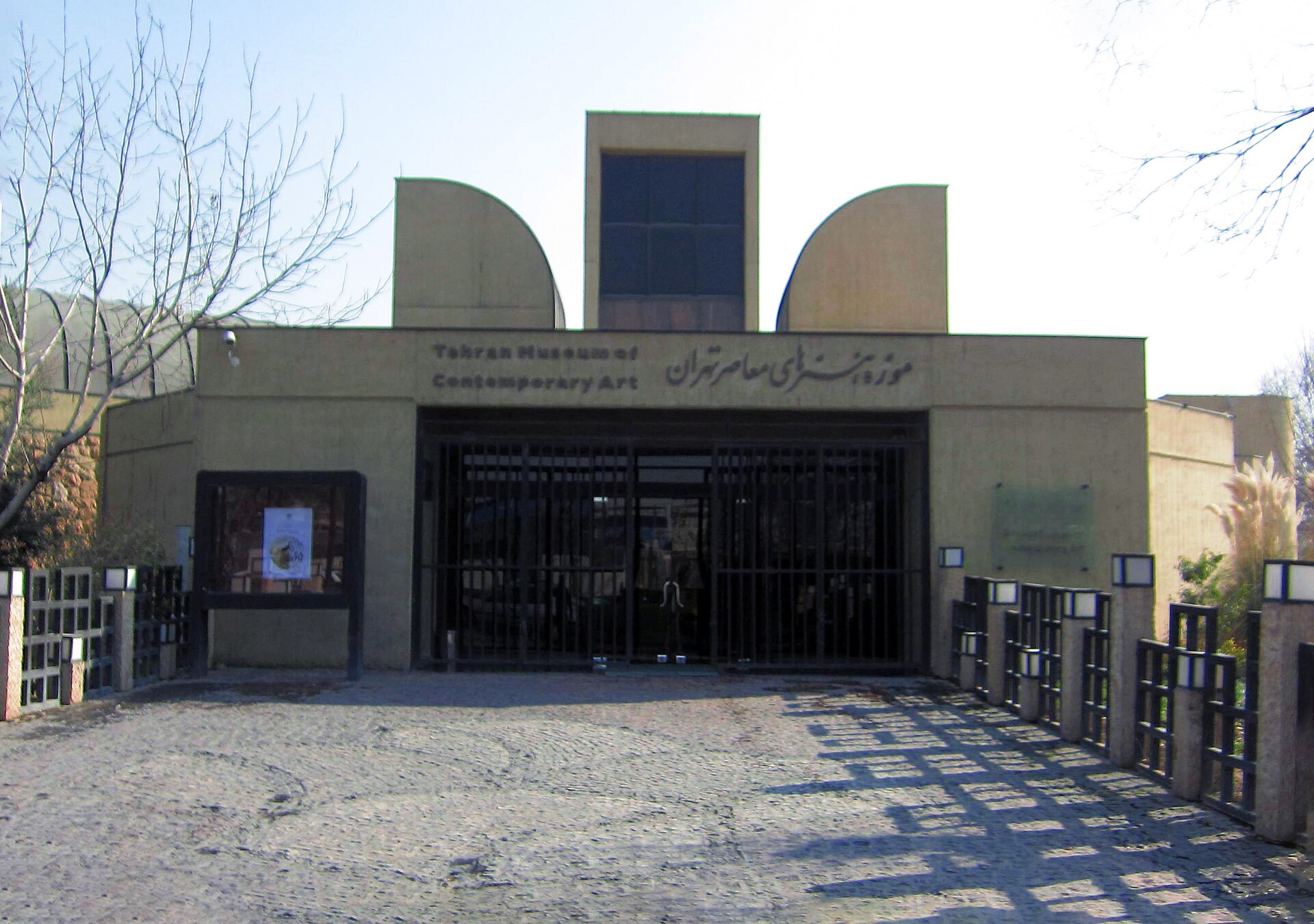
Tehran’s Museum of Contemporary Art stands where a nation’s past meets the restless energy of 20th-century art. Empress Farah Pahlavi founded it in 1977, imagining a place where Iranian and Western creativity could share the same walls. Back then, Tehran felt like a city with no limits—its streets alive with ideas, its people looking beyond borders. The museum captured that spirit, a fleeting but bright moment before politics rewrote everything.
The building doesn’t shout. Kamran Diba, the architect, wove Persian tradition into modern galleries. Light spills through courtyards, shadows stretch across clean lines. It’s like stepping into an old garden, but one built for paintings and sculptures. Inside, rooms connect without doors, encouraging you to slow down. The design doesn’t just hold art; it makes you notice it.
The collection surprises. In the 1970s, Iran bought Western art aggressively. Today, you’ll find Picasso, Van Gogh, Monet, Warhol, Pollock. The Impressionist and Post-Impressionist works feel like a secret—unexpected in a region where Western art was often locked away. But the collection’s story mirrors Iran’s: after 1979, many pieces vanished into storage. Only recently have some returned, hesitantly, to public view.
Iranian modern art fills other galleries. Early works borrow from Europe. Later ones wrestle with revolution, war, change. The 1960s and 1970s were Tehran’s artistic peak, and the museum keeps that alive. Some artists mix old Persian patterns with new techniques. Others push boundaries in temporary shows. The museum isn’t stuck in the past—it gives space to what’s next.
It’s alive. Films screen in the evenings. Workshops spill into courtyards. Musicians perform where sculptures stand. Students debate in corners. The museum fights isolation, proving art doesn’t need permission to exist. For Iranians, it’s a lifeline to the wider world. For visitors, it’s proof that creativity survives, even here.
Laleh Park wraps around the museum like a green scarf. The building’s concrete curves echo the Alborz Mountains. Inside, high ceilings let your thoughts rise. No clutter, no noise—just art and air. You’ll lose track of time, jumping from one movement to another, one decade to the next.
This isn’t the Iran you see in guidebooks. No mosques, no bazaars. Instead, the country’s contradictions hang on walls: ambition, fracture, resilience. The collection isn’t just about artists. It’s about Iran—what it wanted, what it lost, what it still tries to say.
After the last gallery, step outside. Laleh Park’s trees wait. Sit. Breathe. The art isn’t just something you saw. It’s something you carried with you.