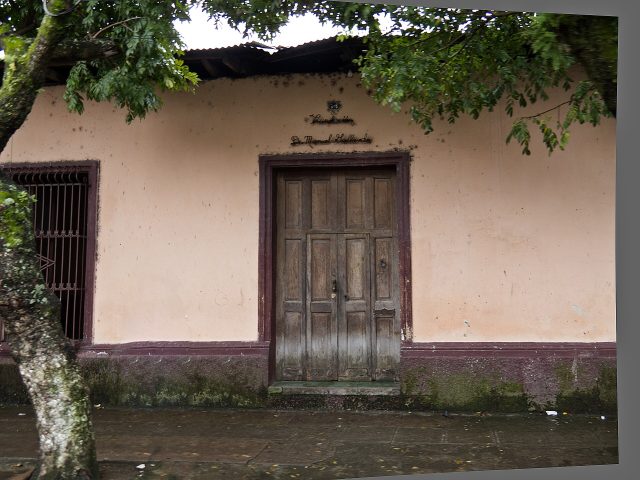
Santa Tecla’s theater is one of those places that feels like a quiet guardian of the city’s past, though it doesn’t always get the attention it deserves. Built in the early 20th century, it stands as a remnant of a time when Santa Tecla was carving out its own identity, distinct from the capital yet deeply connected to the cultural currents of El Salvador. The building itself is unassuming at first glance—its neoclassical facade, with its arched windows and simple columns, doesn’t demand admiration the way grander theaters might. But that modesty is part of its charm. It’s the kind of place that reveals itself slowly, the longer you spend in its presence.
The theater was originally conceived as a space for performance and community, a place where locals could gather not just for entertainment but for the shared experience of art. Over the decades, it has hosted everything from classical concerts to political rallies, its stage bearing witness to the shifting tides of Salvadoran life. The interior, though often overlooked in favor of more modern venues, retains a certain warmth. The seating is arranged in a way that feels intimate, almost as if the audience is part of the performance rather than just spectators. The acoustics, too, have a way of carrying sound that feels deliberate, as though the space was designed to make even the softest voice resonate.
What makes the Teatro Santa Tecla particularly interesting is how it reflects the broader history of the city. Santa Tecla was founded in the 19th century as a planned alternative to San Salvador, a place where the elite could escape the chaos of the capital while still maintaining influence. The theater, then, was never just a building—it was a statement. It represented the aspirations of a community that wanted to be seen as cultured, refined, and forward-thinking. Even today, walking past it on a quiet afternoon, you can almost sense that ambition lingering in the air, though the city around it has changed in ways its founders might not have imagined.
The theater’s role in Santa Tecla’s cultural life has ebbed and flowed over the years. There were periods when it thrived, particularly in the mid-20th century, when it became a hub for local artists and performers. Then came times when it struggled, like so many historic buildings, to keep up with the demands of modernity. Yet it has never been abandoned entirely. Even when other venues took precedence, the theater remained a symbol of something enduring—a place where the past and present could coexist, if only for a few hours at a time.
Visiting the theater today is less about spectacle and more about atmosphere. There’s no grand marquee or flashy signage to announce its presence, just a simple nameplate and the occasional poster advertising an upcoming event. The neighborhood around it is a mix of old and new, with colonial-era buildings standing alongside more recent constructions. On performance nights, the street outside comes alive with people chatting, laughing, and making their way inside. The energy is understated but genuine, the kind that comes from a community that still values the space for what it represents.
Inside, the theater feels like a time capsule in the best sense. The decor is simple, with none of the ornate flourishes you might find in larger venues. The stage is modest, the lighting functional rather than dramatic. Yet there’s a sense of history here, in the way the floorboards creak underfoot or how the light filters through the high windows. It’s the kind of place where you can imagine generations of performers stepping onto the stage, each one adding their own layer to the theater’s story.
The performances themselves are often a mix of local and visiting acts, ranging from traditional Salvadoran music to contemporary theater. There’s no strict programming, which gives the space a certain flexibility. One night it might host a poetry reading, the next a small orchestra or a folk dance troupe. This eclecticism is part of what keeps the theater relevant. It’s not trying to be anything other than what it is—a place for people to come together, whether they’re on stage or in the audience.
For those who take the time to visit, the Teatro Santa Tecla offers more than just a show. It’s a glimpse into the soul of the city, a reminder of how places like this shape the identity of a community. It may not be the most famous theater in El Salvador, nor the most architecturally impressive, but that’s precisely why it matters. In a world where so much is designed to be loud and attention-grabbing, there’s something quietly powerful about a space that doesn’t need to shout to be heard. It’s enough that it’s there, waiting for the next performance, the next story, the next moment when the past and present intersect.