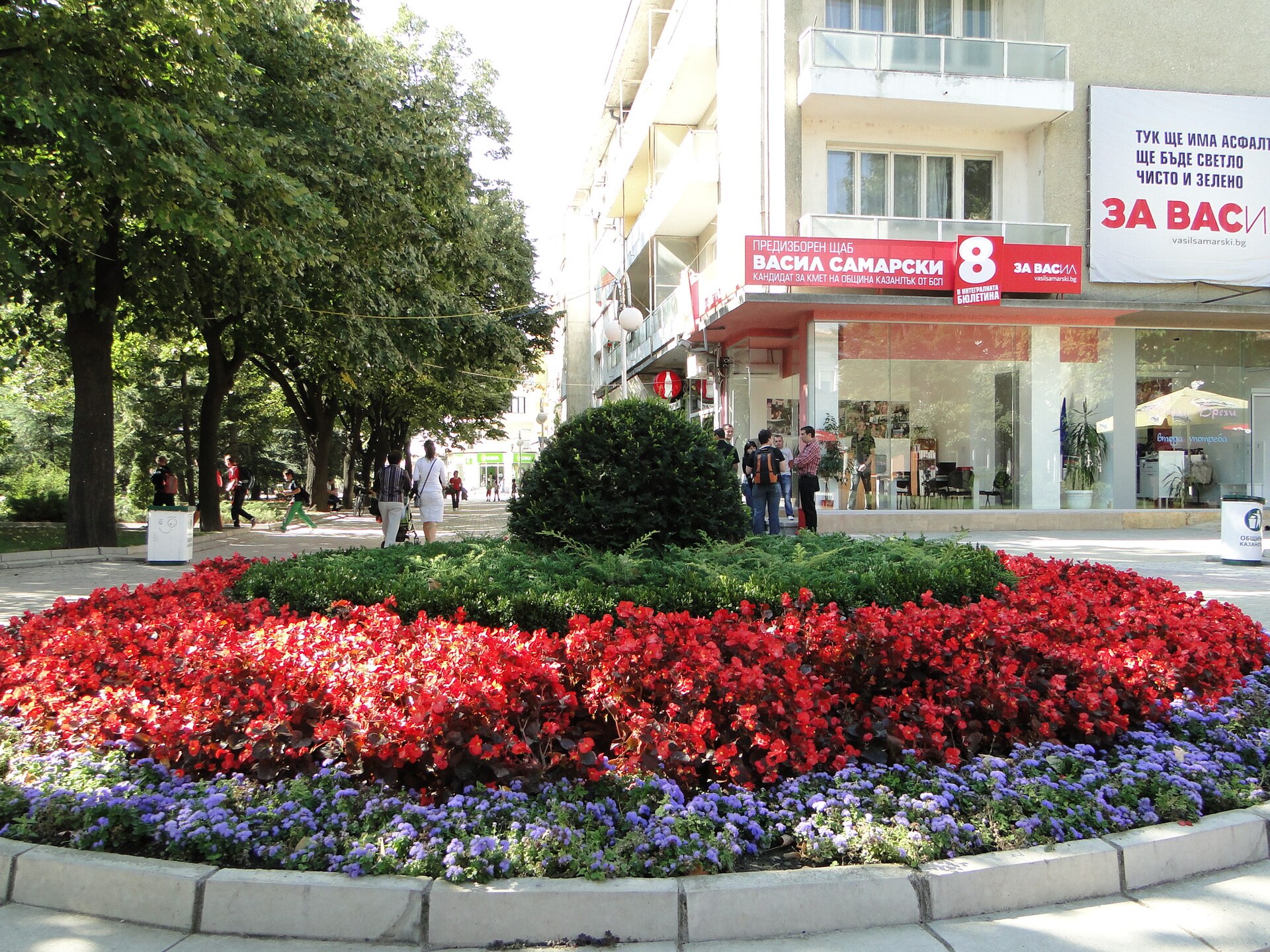
Kazanlak doesn’t shout about itself. No tourist crowds, no souvenir stalls, no neon. The Iskra Theatre stands on a street where old trees cast shadows over cobblestones, hidden behind low houses with tiled roofs. The facade has delicate stucco, some of it worn but still holding its shape. Tall windows let in soft light, and a modest portico leads to the entrance.
It opened in 1963, when Kazanlak was the cultural center of the Rose Valley. Back then, art wasn’t separate from life—it was how people spent their evenings. The stage hosted Chekhov, Gorky, and Bulgarian playwrights. The auditorium filled not because it was trendy, but because people wanted to be there.
The foyer feels open, with high ceilings. Sometimes it hosts concerts or exhibitions. The main hall seats a few hundred, but the space doesn’t overwhelm. The stage is simple. Actors who’ve performed here for years know the room—the way light spills across it, how a whisper reaches the last row. When the performance starts, the audience isn’t just watching. They’re there, in the moment.
Kazanlak has Thracian tombs, a rose museum, ancient churches. But the town’s pulse beats strongest in the theatre. During the Rose Festival, Iskra becomes the valley’s cultural heart. Troupes arrive from Sofia, Plovdiv, even abroad. The hall fills with locals and visitors who came for the rose oil but stayed for the atmosphere.
Winter doesn’t stop the work. Rehearsals continue, new productions premiere, and touring companies pass through. Weekends bring full seats. Tickets stay affordable. Sometimes, there are children’s performances—the foyer fills with laughter, applause for every small moment.
For many here, their first theatre experience happens at Iskra. Not in the capital, but in Kazanlak, where the stage feels close enough to touch.
Iskra is for locals, but it’s also for anyone who wants to see Bulgaria beyond the postcards. If you’re in town on a performance night, sit in the back row. Spend the evening the way people here do—listening, clapping at the final bow. Later, you might end up in the café across the street, talking about what you saw.
The theatre has been renovated, but it hasn’t changed what matters. There’s no chase for grandeur. What counts is what happens on stage—the same seats, the same curtain, the familiar faces in the audience. That’s not stagnation. It’s knowing what theatre is for.
Culture often feels like a product now. But Iskra still exists for art itself. If you’re in Kazanlak, don’t hurry past. Stop by the theatre, even if nothing’s on the schedule. You might catch a rehearsal, or just sit in the empty hall, listening to backstage sounds and the scent of coffee from the foyer. This is Kazanlak—the one that lives, not the one on postcards.