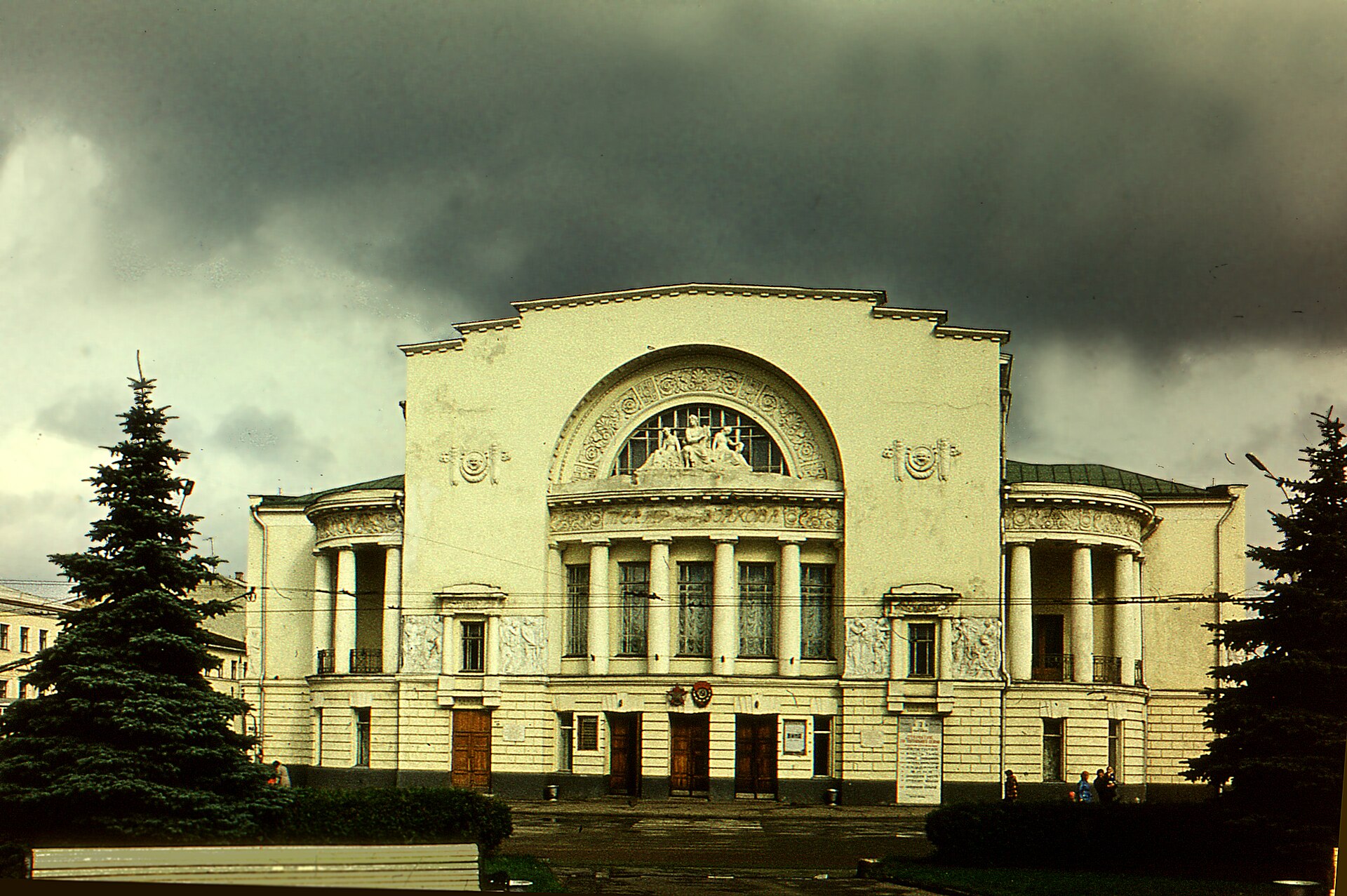
Yaroslavl’s Volkov Theatre isn’t just a building where plays are performed—it’s a place where Russian theatre itself was born. Founded in 1750 by Fyodor Volkov, an actor and visionary, it holds the distinction of being the country’s first professional theatre, a title that carries weight beyond mere historical record. Volkov didn’t just assemble a troupe; he created a cultural phenomenon that reshaped how Russians understood performance, turning theatre from a novelty into a vital part of public life. Today, his name echoes through the city—not only in the theatre itself, but in the square, the street, and even an annual award celebrating excellence in the arts. The theatre’s legacy isn’t confined to archives; it lives in every creak of the stage floor, in the way the audience leans forward during a particularly moving scene, in the quiet reverence that lingers in the air long after the curtain falls.
The current building, constructed in the mid-19th century, is a fine example of Russian Empire architecture, designed by Nikolai Spirin. Its façade is a study in classical restraint, with columns and symmetrical proportions that give it an air of dignified permanence. Yet there’s something unexpectedly intimate about it, too—a sense that this isn’t just a grand public institution, but a place where people have gathered for generations to share moments of joy, sorrow, and revelation. Inside, the auditorium retains much of its original character, with its tiered balconies and private boxes, once the domain of Yaroslavl’s merchants and nobility. The heavy velvet curtains, crystal chandeliers, and polished wood paneling haven’t been modernized out of existence; instead, they’ve been carefully preserved, allowing the space to feel both timeless and alive. The theatre has undergone renovations over the years, but the goal has always been to maintain its soul, not erase it.
The repertoire at the Volkov Theatre has always been broad, reflecting its role as both a guardian of tradition and a laboratory for innovation. Classic Russian plays—Ostrovsky, Chekhov, Gogol—share the stage with contemporary works and experimental productions. But what truly defines the theatre isn’t the genres it embraces, but its approach to performance. From the very beginning, Volkov’s company didn’t just entertain; it challenged. In the 18th century, audiences here weren’t passive spectators—they were witnesses to something new, a form of art that demanded engagement. That spirit hasn’t faded. Today, the theatre’s directors and actors take risks, staging productions that provoke thought and emotion, often blurring the line between performance and reality. The result is a theatre that feels essential, not just to Yaroslavl, but to the broader cultural landscape of Russia.
The Volkov Theatre played a particularly poignant role during World War II. While many theatres were evacuated as the front drew closer, this one remained open, becoming a symbol of resilience for the city. Actors continued to perform, not just for entertainment, but to remind people that life—and art—could endure even in the darkest times. The theatre’s archives still hold photographs and documents from those years, a testament to its dual role as both a cultural institution and a pillar of community morale. After the war, the theatre quickly resumed its full schedule, and today, those records serve as a reminder of how art can be both a mirror and a lifeline in times of crisis.
Beyond the main stage, the Volkov Theatre is a complex of spaces that tell the story of Russian theatre in microcosm. The on-site museum, housed in one of the building’s wings, offers a tangible connection to the past through costumes, set designs, and personal artifacts. Visitors can see makeup tables from the early 20th century, original sketches for legendary productions, and even letters from audience members written decades ago. The theatre’s library holds rare editions of plays, memoirs of actors, and critical essays that trace the evolution of theatrical taste over the centuries. Meanwhile, the theatre’s acting school, which trains the next generation of performers, ensures that the tradition continues. Many of its graduates go on to join the theatre’s company, creating a living link between past and present.
A visit to the Volkov Theatre is about more than just seeing a play. The building itself is a character in the story, its corridors and backstage areas steeped in history. In the summer, guided tours reveal the theatre’s hidden details—the way gas lamps once illuminated the stage, the legends of ghosts said to wander the wings, the shifting tastes of audiences over the centuries. In winter, the theatre takes on a different kind of warmth. The foyer smells of coffee and old books, and the auditorium, despite the cold outside, feels alive with the energy of the audience and the passion of the performers. There’s a sense that this is a place where time moves differently, where the past isn’t just remembered but actively felt.
What makes the Volkov Theatre special isn’t just its age or its architecture, but the way it engages with its audience. Here, theatre isn’t a passive experience—it’s a conversation. A conversation with history, with the city of Yaroslavl, with the other people in the audience, and with oneself. The plays staged here aren’t just stories; they’re invitations to reflect, to question, to feel. That’s why the theatre remains a beloved part of life in Yaroslavl, as much a part of the city’s identity as the Volga River or the old merchant streets. It’s a reminder that theatre, at its best, isn’t just about entertainment. It’s about connection—between people, between eras, between the stage and the world beyond it.