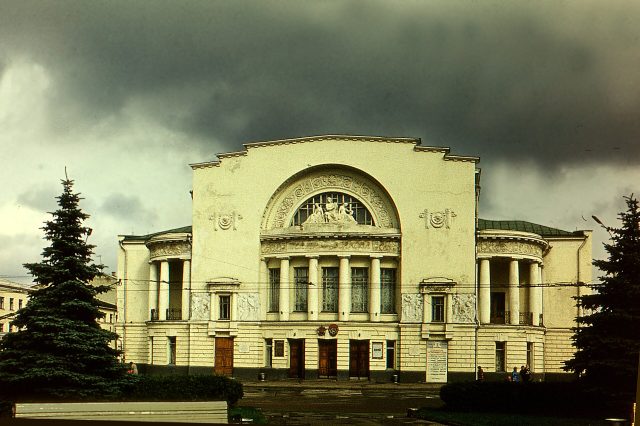
The Yaroslavl Art Museum is one of those rare places where time seems to pause, allowing you to step into a quieter, more deliberate rhythm. Housed in a historic building at the heart of the city, it carries the weight of its own past within its walls. The structure itself is a relic of old Russia, once belonging to wealthy merchants, and even now, the high ceilings, intricate moldings, and heavy wooden doors evoke a sense of permanence. This isn’t just a gallery—it’s a space where history breathes, where every room tells a story long before you even glance at the art.
The museum’s origins trace back to the early 20th century, when a growing collection of artworks, gathered by local patrons, outgrew its private confines. The first pieces—icons, portraits, and landscapes—came from the estates of Yaroslavl’s nobility, later expanding to include works by some of Russia’s most celebrated 18th and 19th-century masters. Here, you’ll find paintings by Bryullov, Aivazovsky, Shishkin, and Repin, alongside lesser-known but equally skilled artists whose names once resonated in artistic circles. The collection isn’t just a showcase of talent; it’s a testament to the region’s deep cultural roots.
One of the museum’s most compelling sections is its collection of Old Russian iconography. Yaroslavl has long been a center of icon painting, and the works here are nothing short of extraordinary. Some date back to the 16th century, their golden halos and delicate brushstrokes carrying a quiet intensity. These icons aren’t merely religious artifacts—they’re windows into a time when art and faith were inseparable, when every stroke held spiritual significance. Standing before them, you sense the craftsmanship of artists who saw their work as both devotion and legacy.
The building itself is a work of art. Designed in the neoclassical style, it features the symmetry and grandeur typical of its era—columns framing the entrance, spacious halls with painted ceilings, and oak-paneled walls that have witnessed over a century of visitors. Walking through its rooms, you can’t help but wonder about the lives that have passed through here: the conversations held in these halls, the quiet moments of reflection, the stories left untold.
Beyond paintings, the museum holds a diverse array of art forms. Sculptures, decorative arts, and even antique illustrated books fill its galleries, each piece offering a glimpse into the tastes and daily lives of past generations. The porcelain collection is particularly striking—elegant tea sets, delicate figurines, and ornate vases that once graced the tables of aristocratic families. These objects aren’t just beautiful; they’re fragments of history, small but telling details of how people once lived.
The museum isn’t stuck in the past. It evolves, hosting temporary exhibitions of contemporary art, lectures, workshops, and concerts. Yet even in these modern offerings, there’s a sense of continuity. The institution doesn’t just display art—it weaves it into the fabric of the city, making it accessible and alive. That’s why the halls are often filled not just with tourists, but with locals who return again and again, drawn by the quiet magic of the place.
What makes the Yaroslavl Art Museum special isn’t just its collection, but the way it connects people to the city’s heritage. It’s a place where the past feels tangible, where beauty isn’t confined to frames but spills into the very air. You might come for an hour and stay for the day, losing yourself in the layers of Russian culture. And when you finally step back outside, the city beyond the museum’s walls feels a little more familiar, a little more like home.