Tak-e Bostan is one of those rare places where history feels carved into the land itself. Tucked on the outskirts of Kermanshah, it isn’t a palace or a temple in the usual sense—no grand halls or gilded domes, just rock and time. What makes it remarkable are the reliefs etched directly into the cliffside, silent witnesses to an empire that shaped Persia over fifteen centuries ago. The Sassanians, who ruled from the third to the seventh century, had a habit of leaving behind monumental proofs of their power, and this is one of the last great examples of that tradition.
The site centers around a massive rock-cut arch, its surface adorned with two large reliefs depicting Sassanian kings. The most striking shows Khosrow II Parviz, a ruler known for his military campaigns and extravagant tastes, seated in regal splendor. Beside him, another relief portrays Ardashir II receiving the ring of kingship from the Zoroastrian deity Ahura Mazda. These aren’t just portraits; they’re political statements, a way for the dynasty to assert its divine right to rule. The craftsmanship is precise, with figures that still carry a sense of authority despite the centuries of weathering.
What sets Tak-e Bostan apart from other Sassanian sites is how seamlessly the art blends with the natural surroundings. The cliff isn’t just a backdrop—it’s part of the composition. Long ago, water would have cascaded down the rock face, pooling in a basin below and creating a mirror-like reflection of the reliefs. The effect must have been striking, turning the carvings into something almost alive. Today, the basin is dry, but the interplay between stone and light remains, especially in the early morning or late afternoon when shadows deepen the contours of the figures.
Near the main arch, a smaller one depicts hunting scenes—Khosrow II on horseback, pursuing wild boars and stags. These aren’t mere decorations; they’re a glimpse into the values of the Sassanian elite. Hunting was more than a pastime—it was a display of strength, skill, and favor from the gods. The animals are rendered with surprising vitality, their muscles taut as if frozen mid-leap. Even now, there’s a sense of movement in the stone, as if the hunt might resume at any moment.
For centuries after the fall of the Sassanian Empire, Tak-e Bostan faded into obscurity. When Persia became Muslim, the site lost its religious significance, though the reliefs were never destroyed. Locals knew of them, of course, but they were just part of the landscape, not a destination. It wasn’t until the 19th century, when European travelers began documenting the ruins of the East, that Tak-e Bostan regained attention. Scholars arrived, sketches were made, and slowly, the site reemerged from the shadows of history.
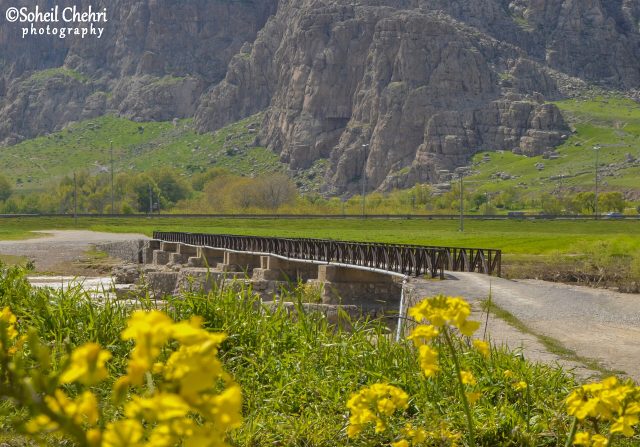
Today, it remains a quiet place, far from the tourist crowds of Isfahan or Shiraz. There are no barriers keeping visitors at a distance, no signs demanding silence. You can walk right up to the rock, trace the outlines of the carvings with your fingers, and sit on the stones below, listening to the wind rustle through the nearby gardens. Families from Kermanshah often come here to picnic, their voices blending with the murmur of the stream that still trickles down the cliff. In the distance, the Zagros Mountains rise like a natural fortress, the same peaks that once shielded this land from invaders.
There’s something unpretentious about Tak-e Bostan. It doesn’t try to impress or explain itself. No plaques detail its history, no guides rush to interpret its meaning. It simply exists, as it has for over a thousand years, indifferent to the passage of time. The reliefs don’t demand admiration—they just are, their stories etched into stone for those who care to look. Maybe that’s why it feels so genuine. It’s not a relic preserved behind glass or a reconstructed ruin; it’s a piece of the past that refuses to be tamed, still standing where it was meant to stand, still telling its story in the language of rock and silence.