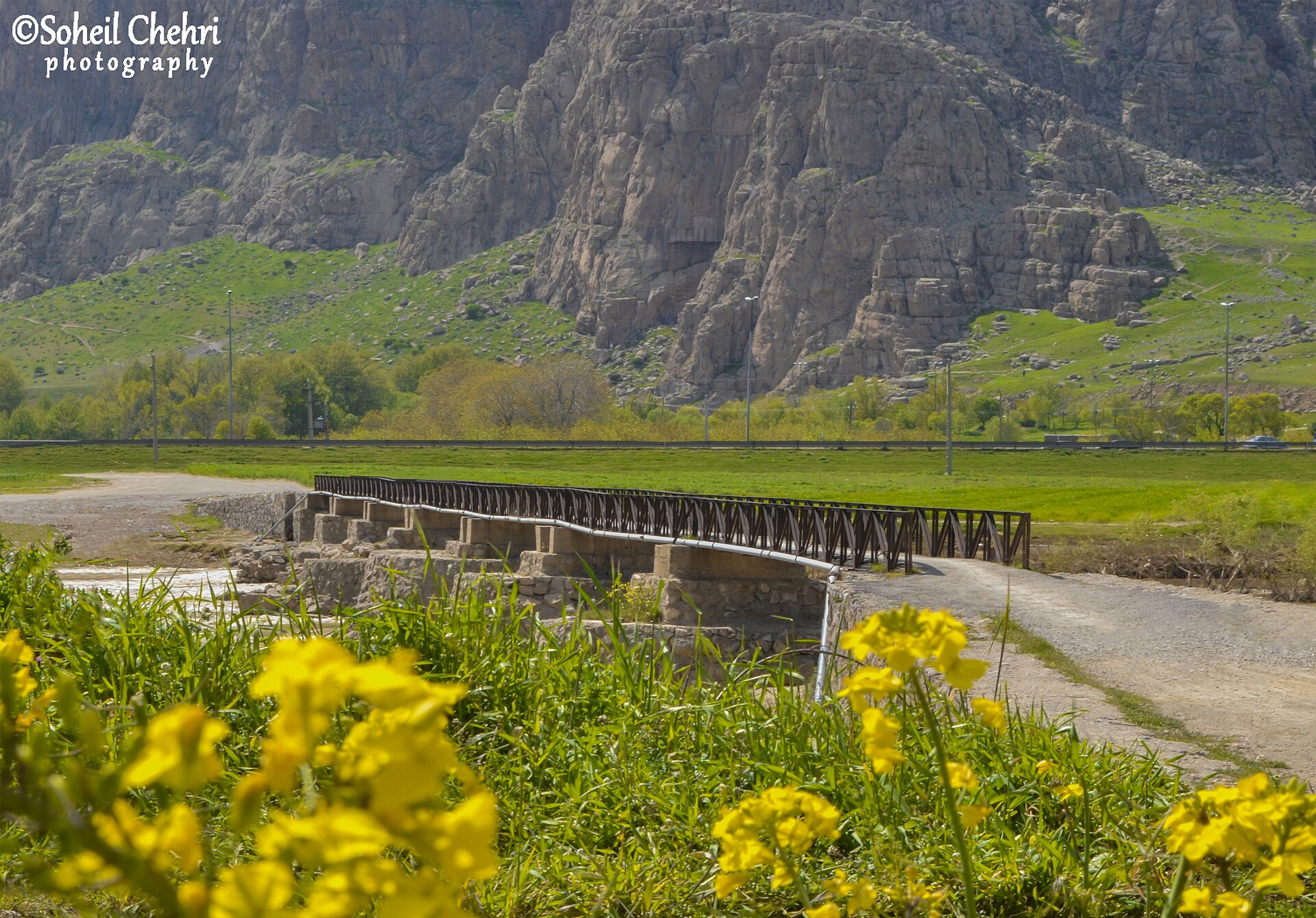
Pol-e Khosrow is one of those places in Kermanshah that feels suspended in time, a quiet witness to the grandeur of ancient trade routes. Built during the Sassanian era, it wasn’t just a bridge spanning the Qarah Su River—it was a vital link between Mesopotamia and the heart of Iran. Today, it stands much as it did centuries ago: sturdy stone piers, arches that have weathered countless floods, and a road once trodden by caravans carrying goods from distant lands. The surroundings are peaceful, broken only by the murmur of water and the rustle of wind through the grass along the banks.
The bridge’s architecture is striking in its simplicity and purpose. Unlike many monuments of its time, it lacks intricate carvings or mosaics, yet this very austerity gives it strength. The stones, laid without mortar, have held firm for generations, while the broad arches allowed water to flow freely even during the heaviest floods. Locals say the bridge has been rebuilt after damage more than once, but always with care to preserve its original form. That might be why it still looks as if it were constructed yesterday.
Kermanshah has long been a crossroads of cultures, and Pol-e Khosrow is a living testament to that history. In the Middle Ages, merchants, pilgrims, and travelers passing between Baghdad and Isfahan would stop here. The bridge was more than just an engineering feat—it was a place of trade, conversation, and sometimes even conflict. Under its arches, deals were struck, stories from faraway lands were shared, and at night, by torchlight, the shadows of camels could be seen moving slowly across the stone.
Though the bridge no longer serves its original purpose, its significance to the city hasn’t faded. It has become a symbol of endurance, a link between past and present. The surrounding meadows and the distant Zagros Mountains add to the sense of tranquility. It’s a place where you can sit by the river, watching the current flow, or walk across the bridge, imagining the caravans that once carried silk, spices, and precious stones along this very path.
The bridge hasn’t always been called Pol-e Khosrow. Over the centuries, it has had other names, but the current one stuck thanks to a legend about the Sassanian king Khosrow II, who supposedly ordered its construction. Whether the story is true or not, the name has endured, and the bridge is now closely tied to his legacy. Regardless, it has outlasted empires, wars, and natural disasters, standing as a silent witness to change.
For visitors, Pol-e Khosrow isn’t just a landmark—it’s a chance to step into history, which feels tangible here at every turn. Unlike the bustling mosques or palaces, the bridge holds a quiet, unassuming presence. There are no crowds of tourists, making a visit all the more peaceful. You can come in the early morning, when mist hovers over the river, or at sunset, when the stones glow golden in the fading light.
Kermanshah itself is a city of layers, where Persian, Kurdish, and Arab influences intertwine, and its history stretches back millennia. Pol-e Khosrow is just one of its treasures, but perhaps the most atmospheric. It doesn’t demand attention with grandeur or opulence; its charm lies in its modesty. Standing on the bridge, it’s easy to picture the life that once pulsed here—now replaced by nothing but stone, water, and the wind, whispering its endless stories.