San Miguel de Allende is a city that wears its history with effortless charm, but some of its most profound stories unfold just beyond the well-trodden paths. A short drive from the cobblestone streets and pastel facades lies the Sanctuary of Jesús Nazareno de Atotonilco, a place that feels suspended in time. Unlike the grand colonial churches that dominate Mexico’s urban landscapes, this sanctuary reveals itself quietly. Its unassuming gray stone exterior gives little hint of the world within, where faith, art, and history converge in ways that linger long after you’ve left.
The sanctuary’s origins trace back to the 18th century, when Father Luis Felipe Neri de Alfaro sought to create a retreat for prayer and reflection. He chose this site deliberately, drawn by its spiritual resonance. Local lore tells of a 16th-century apparition of Christ to a peasant here, an event that marked Atotonilco as sacred ground. Construction stretched over decades, evolving into a complex that blends religious devotion with the raw creativity of Mexican folk art. The result is a space where the sacred and the everyday coexist, where every corner tells a story.
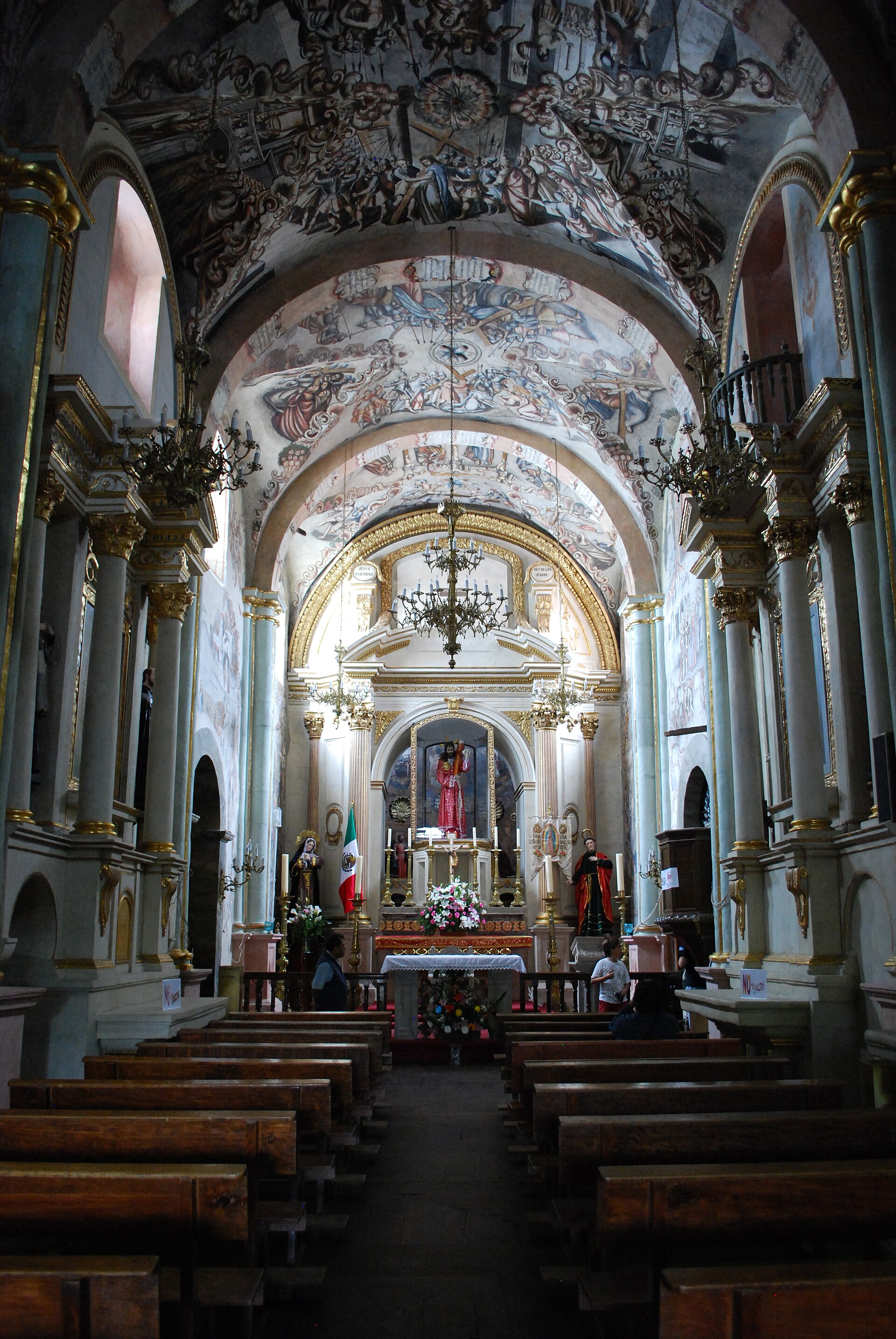
Step inside, and the sanctuary unfolds like a living manuscript. The main nave is adorned with vibrant frescoes that reinterpret biblical scenes through a distinctly Mexican lens. There’s nothing restrained or academic about these paintings—they pulse with emotion, their colors so vivid they seem to breathe. The Passion of Christ is depicted with striking realism, its raw intensity tempered by a simplicity that makes the scenes deeply personal. The artists, local craftsmen rather than trained masters, prioritized feeling over precision, crafting images meant to move rather than impress. The result is a visual narrative that feels immediate, as if the stories are unfolding in real time.
Beyond the frescoes, the sanctuary is a testament to the faith of ordinary people. Side chapels house hundreds of *retablos*—small votive paintings left by pilgrims over centuries. Each one is a snapshot of a life: a near-fatal illness, a narrow escape from danger, a child’s recovery, a family’s gratitude. Painted by hand, often in humble materials, these retablos are intimate records of hope and hardship. They transform the sanctuary into more than a place of worship; it becomes a repository of human experience, where the walls whisper the prayers and sorrows of generations.
The sanctuary’s role in Mexico’s history is equally profound. In 1810, during the early days of the country’s fight for independence, Father Miguel Hidalgo took up the banner of the Virgin of Guadalupe here, a moment that became a rallying cry for revolution. That banner, now a symbol of Mexican identity, is echoed in the sanctuary’s own relics. The site is more than a religious landmark; it’s a touchstone of national memory, where the struggle for freedom and the power of faith intertwine.
Architecturally, the sanctuary is a study in contrasts. Its austere exterior belies the opulence within, where baroque flourishes meet rustic simplicity. Gilded altars gleam against rough stone walls, while intricately carved wooden beams stretch across ceilings adorned with geometric patterns. The effect is disorienting in the best way, as if the building itself is caught between two worlds—the grandeur of colonial ambition and the unvarnished devotion of the people who built it. Time feels suspended here, not in the way of a museum, but as if the past is still alive in the flicker of candlelight and the murmur of prayers.
Atotonilco itself is a village that moves to its own rhythm. The streets around the sanctuary hum with the quiet routines of daily life: the scent of fresh bread from a nearby bakery, the chatter of vendors selling handmade tortillas, the occasional glance from locals curious about the rare visitor. There’s no tourist hustle here, no pressure to perform or consume. Instead, the village offers a rare stillness, a chance to step outside the rush of modern travel. You might spend an afternoon sitting on a bench outside the sanctuary, watching the light shift over the hills, or wander into a small shop where artisans sell sweets made from local recipes passed down through generations.
What makes the Sanctuary of Jesús Nazareno de Atotonilco so compelling is its refusal to demand attention. It doesn’t rely on grandeur or spectacle; its power lies in its authenticity. The worn steps leading to the altar, the cracks in the frescoes, the soft voices of worshippers—these details carry the weight of centuries. The sanctuary doesn’t just preserve history; it invites you to feel it, to sit with the quiet strength of a place shaped by countless hands and hearts. For those who seek more than just a sight to check off a list, it offers something far rarer: a connection to the living past.