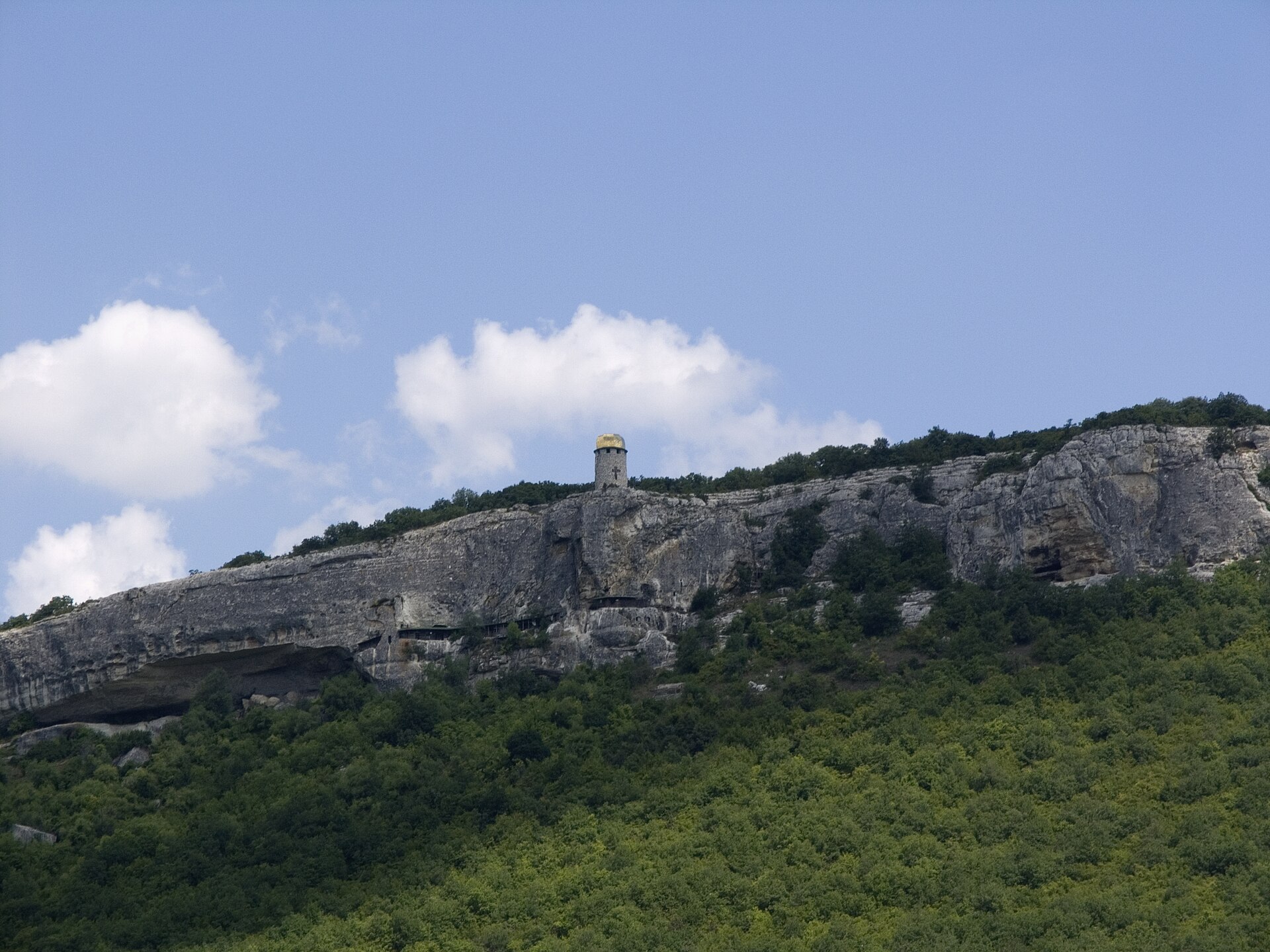
Perched in the rocky hills of Crimea near Ternivka, Shuldan is a cave monastery that has endured through centuries. The absence of crowds, tour buses, or souvenir stalls leaves only the quiet presence of stone walls carved by monks long ago. The surrounding forests and cliffs stand still, as if preserving a world unchanged since the Middle Ages.
The origins of Shuldan date back to the Byzantine era, when this region was part of an empire stretching across continents. Founded between the 8th and 9th centuries, it provided refuge for Christians fleeing persecution. Monks lived here in strict asceticism, carving cells and chapels directly into the rock. Later, under the Principality of Theodoro, the monastery became a spiritual center, though its significance faded after the Ottoman conquest. Abandoned for centuries, it was reclaimed by nature until restoration efforts began in the 19th century.
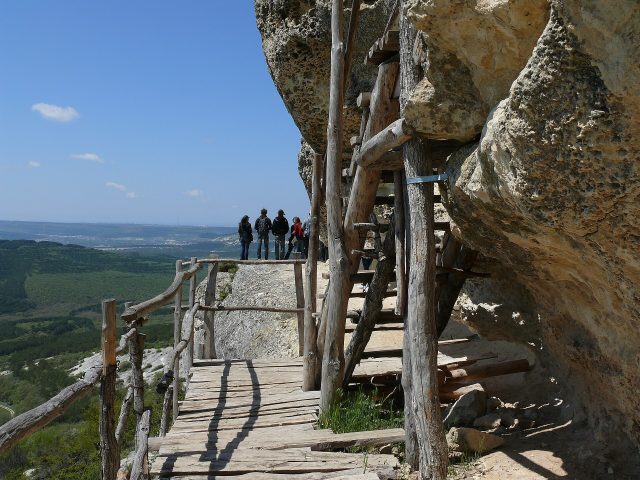
The main church, hollowed from the cliffside, still holds traces of faded frescoes. Their colors, softened by time, remain visible. Inside, an altar stands beside niches where icons once hung. Nearby, the monks’ cells—small, low-ceilinged rooms—are connected by narrow passages. Some open onto sheer drops, offering views of the valley below.
Shuldan was never a place of wealth. There are no gilded domes or marble floors, only raw stone shaped by devotion. During the Soviet era, the site was repurposed, yet its history remained intact. The walls absorbed neglect but could not be stripped of their past.
Today, reaching Shuldan requires effort. A journey by road to Ternivka is followed by a trek along a winding mountain path. The reward is solitude. Standing among the weathered chambers, the past feels tangible. This was a place where men lived apart from the world by choice, not despair. Their presence lingers in the cool air and the quiet that settles at dusk.
The landscape around Shuldan tells its own story. Forests stretch across hills, broken by jagged rock outcrops. Locals share tales of monks who once lived here, their prayers echoing in solitude. The atmosphere invites belief. It’s easy to imagine them fetching water from the spring or gathering in their cells during winter, their voices rising in chant as wind howled outside.
Shuldan is not for those seeking spectacle. There are no guided tours or gift shops. What remains is authenticity. The monastery exists as it always has, untouched by modern tourism. For visitors, it offers a chance to step outside of time, to sit in silence and listen to echoes of the past.
The wind carries the scent of pine and damp earth. The stones hold the warmth of the sun. For a moment, it’s possible to understand why this place was chosen—and why it endures.
If you come here, stay awhile. Let the quiet settle. Look at the valley below, where the land rolls in shades of green and gold. Shuldan doesn’t reveal its secrets easily, but for those who wait, it offers stillness—and a glimpse into lives lived long ago.