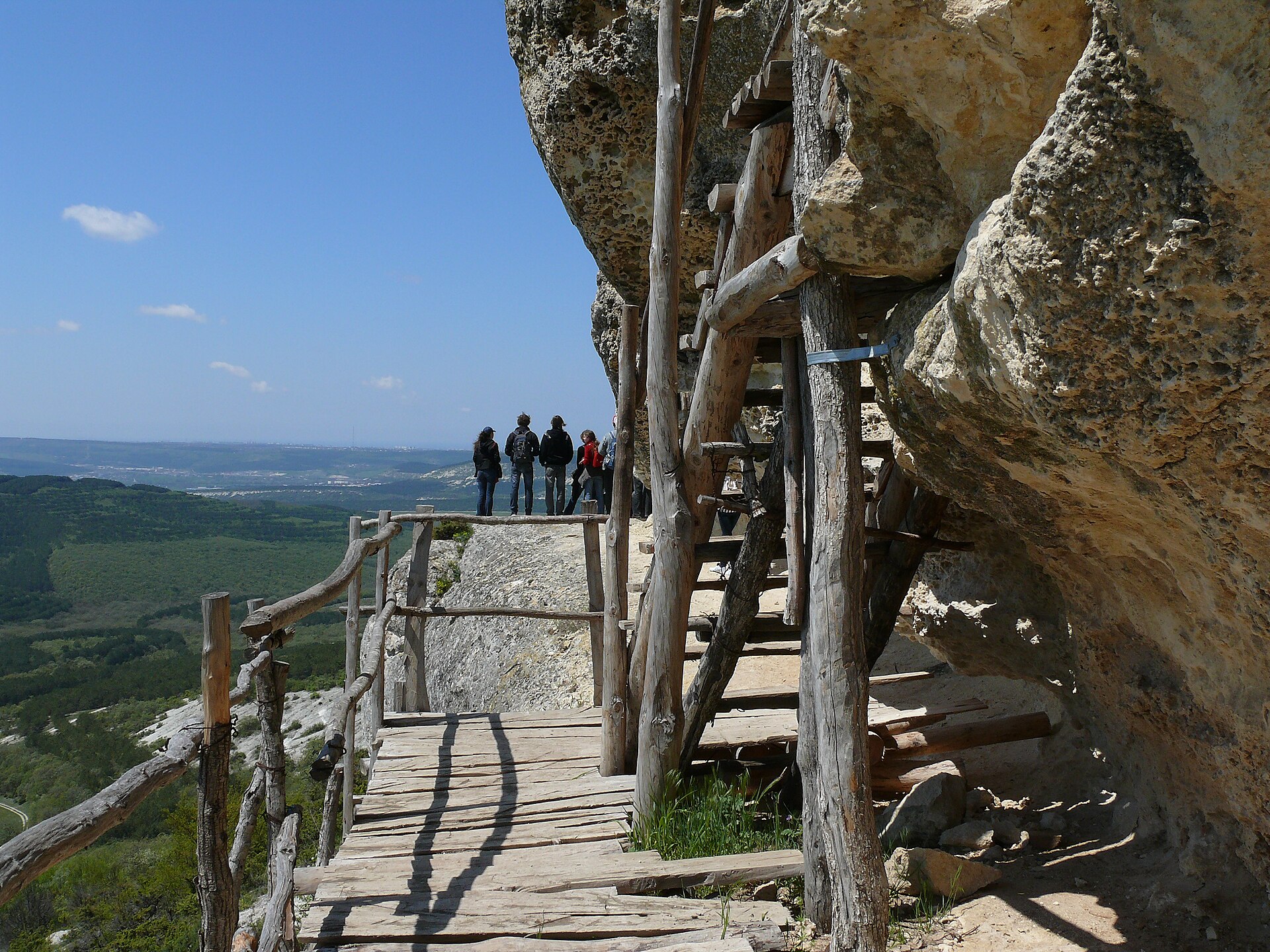
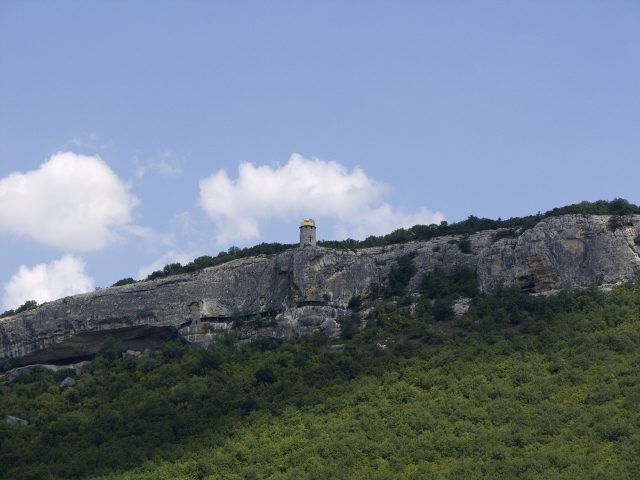
Chelter-Marmara is one of those rare places where time seems to slow down, allowing the past and present to merge effortlessly. Tucked away in the hills near the village of Ternivka, this rugged landscape is defined by its caves and weathered rock formations, which have drawn people for centuries with their quiet mystery. The name itself, derived from Crimean Tatar, translates roughly to "caves by the marble rock," though the stone here isn’t true marble—just a striking resemblance that adds to the illusion. The cliffs are carved with fissures and hollows, creating a maze-like feel where every turn reveals something new, whether it’s a hidden grotto or an unexpected view of the surrounding steppe.
The history of Chelter-Marmara stretches back thousands of years, though much of it remains shrouded in speculation. Archaeological evidence suggests that these caves were used as far back as the Bronze Age, likely serving as shelters for early nomadic groups or settlers. Later, during the medieval period, they may have provided refuge for monks or hermits seeking solitude, though there’s no definitive proof of a monastic presence. What is clear is that these caves offered protection—from the elements, from invaders, or simply from the noise of the outside world. The faint traces of soot on the walls hint at fires once lit for warmth or cooking, while the smoothness of some chambers suggests deliberate shaping, perhaps for storage or even ritual purposes.
The caves themselves are modest in size but varied in form. Some are connected by narrow passages, forcing visitors to crouch or squeeze through, while others open into wider chambers with surprisingly even walls, as if chiseled by human hands. Inside, you might find small niches carved into the rock—possibly used to hold supplies or religious artifacts—though their exact purpose is lost to time. The air inside is cool and still, even on the hottest days, and the dim, diffused light gives the space an almost sacred atmosphere. Outside, the cliffs rise dramatically from the landscape, their jagged edges softened by time and the occasional tuft of hardy vegetation clinging to the stone.
The surrounding area is just as striking in its own way. The terrain is sparse, with low shrubs and drought-resistant grasses dotting the rocky soil, their simplicity only emphasizing the raw beauty of the cliffs. In spring, wildflowers push through the cracks in the stone, adding fleeting splashes of color to the otherwise muted palette. The lack of dense vegetation means the landscape feels open and exposed, a quality that only deepens the sense of isolation. There are no crowds here, no guided tours or souvenir stands—just the wind, the occasional cry of a bird, and the quiet rustle of dry grass underfoot.
Visiting Chelter-Marmara is less about ticking off a sightseeing checklist and more about slowing down and letting the place reveal itself. There are no marked trails, no informational plaques, and no designated viewpoints—just the land as it is, with all its rough edges and hidden corners. This lack of infrastructure can be disorienting at first, but it also means the experience feels unfiltered, as if you’ve stumbled upon a secret that few others know. The absence of modern conveniences forces you to engage with the landscape on its own terms, whether that means scrambling up a rocky slope, peering into a shadowy cave, or simply sitting on a sun-warmed boulder to watch the light shift across the valley below.
The best time to visit might be at dawn or dusk, when the low angle of the sun transforms the cliffs into a canvas of gold and rose. Shadows stretch long across the stone, and the air takes on a hush, broken only by the distant call of a raptor or the scuttle of a lizard over rock. At these hours, the caves seem to hold their breath, their dark interiors hinting at stories untold. Some visitors come equipped with cameras, eager to capture the play of light and shadow, while others are content to simply be present, letting the quiet seep into their bones. There’s no pressure to "do" anything here—just the invitation to observe, to wander, and to listen.
What makes Chelter-Marmara special is precisely what it lacks: the trappings of mass tourism. There are no gift shops, no restaurants, and no crowds jostling for the perfect photo. Instead, there’s space—both physical and mental—to breathe and reflect. Getting here isn’t easy; the approach involves navigating rough tracks through the steppe, and without a guide or a good sense of direction, it’s easy to lose your way. But that remoteness is part of the appeal. This isn’t a place that caters to visitors; it’s a place that demands you meet it halfway, with patience and respect.
That respect is crucial. The caves and cliffs here are fragile, and even small disturbances can leave lasting damage. There’s no one to enforce rules, no rangers to remind you to stay on the path—just the quiet expectation that you’ll tread lightly. That means no carving into the rock, no taking souvenirs, and no leaving behind anything but footprints. The wildlife here, from the lizards darting between stones to the birds nesting in the cliffs, is equally vulnerable. The land has endured for millennia, but its survival now depends on the choices of those who visit.
Chelter-Marmara isn’t the kind of place you can rush through in an afternoon. It doesn’t offer grand monuments or dramatic narratives, but something far more subtle: the chance to step outside of time, if only for a little while. There’s a quiet magic in the way the past lingers here, in the way the wind carries echoes of those who came before, and in the way the landscape seems to hold its secrets just out of reach. For those who return, it’s rarely for the sights alone, but for the feeling of having touched something enduring—a place where the earth, the sky, and the weight of history come together in a way that’s hard to put into words.