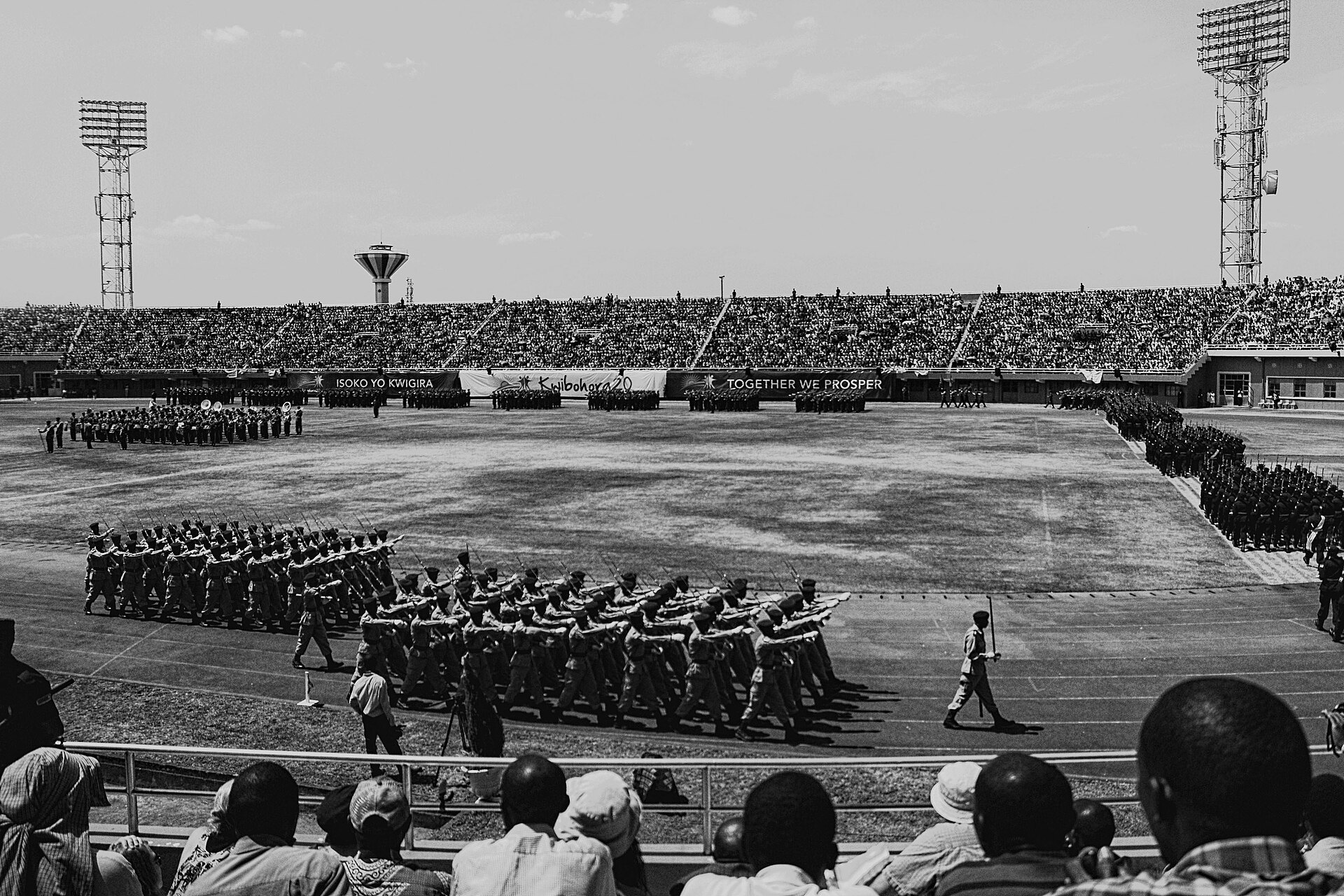
Mugina Stadium is one of those places that doesn’t announce itself at first glance. Tucked away in the heart of Kamonyi District, it sits among rolling hills dotted with small villages, where life moves to the rhythm of grazing cattle and the occasional motorcycle kicking up dust on unpaved roads. There are no grand landmarks or tourist trails here, just the quiet authenticity that makes Rwanda feel real—the kind of place where something unassuming on the surface holds the weight of everyday life.
The stadium itself is modest: an oval dirt pitch surrounded by low wooden or metal benches that pass for stands. When the rains come, the field turns to mud; in the dry season, it cracks under the sun. Yet none of this stops the community from gathering here on weekends. Football in Rwanda is more than a game—it’s a reason to come together, to talk, to settle disagreements that can’t be resolved over tea at home. The players aren’t professionals; they’re neighbors, schoolkids, farmers. Every match is a small celebration, a break from routine for the whole district.
The story of Mugina Stadium is tied to Rwanda’s slow recovery after the devastation of 1994. In the years that followed, sport became one of the ways the country rebuilt itself—not with grand stadiums or international tournaments, but with simple spaces where people could simply be together. This stadium wasn’t built for spectacle; it was built for connection. It’s on fields like this that a sense of community takes root, something essential to Rwanda’s identity today.
The architecture is as straightforward as it gets: a few rows of seating, a bare minimum of concrete, and a design that prioritizes function over form. On scorching afternoons, the sparse shade from a few trees offers the only relief from the sun. By evening, when the heat eases, teenagers often linger here, sharing stories or playing music from a phone. There are no floodlights, no VIP boxes—just a place that serves its purpose without pretension.
But the stadium’s role in Mugina goes beyond sports. It’s where children learn to play as a team, where elders pass down stories to the younger generation, and where women from nearby homes set up impromptu stalls selling fresh fruit and homemade bread. On match days, the air fills with the smell of grilled meat and spices, with laughter and the shouts of fans. For many in the district, it’s the only chance to step away from daily worries and feel part of something larger than themselves.
The atmosphere here is nothing like that of a major arena. There are no billboards, no booming commentators, no referees in crisp uniforms. Instead, there’s an unfiltered energy—moments that might be forgotten by the next day but leave a lasting impression. Sometimes, the games are accompanied by drumming, the rhythm picked up by clapping spectators, turning the match into a kind of communal celebration. In those moments, the stadium feels less like a sports ground and more like a village square, where everyone belongs.
Despite its simplicity, Mugina Stadium is a cultural hub. It hosts not just football matches but school competitions, local festivals, and even political gatherings. In Rwanda, where public life often revolves around collective events, such places become natural meeting points. They bring together people of all ages and backgrounds, reminding them that even in a small town, there’s a space where everyone has a place.
To an outsider, the stadium might look like nothing more than a patch of dirt with a few benches. But for locals, it’s a symbol of resilience and hope. In a country that has known profound loss, places like this show that life goes on—and that even a simple game of football can be a step toward healing. There’s no luxury here, just the kind of sincerity that can’t be bought: the genuine joy of a goal scored, the willingness to stand by one another when it matters.
Perhaps one day Mugina Stadium will get new stands or an artificial surface, but its spirit is unlikely to change. This is a place where time moves differently, where records and trophies don’t matter as much as the moment itself. For anyone passing through Mugina, the stadium might seem like an ordinary field—but that’s exactly why it’s worth noticing. It’s not about grandeur; it’s about being real.