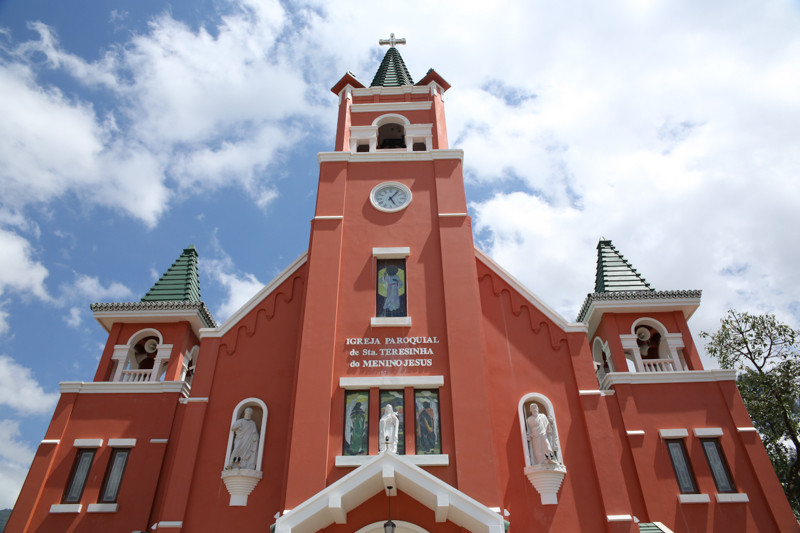
St Theresina’s Church sits on a gentle hill, surrounded by low houses and swaying palms. Viqueque isn’t a tourist hub, and the church isn’t a spectacle. It’s where people come for something deeper than sightseeing. That quiet presence makes it feel like part of the landscape.
The church’s history is tied to East Timor’s colonial past under Portuguese rule. Built in the mid-20th century, when Timor was still a Portuguese territory, it was more than a house of worship. Churches often became community hubs—places to share news, seek comfort, or simply gather. Even after independence in 2002, St Theresina’s kept its role in daily life.
Architecturally, the church is simple. Whitewashed walls, a modest bell tower, and a plain cross on the facade—nothing about it is grand. It was built for people. Inside, high windows let in soft tropical light. Wooden pews line the nave, leading to an altar with an image of Saint Thérèse of Lisieux. A few icons hang on the walls, but there’s no excess. Locals often sit here in quiet reflection, especially when the midday heat outside feels stifling.
In Viqueque, the church is central to life. Baptisms, weddings, and funerals happen here, but so do local celebrations. On feast days, people gather outside, bringing flowers and joining processions. The atmosphere is calm, more like a family gathering than a formal event.
For visitors, St Theresina’s is an unexpected discovery. There’s no tourist bustle, just the unhurried pace of a Timorese town. You might see a service or watch locals leave their shoes at the door before stepping inside. It’s not a place to tick off a checklist—it’s somewhere to pause.
East Timor’s history is marked by struggle. After decades of conflict, churches like this one often became symbols of resilience. St Theresina’s is one such place, where past and present coexist without fanfare. Its walls hold a quiet history.
If you visit Viqueque, step inside. Listen to the silence. Think about what this modest building means to those who call it theirs. In places like this, where there’s no luxury or crowds, you might begin to understand the soul of a country. St Theresina’s isn’t a place for rushing—it’s a place to stop.