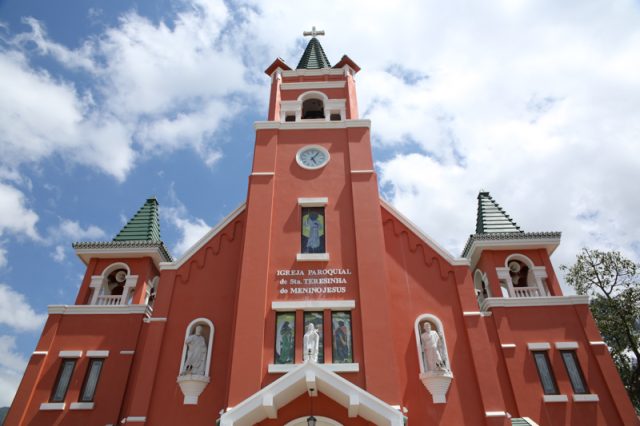
The National Parliament of East Timor in Viqueque is more than just a government building. It stands where history and the present intersect, in a town that carries the weight of the country’s long struggle for independence. Viqueque, nestled in the central highlands of Timor Island, was a key location during the resistance against Indonesian occupation. Here, among rolling hills and dense tropical greenery, the parliament became a symbol of a new era—one where power finally belonged to the people, not colonial rulers or military administrations.
The parliament building itself is relatively new, but its design reflects an effort to blend tradition with modern needs. Clean lines, open spaces, and an abundance of natural light create an atmosphere of transparency, a deliberate choice for a nation emerging from decades of conflict and isolation. Inside, visitors might notice elements of Timorese craftsmanship—carved wooden panels, woven fabrics with traditional patterns—subtle reminders of the country’s cultural roots. Yet the structure remains understated and functional, avoiding unnecessary grandeur.
For locals, the parliament is more than a political institution; it’s where the future of the country takes shape. East Timor gained independence only in 2002, and the nation is still finding its footing. Within these walls, laws are debated to address the lingering effects of colonialism and occupation, to rebuild the economy, and to preserve cultural identity. A visit here offers a glimpse into how a young democracy operates, the challenges it faces in a country where most people live in rural areas and infrastructure is still developing.
Unlike the bustling capitals of other nations, Viqueque remains a quiet provincial town. There are no tourist traps, no souvenir shops, no cafes catering to visitors. Life moves at a slower pace, and if you ask locals about the parliament, they’ll likely speak of how it has changed their lives or the hopes they place in its decisions. For travelers, this is a rare chance to see a political center stripped of pretense, existing in its everyday reality.
The parliament’s story is deeply tied to East Timor’s own journey. After independence, the country had to build its institutions from scratch. Before 2002, Timor had been a Portuguese colony, then occupied by Indonesia, leaving little room for self-governance. The parliament was one of the first steps toward creating a system that reflected the people’s will. Its work hasn’t always been smooth—internal conflicts, economic struggles, and political tensions have tested the young nation—but its very existence marks a turning point.
Architecturally, the building isn’t a masterpiece, but it has a quiet harmony. It doesn’t dominate the landscape with size or opulence; instead, it serves as a practical space for those shaping the country’s future. This modesty makes sense in a nation with limited resources. The parliament reflects East Timor’s reality, not the ambitions of individual leaders. Perhaps that’s why it feels so fitting here—it doesn’t stand out but blends into the surroundings, much like the country itself.
Visiting the parliament in Viqueque isn’t a typical tourist experience. There are no crowds, no scripted tours, no polished narratives. What you see and hear depends on who you meet—a passerby, a local journalist, or a staff member. You might witness a session in progress, or you might only see the building’s exterior. Either way, it offers a sense of how life functions in one of the world’s youngest nations.
For those interested in postcolonial history, East Timor’s parliament is a compelling case study. There are no grand columns or gilded emblems, just simplicity and a focus on practicality. This is a place where politics isn’t detached from daily life, where decisions are made with the people’s voices in mind. That, perhaps, is the parliament’s defining trait: it’s not just a building, but part of an ongoing process, one that unfolds every day.