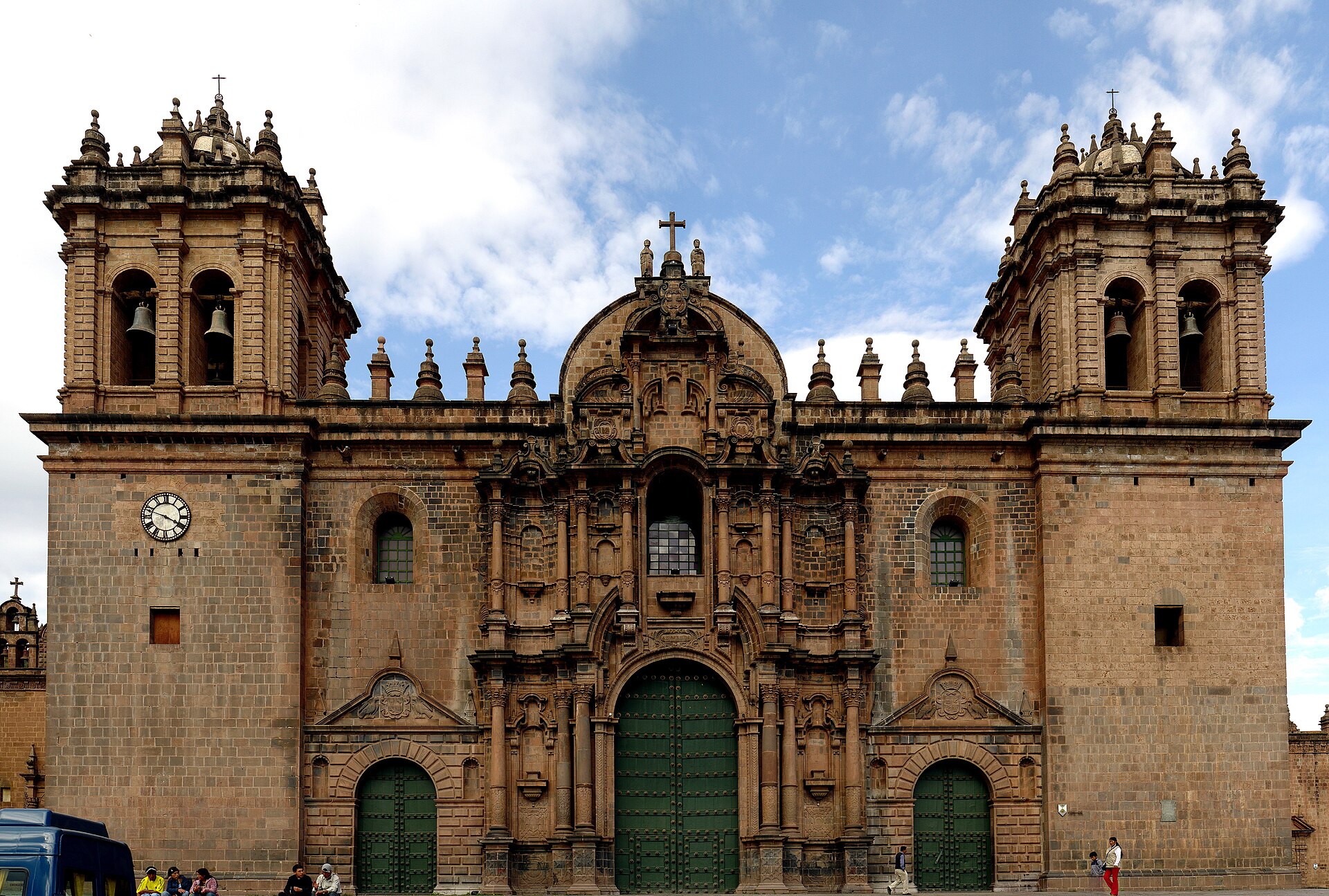
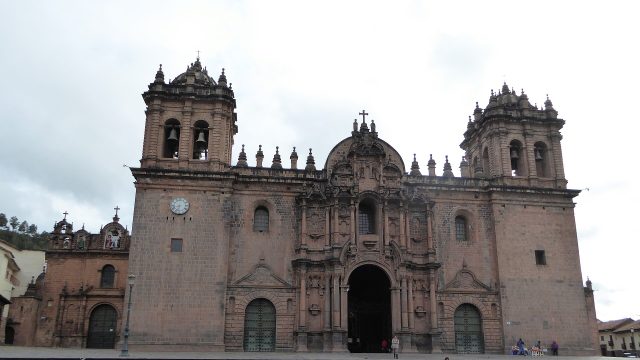
Cusco’s Cathedral of the Assumption of the Virgin Mary stands where empires once collided, and where the past refuses to fade into silence. Built in the heart of what was once the Inca Empire’s capital, it occupies the same ground where the palace of the ruler Viracocha once stood. The Spanish chose this site deliberately, not just to erect a church, but to assert their dominance—both spiritual and political—over a land they had conquered. Construction began in the mid-16th century and stretched over nearly a hundred years, blending late Gothic, Renaissance, and Baroque styles into something uniquely Andean. The result is more than a place of worship; it’s a living archive of history, where every stone and painting tells a story of collision and coexistence.
The cathedral’s architecture commands attention, even for those familiar with Europe’s grandest cathedrals. Its gray granite facade is imposing, almost austere from a distance, but up close, the details reveal the hands of local craftsmen. The foundation incorporates Inca stonework, fitted together with such precision that not even mortar was needed—a technique that left the Spanish in awe. Inside, the space unfolds in three naves, supported by thick columns and vaulted ceilings adorned with intricate carvings and paintings. The main altar, gilded in silver and gold, reflects the wealth that flowed from Peru’s mines into Spanish coffers, a reminder of the colonial economy that shaped the city.
The interior is a gallery of colonial art, much of it from the Cuzco School, a movement that fused European techniques with indigenous sensibilities. Saints appear with darker skin, and biblical scenes are set against Andean landscapes. One of the most striking works is Marcos Zapata’s *Last Supper*, where the traditional Passover lamb is replaced by a roasted guinea pig—a staple of Andean cuisine. These touches make the art feel deeply rooted in the local culture, not just an import from Europe. The cathedral’s collection also includes silverwork, religious vestments, and centuries-old manuscripts, some written in Quechua, the language of the Inca that still echoes through Cusco’s streets.
History is woven into the cathedral’s very structure. It was here that Spanish viceroys were crowned and where the most important religious ceremonies of the colony took place. Among its most revered relics is the *Señor de los Temblores* (Lord of the Earthquakes), a crucifix credited with saving the city from destruction in 1650. According to legend, when tremors struck Cusco, the statue of Christ leaned forward as if bearing the brunt of the quake, and the shaking stopped. Every October, the cathedral hosts a procession in its honor, drawing crowds who come to pay homage to the miracle. The crucifix, darkened by centuries of candle smoke and devotion, remains a powerful symbol of faith and resilience.
Beneath the cathedral’s grand halls lie layers of history. The crypts once held the archives of the Inca Empire, later repurposed to store colonial documents. Today, they house a collection of artifacts that trace the city’s evolution—jewelry, liturgical objects, and rare books spanning the 16th to 18th centuries. The library is particularly fascinating, with manuscripts in Spanish, Latin, and Quechua, offering glimpses into the lives of those who shaped Cusco over the centuries. These spaces feel like a bridge between worlds, where the voices of the past are still audible if you listen closely.
Visiting the cathedral is as much about atmosphere as it is about history. In the early morning, sunlight spills across Plaza de Armas, casting long shadows over the granite walls and making the cathedral appear even more monumental. The bells ring out over the city, a sound that has marked the passage of time for generations. By evening, the stone takes on a warmer hue, and the plaza fills with locals and visitors alike, drawn to the quiet grandeur of the place. For many, the cathedral is more than a tourist stop; it’s a place to pause, reflect, or simply sit in the company of history.
The cathedral has witnessed conquests, earthquakes, and revolutions, yet it endures, a testament to the city’s ability to absorb and adapt. For tourists, it’s a window into Peru’s layered past. For the faithful, it’s a sanctuary. For Cusco’s residents, it’s a familiar presence, as much a part of their daily lives as the mountains that surround the city. There are no casual visitors here—everyone who steps inside leaves with something intangible, whether it’s the weight of history, the quiet of the nave, or the sense of standing in a place where time moves differently.
What makes the cathedral truly remarkable is how it embodies the spirit of Cusco itself. It’s a place where Inca stones support Spanish arches, where European saints share space with Andean symbols, and where the sacred and the everyday coexist. The past isn’t just preserved here; it’s alive, breathing through the rituals of the present. Whether you come for the art, the history, or the sheer presence of the place, the cathedral offers a rare chance to stand at the crossroads of two worlds—and to feel the pulse of a city that has always been more than the sum of its parts.