Stephansdom, or St. Stephen’s Cathedral, isn’t just Vienna’s most important church—it’s the city’s beating heart, a monument that has watched over its streets for centuries. From afar, its towering spire cuts a familiar silhouette against the sky, crowned by the double-headed eagle of the old empire. Up close, the cathedral’s dazzling tiled roof catches the light like scattered jewels, its intricate patterns weaving together history and craftsmanship. This is a place where emperors were crowned, where Mozart’s requiem once filled the air, and where, in darker times, the people of Vienna sought refuge. Today, it remains a living part of the city, where faith, art, and daily life intersect in quiet harmony.
The story of Stephansdom begins in the 12th century, when a Romanesque church stood on this spot. Over the next hundred years, it was rebuilt in the Gothic style, its soaring arches and pointed windows setting the tone for what would become one of Europe’s most striking cathedrals. The most iconic addition came in the 15th century with the completion of the south tower, a masterpiece of medieval engineering that stretches 136 meters into the sky. For generations, it was the tallest structure on the continent, a testament to the ambition of its builders. The north tower, though never finished, adds a sense of asymmetry that only enhances the cathedral’s grandeur.
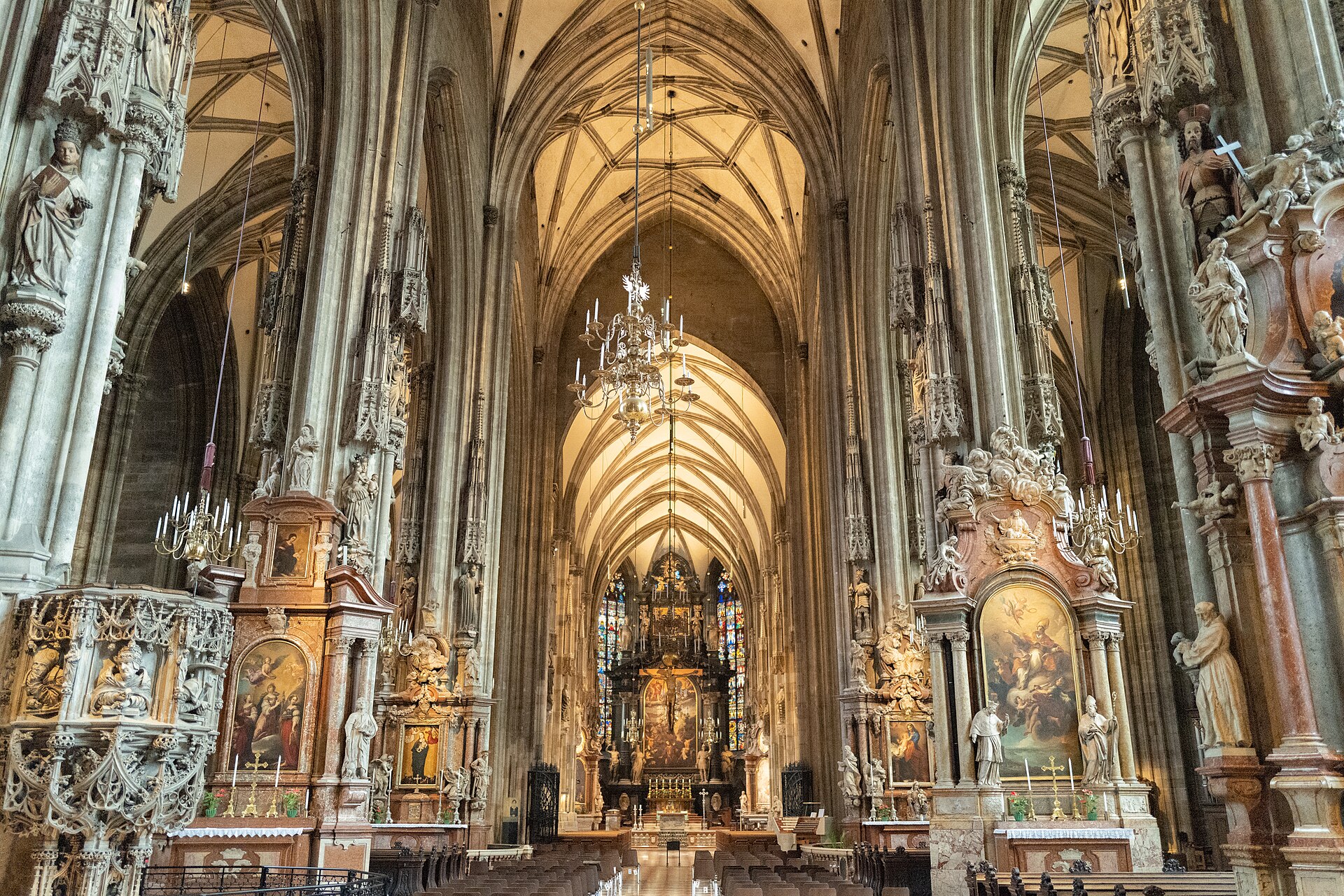
Inside, the scale of the space is breathtaking. The vaulted ceilings, supported by slender columns, seem to float overhead, while the stained glass windows—some still original—paint the stone floors in shifting hues of blue and gold. The pulpit, carved in the 16th century, is a marvel of detail, its stone figures of the Church Fathers standing guard over the congregation. Look closely beneath the stairs, and you’ll find the sculptor’s self-portrait, a quiet signature hidden in plain sight. Below the cathedral, the crypt holds the remains of Vienna’s elite, from Habsburg archdukes to lesser-known figures whose lives shaped the city.
But Stephansdom is more than a museum of stone and glass. It’s a place where the past and present coexist. Every day, the sound of the organ fills the nave, its deep notes resonating through the centuries-old walls. Worshippers kneel in prayer while tourists wander the aisles, their footsteps echoing softly. Outside, the square pulses with life—street musicians play in the summer, and in winter, the Christmas market transforms the space into a glittering wonderland. The cathedral doesn’t just stand apart from this energy; it absorbs it, offering a moment of stillness amid the city’s constant motion.
The roof is perhaps the most unexpected feature of Stephansdom. Covered in over 230,000 glazed tiles, it forms a vast mosaic of the imperial double-headed eagle, its wings spread wide across the skyline. During World War II, the cathedral suffered severe damage, and the roof was nearly destroyed. In the years that followed, it was painstakingly restored, each tile placed by hand to recreate the original design. Today, the eagle gleams in the sunlight, a symbol of resilience as much as power.
What makes Stephansdom special is the way it invites you to linger. You might come for a quick look at the architecture, only to find yourself drawn into the quiet rhythm of the place. Sit on one of the wooden pews, and the world outside fades—the hum of the city, the chatter of the square, all of it recedes. The light shifts across the stone, the air carries the scent of incense, and for a moment, it’s easy to imagine the generations who have stood in this same spot. The cathedral doesn’t demand reverence; it simply offers the space for it.
Around Stephansdom, Vienna moves at its usual pace. Cafés spill onto the sidewalks, shoppers browse the boutiques, and trams rattle past. But step through the doors, and the noise of the city falls away. Here, time feels different—slower, deeper. Whether you spend an hour tracing the details of the carvings or a whole afternoon listening to the organ, the cathedral has a way of making the outside world feel distant. It’s a place where history isn’t just remembered; it’s still alive, waiting in the flicker of candlelight or the echo of footsteps on ancient stone.