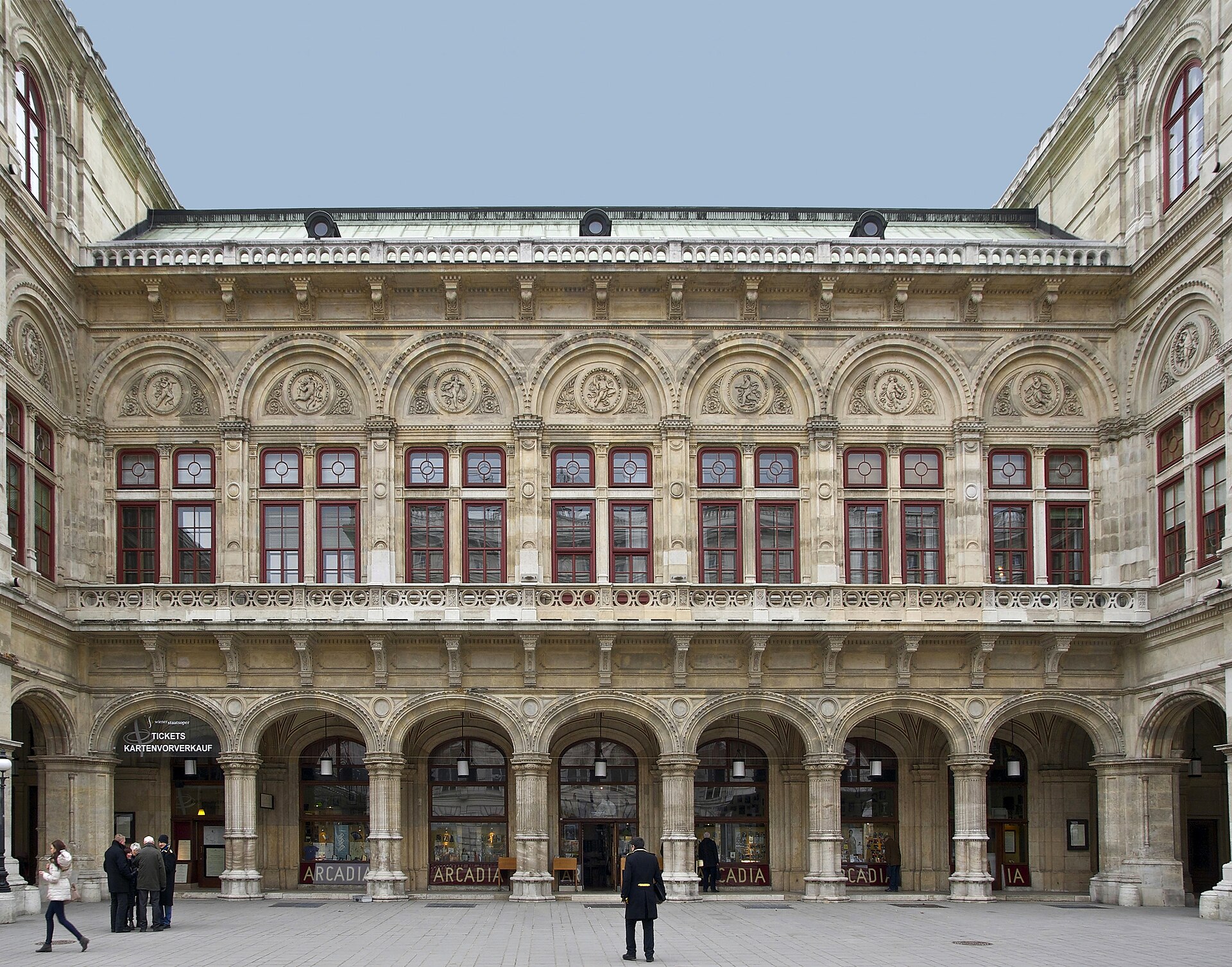
The Vienna State Opera stands on the Ringstrasse. Its neoclassical facade, with columns and sculpted figures of composers and muses, drew criticism when it opened in 1869. Some called it dull, even comparing it to a train station. The architects, August Sicard von Sicardsburg and Eduard van der Nüll, did not live to see their work become iconic. Van der Nüll took his own life after the backlash; Sicardsburg died of illness shortly after. Today, the building feels like a natural part of Vienna.
The opera house was built when the city was reinventing itself. The Ringstrasse replaced the old city walls, and the opera was meant to reflect the ideals of the era—harmony, tradition, and progress. Inside, the design focuses on purpose. Staircases, private boxes, and seat arrangements guide the audience toward the performance. The space does not just host shows; it shapes how people experience them.
Here, some of opera’s most important works premiered. Wagner’s *Tristan und Isolde*, Strauss’s *Salome*, and Berg’s *Wozzeck* were not just performances but events that shaped musical history. In the 19th century, audiences were famously unruly. If a singer displeased them, they whistled or shouted. Today, the crowd is quieter, but the passion remains. During the annual Opera Ball, the auditorium becomes a dance floor. For one night, the opera is the heart of the city.
The building has endured hardship. In 1945, Allied bombs destroyed part of the facade and set the roof ablaze. Archives were lost, and for a time, recovery seemed impossible. By 1955, it reopened as a symbol of Austria’s rebirth. The restoration followed the original plans while updating the stage for modern demands. Today, the Vienna State Opera is one of the world’s most advanced theaters, capable of switching sets in minutes.
What makes the opera special is how it fits into the city’s life. It’s not just a venue; it’s a place where people gather. Locals sip coffee in the foyer, meet friends before a show, or walk past the illuminated facade in the evening. In summer, open-air concerts turn the building into a public space. For many Viennese, it’s part of daily life.
The opera has also been a place for musical innovation. Conductors like Gustav Mahler, Herbert von Karajan, and Karl Böhm shaped its legacy. Mahler introduced dimming the lights during performances. Karajan pushed the orchestra and singers toward technical perfection. The opera balances tradition with experimentation, staging contemporary works alongside classics.
In recent decades, the opera has become more accessible. Subtitles in multiple languages help foreign visitors. Ticket prices have been adjusted to welcome a broader crowd. Yet it retains its aristocratic air. Standing-room tickets remain affordable, letting opera lovers immerse themselves in the music. The opera feels both grand and intimate—a place where a first-time visitor and a regular can share the same experience.
Walking through the Vienna State Opera, you move through layers of time. A young singer might rehearse in the same dressing room where Enrico Caruso once prepared. The orchestra might play *Die Fledermaus* in the hall where it was first heard under Emperor Franz Joseph. The building does not just preserve history; it lives within it. It evolves, absorbing new influences while staying true to its purpose: creating moments of beauty that last long after the final note.