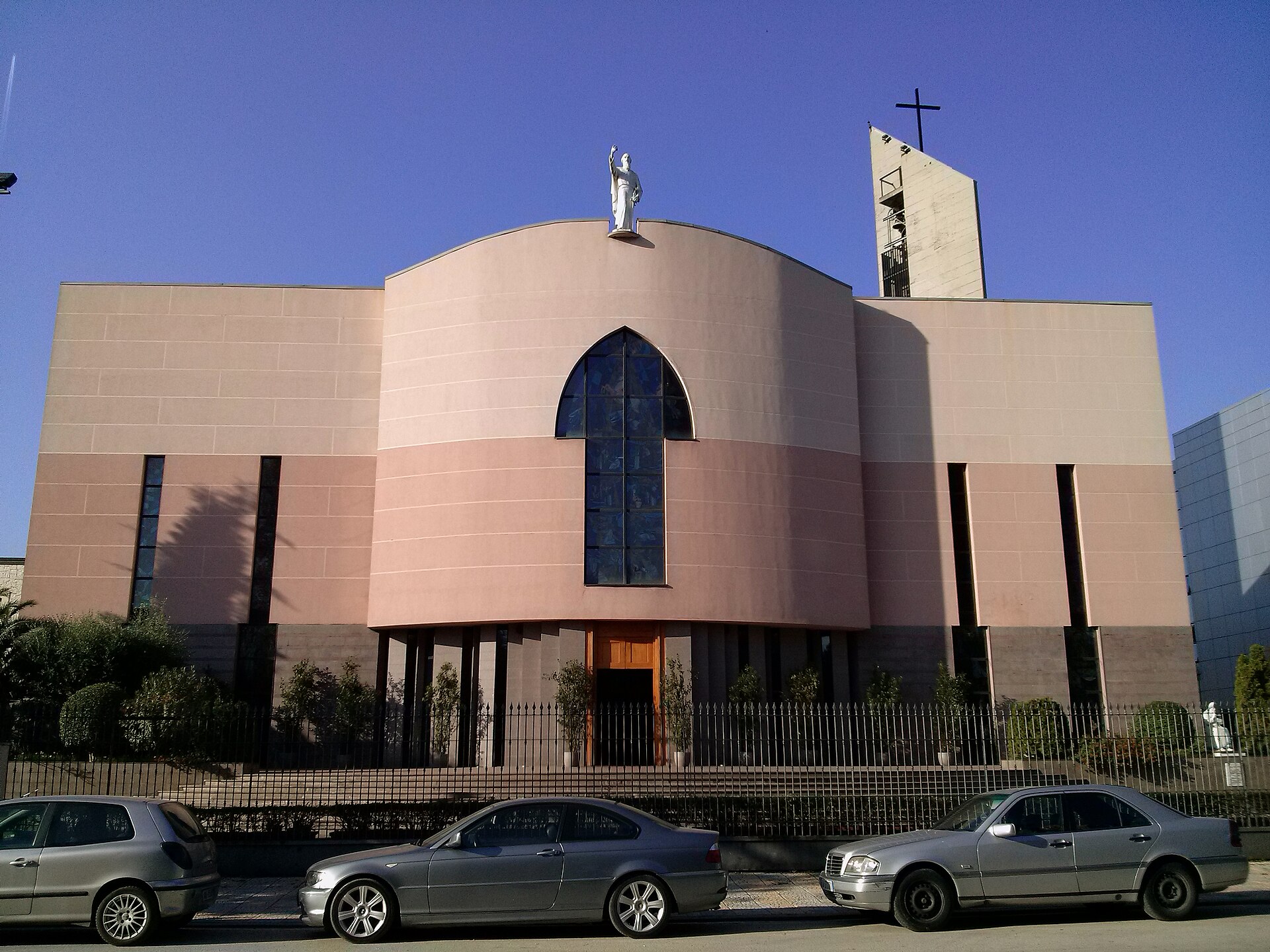
St. Paul’s Cathedral in Tirana is one of those places that doesn’t demand attention at first glance, yet lingers in the mind long after you’ve left. Tucked away on a quiet square in the heart of the city, it stands surrounded by the hum of modern life—glass-fronted buildings, bustling streets, the occasional honk of a car. But step inside, and the noise fades into something softer, as if the walls themselves create a separate world. Built in the early 2000s, the cathedral is a symbol of something deeper than its architecture: the slow, careful revival of Albania’s Catholic community after decades when faith was not just discouraged but violently suppressed.
The building itself is a study in balance. Its facade, made of pale stone, feels both solid and light, as if the architects wanted to honor tradition without being bound by it. Tall, narrow windows filter sunlight into the interior, casting a gentle glow that softens the space without overwhelming it. The main nave isn’t vast, but its proportions are deliberate, designed to make visitors feel not dwarfed but embraced. Inside, there’s no excess—just frescoes on the walls, simple wooden pews, and a marble altar. The effect is one of quiet dignity, a place where reverence doesn’t need grand gestures to be felt.
St. Paul’s is inseparable from Albania’s recent history, a country that once declared itself the world’s first atheist state. Under communist rule, religious buildings were either demolished or repurposed—churches became warehouses, mosques turned into gyms, and synagogues vanished entirely. When the regime fell in the 1990s, the country began to reclaim its spiritual identity, and the cathedral’s construction in 2001 marked a turning point. It wasn’t just a new place of worship; it was a statement that faith, after years of silence, had a voice again.
For Tirana’s Catholic community, the cathedral holds a significance that goes beyond its physical presence. Albania is a country where Muslims, Orthodox Christians, and Catholics have long coexisted, and St. Paul’s has become a gathering place—not just for services, but for cultural events, charity work, and quiet reflection. A small exhibit inside traces the history of Catholicism in Albania, with photographs and documents that tell the story of survival and renewal. It’s a reminder that faith here wasn’t just interrupted; it was nearly erased, and its return is still something fragile, worth protecting.
Tirana is a city of contrasts—where sleek new high-rises stand beside crumbling Soviet-era apartment blocks, and where the chaos of street markets gives way to the hush of old neighborhoods. St. Paul’s fits into this mosaic in its own understated way. It doesn’t draw crowds like the city’s more famous landmarks, and that’s part of its charm. There’s no tourist hustle here, no vendors selling postcards or overpriced souvenirs. Instead, the square outside is peaceful, with a few benches shaded by trees in the summer. Nearby, a Catholic center offers a small bookshop with religious texts, and the occasional visitor might strike up a conversation with someone from the congregation.
What makes St. Paul’s special is the way it reveals itself slowly. There’s no dramatic reveal, no soaring dome or gilded iconostasis to command awe. Instead, it invites you to sit, to listen to the silence, to watch how the light moves across the stone. It’s the kind of place where you might come in out of curiosity and leave with a sense of having touched something deeper—the resilience of a community, the quiet persistence of belief in a country that once tried to erase it entirely.
For those who visit Tirana not just to see its sights but to understand its soul, St. Paul’s offers a rare kind of stillness. It’s a place where the past isn’t just remembered but lived, where the scars of history are acknowledged without being dwelled upon. The cathedral doesn’t preach or proclaim; it simply exists, a testament to the idea that even after the darkest times, life finds a way to begin again. And in a city that’s always moving, always changing, that kind of quiet endurance feels like something worth holding onto.