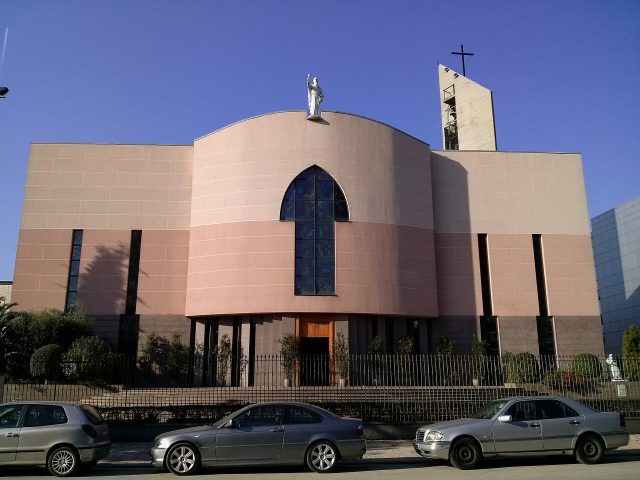
The Presidential Palace in Tirana is one of those places that doesn’t immediately demand attention, yet once you notice it, you realize how deeply it’s woven into the city’s fabric. Built in the early 20th century, it was originally intended as a royal residence for Ahmet Zogu, who began as Albania’s prime minister before declaring himself king. The palace was more than just a home for the monarchy—it was a statement. After centuries under Ottoman rule, Albania was asserting its independence, and this building was meant to symbolize the country’s ambitions on the world stage.
Construction began in the 1920s, but the palace wasn’t completed until after Zogu had crowned himself king. Italian architects designed it, reflecting Italy’s strong influence over Albania at the time. Many of Tirana’s public buildings from that era bear a similar Italian imprint, and the palace was no exception. The design was grand, with spacious halls, marble staircases, and soaring ceilings—all meant to project the power and legitimacy of the new monarchy. But history had other plans. In 1939, Italy invaded Albania, and Zogu fled into exile. The palace passed into the hands of the Italian administration, then to the communist government after World War II.
Under Enver Hoxha’s rule, the building became a venue for state receptions and diplomatic meetings. It hosted foreign leaders and official ceremonies, retaining its role as a center of political power, even if the monarchy it was built for no longer existed. After communism fell in the 1990s, the palace was repurposed as the official residence of Albania’s president, a function it still serves today. While the interior remains off-limits to the public, the exterior and the surrounding grounds are open, offering a quiet space in the heart of the city.
The architecture is a blend of classical European grandeur and subtle nods to Albanian heritage. The façade features columns and bas-reliefs, while the interiors—glimpsed only in rare photographs—are said to be adorned with marble, wood paneling, and intricate plasterwork. The palace is set within a small but well-kept garden, once part of the royal estate and now a pleasant spot for a stroll. It’s not a vast park, but on a hot day, the shade of the trees and the relative calm make it a welcome retreat from the bustle of the city.
For visitors, the Presidential Palace is more of a sight to admire from the outside than a place to explore. Still, it’s worth including in a walk through Tirana, especially for those interested in the country’s history. The palace sits just a short distance from Skanderbeg Square, the city’s central plaza, and is within easy walking distance of other landmarks like the National Museum and the parliament building. Nearby cafés and restaurants offer a chance to rest and reflect on what you’ve seen.
The palace hasn’t always been as inaccessible as it is now. In the years immediately following the fall of communism, it was occasionally opened for tours, but those days are long gone. Today, security is tight, and visitors are kept at a distance. Photographing the building is allowed, but only from a certain point. Even so, the palace’s imposing presence is hard to ignore. Its solid, dignified lines serve as a reminder that this isn’t just another government building—it’s a place where Albania’s past and present intersect.
Over the decades, the palace has witnessed some of the country’s most pivotal moments. It has hosted foreign dignitaries, overseen the signing of treaties, and stood as a silent observer to political upheavals. During the communist era, it was a symbol of unyielding authority; after the regime’s collapse, it became a symbol of change. Today, it remains one of the few places in Tirana where you can sense the layers of history that have shaped Albania. Even without stepping inside, a walk past the palace offers a glimpse into the country’s journey—its struggles, its ambitions, and the forces that have defined it.
The area around the palace is very much part of the city’s daily rhythm. Tirana is a lively, sometimes chaotic place where old and new coexist. The streets around the palace are always busy, filled with locals going about their day, tourists exploring, and the occasional group of students or office workers taking a break. The atmosphere is relaxed but energetic, much like the city itself—a mix of small-town ease and big-city urgency. The palace, with its quiet dignity, stands in contrast to the surrounding hustle, yet it’s very much a part of it.
More than just an architectural landmark, the Presidential Palace is a living piece of Albania’s history. It speaks to a time when the country was finding its footing, when leaders sought to reshape its identity, and when ordinary people lived through those transformations. Though it remains closed to the public, its presence in the heart of Tirana adds depth to the city. For those who care about history, it’s another piece of the puzzle, helping to make sense of how Albania became what it is today. For everyone else, it’s simply a striking building—one that invites you to pause and wonder about the stories it could tell.