Notre-Dame de Miséricorde Cathedral in Cotonou is one of those places that doesn’t announce itself with grand gestures or towering spires. It sits quietly in the heart of the city, where the rhythm of daily life pulses around it—motorbikes weaving through traffic, street vendors calling out their wares, and locals hurrying past on their way to somewhere else. The cathedral doesn’t demand attention like the great European cathedrals or the ornate mosques found elsewhere in West Africa. It simply exists, unassuming yet deeply rooted in the lives of those who gather here.
The story of the cathedral is woven into the broader history of Benin itself. Built in the mid-20th century, when the country was still known as Dahomey and was just beginning to find its footing after colonial rule, it reflects a time of transition. Catholicism arrived with French missionaries, but over the decades, it became more than just an imported faith. Here, it blended with local traditions, creating a spiritual landscape where different beliefs coexist. The cathedral isn’t just a place of worship; it’s a quiet witness to a nation’s evolution—from a colony to an independent state, from a single dominant faith to a tapestry of spiritual practices.
The architecture is straightforward, almost understated. There are no soaring Gothic arches or intricate stained glass, no elaborate carvings or gilded domes. Instead, the building is a modest structure, typical of many churches built across Africa in the last century. Its whitewashed walls and simple facade give it a sense of calm, as if the space itself is an invitation to pause and reflect. Inside, the atmosphere is much the same—wooden pews, a plain altar, a few icons. There’s no excess, no distraction from the act of prayer. That simplicity is what makes it feel authentic, a place where the focus is on what truly matters.
For the people of Cotonou, the cathedral is more than just a religious site; it’s part of the fabric of everyday life. On Sundays, families fill the pews for Mass, while on weekdays, you might find someone slipping in to light a candle or sit in silence for a moment. Outside, vendors set up stalls selling religious candles, postcards with images of saints, or homemade pastries. This isn’t a tourist attraction, but a living part of the city, where faith and daily life intersect naturally.
Unlike some of Africa’s more famous pilgrimage sites, Notre-Dame de Miséricorde doesn’t draw crowds with relics or miracle-working icons. There are no grand legends attached to it, no stories of divine intervention that would make it a destination for the devout. And perhaps that’s why it feels so genuine. It’s a place for those who seek not spectacle, but solace—for the parishioners who come not for the drama of faith, but for the quiet moments of connection.
Cotonou is a city of contrasts, where the modern and the traditional collide in a whirl of markets, offices, and port activity. The cathedral offers a rare pocket of stillness in all that motion. It doesn’t ask anything of visitors except respect for what happens within its walls. You can step inside, sit on a pew, and listen to the murmur of prayers or the sound of the organ if you’re there during a service. There’s no pressure, no expectation—just the chance to be present in a space that has seen generations of worshippers come and go.
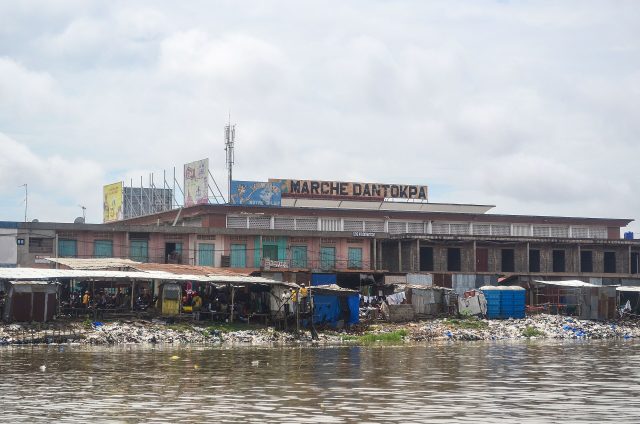
There are no grand plazas or manicured gardens surrounding the cathedral, no scenic spots for tourists to linger. But if you wander just a little farther, you’ll find the other faces of Cotonou—the bustling Dantokpa Market, where the air is thick with the scent of spices and grilled fish, or the waterfront, where locals gather in the evenings to watch the sun dip below the horizon. The cathedral isn’t a stop on the typical tourist trail; it’s a thread in the city’s tapestry, something you might only truly understand after spending time here, watching how it fits into the rhythm of daily life.
In Benin, religion is a complex and deeply personal matter. While Christianity and Islam are widely practiced, traditional beliefs remain strong, and many people blend different spiritual practices without contradiction. Notre-Dame de Miséricorde isn’t a symbol of one faith’s dominance over others. Instead, it stands as a reminder that belief can take many forms, yet still bring people together. That, perhaps, is its greatest strength—it doesn’t divide, but unites, quietly and without fanfare.