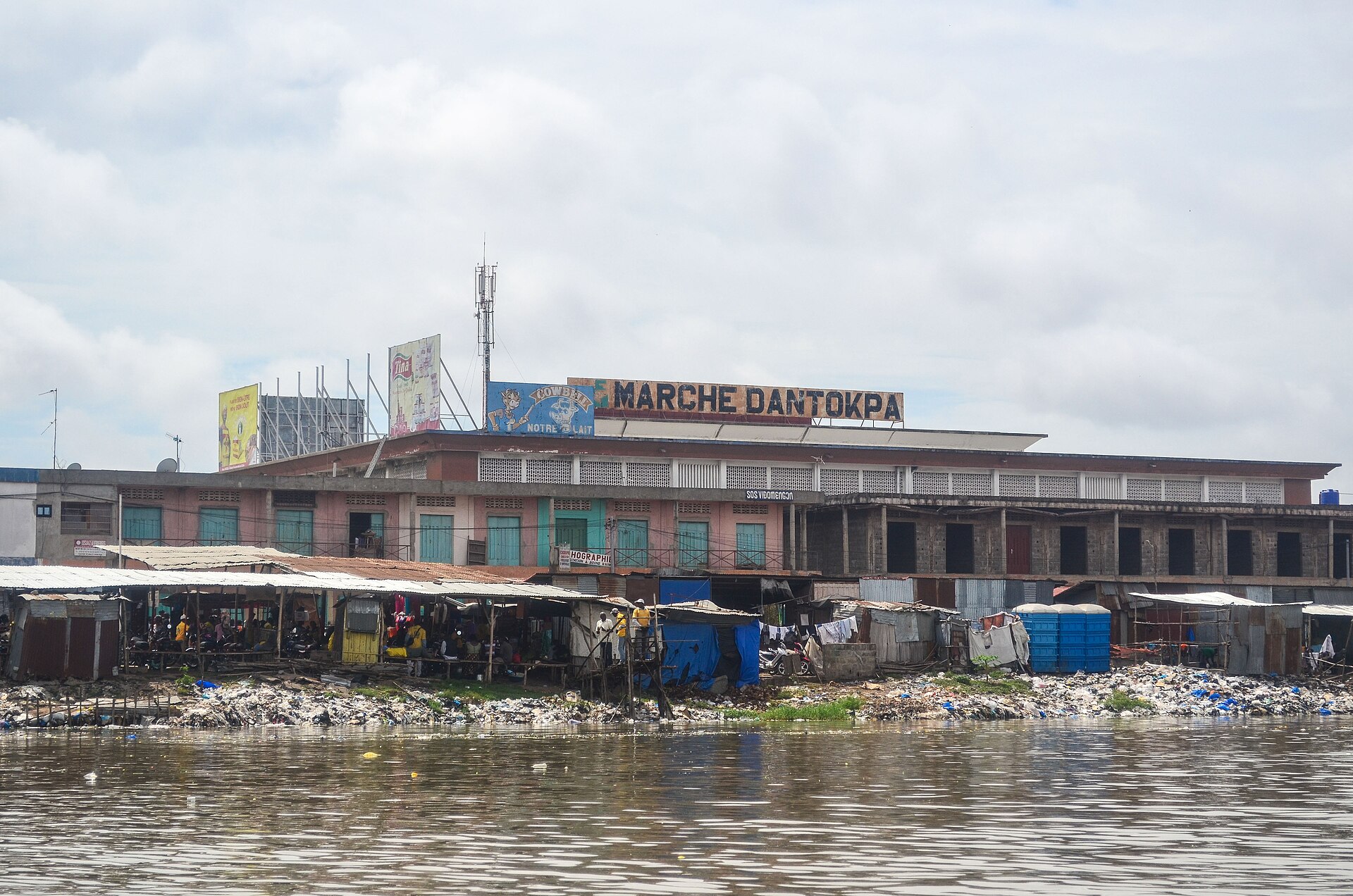
Dantokpa Market isn’t just a place to buy things—it’s the beating heart of Cotonou, a sprawling maze where the city’s energy, chaos, and daily life collide in the most vivid way. Stretching along the lagoon’s edge, this is West Africa’s largest open-air market, a labyrinth of stalls, alleys, and impromptu shops where nearly everything imaginable is sold, traded, or haggled over. The market has grown organically over decades, expanding from a modest trading post into a vast, semi-permanent city within a city. It’s where locals come not just to shop, but to meet, gossip, and navigate the rhythms of Beninese life.
The market’s origins trace back to the mid-20th century, when Cotonou was still a growing port town. As trade routes shifted and the city became a commercial hub, Dantokpa emerged as the natural gathering point for farmers, fishermen, and traders from across the region. What started as a cluster of wooden stalls near the waterfront gradually transformed into a sprawling complex, absorbing surrounding streets and neighborhoods. Today, it’s a patchwork of covered sections, open-air corridors, and makeshift extensions, with no single authority dictating its layout. The market simply *is*—a living organism that adapts to the needs of those who use it.
Walking through Dantokpa is an assault on the senses, in the best possible way. The air is thick with the scent of smoked fish, grilled corn, and the sharp tang of spices piled high in woven baskets. Vendors call out prices in Fon, Yoruba, and French, their voices blending into a constant hum. The market is divided into loosely defined sections, each specializing in something different: one alley might be devoted entirely to bolts of brightly patterned fabric, another to stacks of secondhand clothing, while a third overflows with fresh produce—mangoes, yams, okra, and peppers in every shade of red and green. There’s no formal directory, no neat signage; finding what you need means asking, wandering, and letting the market reveal itself.
One of the most striking areas is the fetish market, a corner of Dantokpa where traditional Vodun practices are on full display. Here, you’ll find stalls selling everything from dried chameleons and monkey skulls to bundles of herbs and handmade charms. It’s not a tourist attraction, but a working part of the market where healers, priests, and locals come to source ingredients for rituals. The atmosphere is matter-of-fact—this is just another section of the market, as ordinary to its regulars as the vegetable stands are to everyone else. For outsiders, it’s a rare glimpse into the spiritual traditions that remain deeply woven into Beninese culture.
The lagoon side of the market is where the day’s catch is brought in, sold, and sometimes smoked on the spot. Fishermen from nearby villages arrive before dawn, their wooden pirogues piled high with tilapia, catfish, and the occasional barracuda. By mid-morning, the area is a flurry of activity as women gut and scale fish, their hands moving with practiced efficiency. The smoke from the grills drifts through the air, mingling with the smell of saltwater and diesel from the boats. It’s one of the few places in Cotonou where you can still see the city’s connection to the water, a reminder that this is, at its core, a port town shaped by the rhythms of the Atlantic.
Dantokpa is also where the informal economy thrives in full view. You’ll find everything from knockoff electronics and pirated DVDs to handmade sandals and intricately carved wooden masks. Some stalls specialize in auto parts, others in household goods, and a few in the kind of odds and ends that defy categorization—old keys, rusted tools, or bundles of used plastic bottles. The market operates on a system of trust and reputation; regulars know which vendors are reliable, which ones will give a fair price, and which ones to avoid. Haggling isn’t just expected—it’s part of the social contract, a dance of offers and counteroffers that can last minutes or stretch into half an hour.
The market’s physical structure is as eclectic as its offerings. Some sections are covered by corrugated metal roofs, providing shade from the relentless sun, while others are open to the elements, leaving shoppers to navigate sudden downpours during the rainy season. The ground is a mix of dirt, concrete, and makeshift paving, with drainage channels running alongside the paths to carry away rainwater and waste. There are no grand architectural flourishes here—just raw functionality, built to withstand the wear and tear of thousands of people passing through every day.
For all its chaos, Dantokpa has a rhythm of its own. The early morning is the busiest time, when the market is at its most vibrant, with deliveries arriving and the first wave of shoppers flooding in. By midday, the pace slows slightly as vendors take breaks, sharing meals of pâte with sauce or grilled fish. In the late afternoon, the market begins to wind down, though some stalls stay open well into the evening, catering to those who work late or need last-minute supplies. The market never truly closes—it just shifts into a lower gear, with a few die-hard vendors keeping watch over their goods until the next day’s rush.
Dantokpa is more than a market; it’s a microcosm of Benin itself. It reflects the country’s diversity, its resourcefulness, and its deep-rooted traditions. Here, the past and present coexist—modern goods sit alongside handmade crafts, and the latest gadgets share space with centuries-old spiritual practices. For visitors, it’s an overwhelming but unforgettable experience, a place where the energy of West Africa is distilled into a single, sprawling space. You don’t just shop at Dantokpa; you immerse yourself in it, letting the market’s pulse guide you through the layers of life in Cotonou.