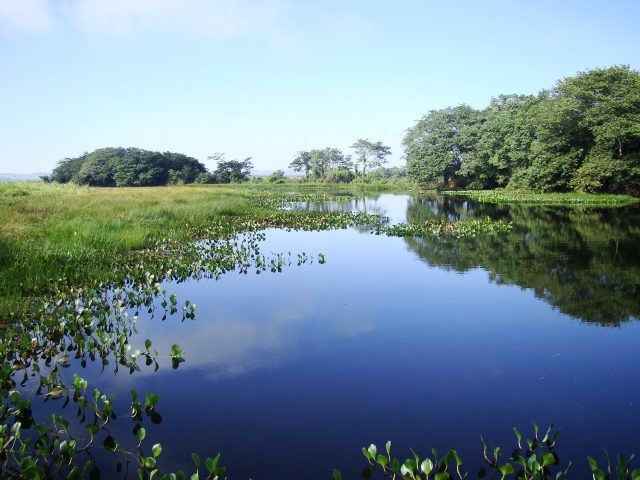
The hill rises above Mundu-Novu, its slopes holding more than just earth and stone. The name means Christian’s Hill, though its origin is lost—some say a wanderer once lived here, watching over the valleys. Whether true or not, the quiet history remains. Now, people come for the view: valleys folding into rivers, ridges fading into the horizon like a half-finished painting.
The viewpoint is simple. A low stone terrace, a short wall to lean against, and nothing else. No railings, no signs, no distractions—just the edge of the hill and the town below, small enough to cup in your hands. The wind moves through the grass, and if others are there, they speak softly, as if louder words might break the spell.
The climb starts at the base, where the path twists through scrub and trees. Roots trip your feet; rocks shift underfoot. It’s not hard, but it’s not easy either. Along the way, you might see herders with cattle, families walking, or someone sitting under a tree. The shade is welcome when the sun is high, and by the time you reach the top, the wind greets you like an old friend.
From here, the Paranaíba River cuts through the valley to the east, its banks thick with forest. To the west, the mountains change with the seasons—deep green in the rains, golden when the land dries. Below, Mundu-Novu spreads out: white houses, straight streets, a church spire standing taller than the rest. On clear days, you can see the farms beyond, where life moves slowly, deliberately.
Morning is best. The air is cool, the light soft, and the hills glow as if lit from within. By evening, the sky turns pink, then orange, and the town below lights up one window at a time. These are the moments when the hill feels like a secret—something only those who climb it get to see.
Mundu-Novu wasn’t always a town. It began as a stop along old trade routes, and the hill was its lookout. Now, it’s where locals bring their children to show them the view, where photographers wait for the perfect light, where anyone can sit and watch the day pass.
You won’t find crowds here. No tour buses, no souvenir stands. Just the wind, the grass, and the occasional sound of someone else who came for the same reason: to stand a little higher and see a little farther.
If you’re in Mundu-Novu, don’t hurry past. Take the path up, find a spot on the stones, and listen. The land doesn’t rush its stories—why should you?