Fureidis is one of those quiet places along Israel’s Mediterranean coast that most travelers overlook. It doesn’t have the buzz of Tel Aviv’s beaches or the weight of Jerusalem’s history, but it carries something just as meaningful—a sense of everyday life shaped by layers of culture, time, and creativity. At the heart of this small town is an art school that feels less like an institution and more like a living space where ideas take shape between brushstrokes and musical notes. It’s the kind of place where the air hums with possibility, where the walls seem to absorb the energy of those who pass through them.
The school didn’t emerge by accident. Fureidis itself is a place of quiet contrasts, founded in the early 20th century by Arab farmers who settled here when the land was still a patchwork of fields and olive groves. For decades, life moved at the pace of the seasons, shaped by agriculture and the rhythms of a close-knit community. Later, waves of immigrants arrived—Jews from Europe, North Africa, and the former Soviet Union—each bringing their own traditions, languages, and artistic sensibilities. The result is a town where Arabic, Hebrew, and Russian often blend in conversation, where Friday prayers and Sabbath dinners coexist, and where the idea of an art school felt almost inevitable. It became a natural meeting point for these different worlds, a place where creativity could bridge gaps that words sometimes couldn’t.
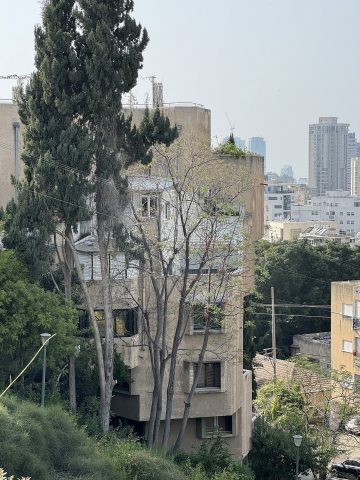
The building itself tells part of this story. Unlike the stark, functional architecture of many Israeli schools, this one feels intentionally unpolished, as if designed to invite rather than impress. The two-story structure is modest, with wide windows that flood the rooms with light and a flat roof that seems made for impromptu gatherings. The facade is adorned with mosaics—student work from over the years—that form a kind of visual diary of the school’s evolution. Inside, the high ceilings and open spaces make room for painting studios, music rooms, and workshops where the scent of oil paints lingers in the air. The walls are covered in artwork, some carefully framed, others pinned up casually, as if waiting for the next layer of inspiration. On any given day, you might hear the scratch of a violin bow or the soft thud of a piano key drifting down the hall.
What makes the school unusual is its approach to teaching. It’s not just about technique—though that matters—but about understanding art as a way of seeing, a language that can say things words can’t. Students learn the history of different artistic traditions, from Arabic calligraphy to European modernism, but they’re also encouraged to look for beauty in the ordinary: the play of light on a neighbor’s wall, the pattern of cracks in the sidewalk, the way a melody can carry emotion. The school places a strong emphasis on dialogue between cultures, and its students reflect that diversity. Arab children study alongside Jewish kids, immigrants from Ethiopia share classrooms with those from Russia, and somehow, through painting or music, they find common ground. For many, the school becomes a place where differences feel less like barriers and more like starting points for something new.
But the school isn’t just for students. It has quietly become a cultural hub for the whole town. Exhibitions, concerts, and workshops are open to everyone, drawing in locals who might not consider themselves artists but who appreciate the chance to slow down and engage with something creative. In the summer, the courtyard transforms into an open-air venue for small festivals, where musicians play under strings of lights and children display their latest projects. These events have a way of bringing people together—neighbors who might not otherwise cross paths, visitors from nearby cities who come looking for something different. There’s no grand stage or elaborate production; just the simple pleasure of sharing art in a place where it feels at home.
One of the school’s most striking qualities is its openness. There’s no audition, no portfolio requirement, no expectation of prior experience. Walk in, and you might find a seven-year-old dipping a brush into paint for the first time or an adult picking up a guitar after decades away from music. The teachers—many of them working artists themselves—aren’t just instructors; they’re guides, helping students find their own voice rather than imposing a style. The atmosphere is one of encouragement, not competition. Mistakes aren’t failures; they’re part of the process. And for some, the school becomes a second home, a place they return to long after their formal studies end.
Fureidis moves at its own pace, slower than Tel Aviv’s relentless energy or Haifa’s coastal bustle. The art school fits perfectly into this rhythm. It doesn’t chase fame or accolades; its success is measured in quieter ways—the confidence of a student who finally dares to exhibit their work, the friendships formed over shared projects, the way a room falls silent when someone plays a song that resonates. For many, the school is a reminder that art isn’t just about talent or technique; it’s about connection. It’s about the way a painting can make someone pause, or how a melody can stir something deep inside.
In a world where art is often reduced to market value or viral trends, the school in Fureidis offers a different perspective. It’s a place where creativity isn’t about becoming famous or making money; it’s about the quiet, daily act of making something meaningful. The focus isn’t on producing the next great artist but on helping people see the world a little differently—more vividly, more thoughtfully. And perhaps that’s why the school endures. It doesn’t need to be grand or groundbreaking; it just needs to be real. In a small town where cultures intersect and time moves gently, it stands as a testament to the idea that art, at its best, is simply a way of being human together.