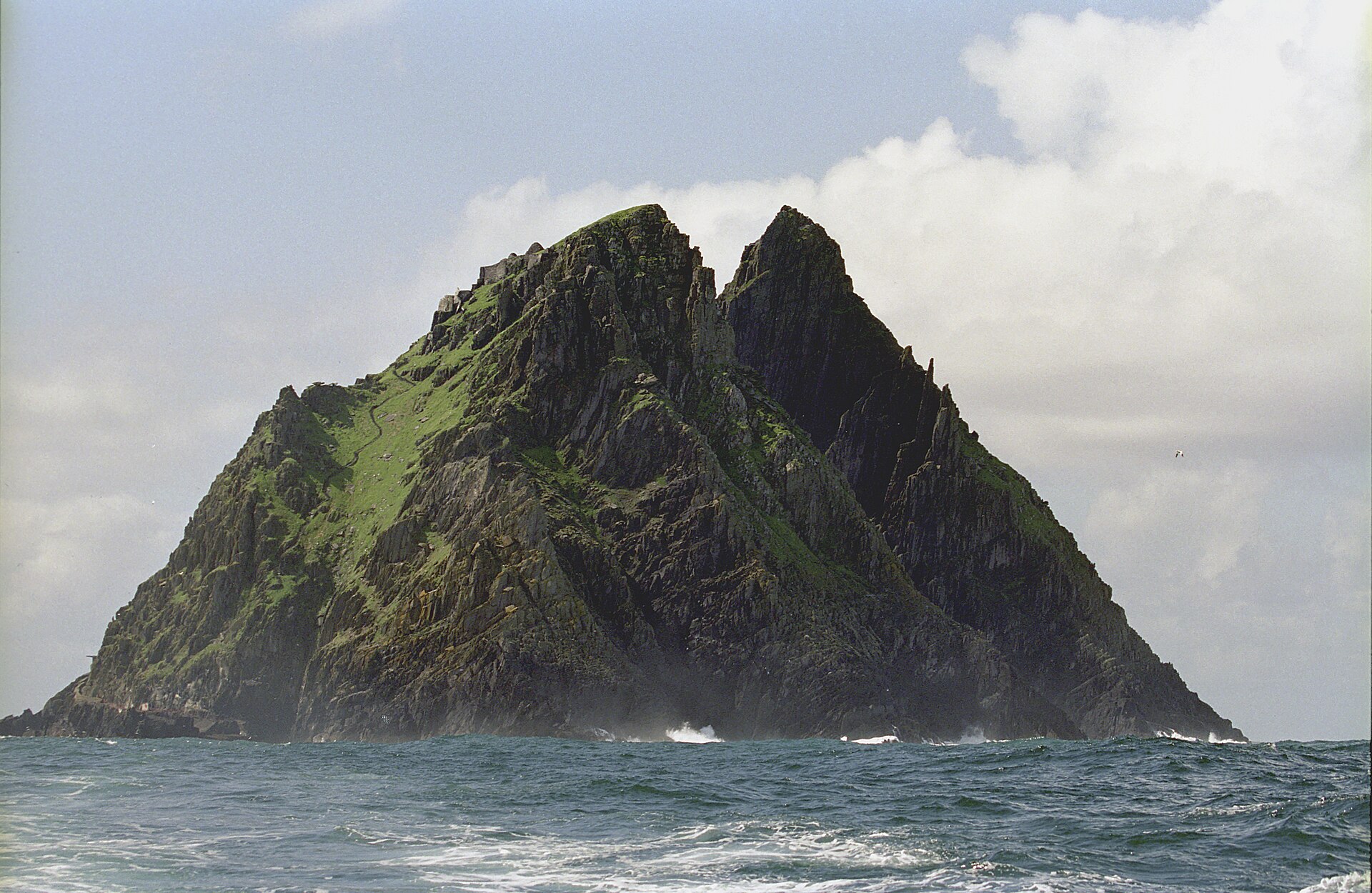
Skellig Michael rises from the Atlantic like a fragment of another world, twelve kilometers off the coast of County Kerry. Its jagged cliffs and steep slopes seem untouched by time, a place where the elements still dictate the rules. There are no harbors here, no modern comforts—just the relentless wind, the salt spray, and the cries of seabirds cutting through the silence. The island is small, barely a kilometer and a half long and half as wide, yet its history and atmosphere make it one of Ireland’s most extraordinary places.
The first records of Skellig Michael date back to the 6th century, when monks seeking solitude arrived on its shores. They were drawn to the isolation, to the chance to live in prayer and contemplation far from the distractions of the mainland. The monastery they built clings to the summit, nearly 200 meters above the sea. The stone beehive huts, known as *clocháns*, still stand today, their dry-stone walls defying centuries of storms. These structures are a testament to the monks’ determination, built without mortar yet enduring through sheer skill and necessity. Life here was harsh—cold, wet, and exposed—but for those who chose it, the island offered something rare: a place to exist beyond the reach of the world.
Reaching the monastery is no easy feat. A narrow staircase of six hundred uneven steps winds up the cliffside, each one demanding care. The stones are slick with spray, the wind gusts unpredictable, and the drop to either side is steep. Yet those who make the climb are rewarded not just with the sight of the monastery but with a sense of stepping outside time. The view from the top is stark—nothing but rock, sky, and ocean stretching endlessly. It’s a place where the modern world feels distant, almost irrelevant.
The monastery itself is a cluster of small, weathered buildings. Two oratories, a cemetery, and terraced gardens where the monks once grew vegetables still remain. The most striking structure is the Church of St. Michael, a round building with a conical roof, its walls held together by nothing more than carefully placed stones. Inside, the remnants of an altar and simple carved crosses hint at the lives once lived here. There is no grandeur, no ornamentation—just the quiet resilience of stone and faith. The monks who lived here did so with almost nothing, yet their presence lingers in the very air.
Skellig Michael was not always abandoned. In the 9th century, Viking raiders attacked the monastery, looting its meager treasures. The monks returned, rebuilding what had been damaged, and the community endured for centuries more. But by the 13th century, the climate had grown harsher, and the island’s isolation became a burden. The monks left, relocating to more accessible sites on the mainland. Skellig Michael was forgotten by many, though its story lived on in Irish chronicles and folklore.
Today, the island draws those who seek something beyond the ordinary. It’s a place for historians, for nature lovers, for anyone willing to trade comfort for the chance to stand where few have stood. As part of Kerry’s national park and a UNESCO World Heritage Site, Skellig Michael is protected, but access is limited. Boats run only in the summer months, when the sea is calm enough to make the crossing. Even then, the journey is never guaranteed—the waves can be rough, the wind unforgiving. Those who do make it are met with an island that feels suspended between the past and the present.
Life here is not entirely gone. Thousands of seabirds nest on the cliffs, their calls filling the air—puffins, gannets, and kittiwakes among them. The waters around the island teem with seals, dolphins, and, if luck is on your side, whales. The landscape is raw, untamed, and that’s precisely what makes it compelling. There are no shops, no cafes, no crowds. Just the wind, the birds, and the ever-present sound of the ocean.
Skellig Michael is a place that puts things in perspective. Standing on its summit, the worries of daily life feel small against the vastness of the sea and sky. The monks who once lived here chose this isolation not out of despair, but out of a desire to connect with something greater. Visiting the island isn’t just about seeing a historic site—it’s about experiencing a silence that’s rare in the modern world. It’s a reminder that some places exist beyond tourism, beyond easy explanations. And perhaps that’s why Skellig Michael continues to fascinate, a silent witness to the passage of time.