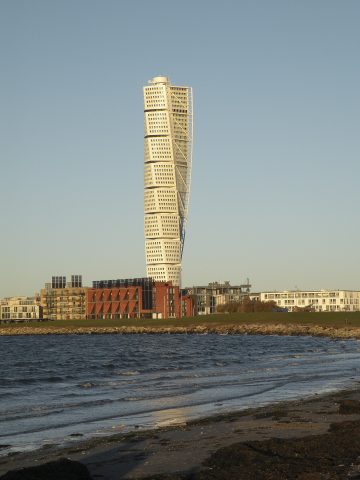
Scandinavium in Malmö is one of those places that feels like more than just a building. It’s a piece of the city’s identity, a space where history, architecture, and everyday life intersect in unexpected ways. Opened in 1971, it was built to host the Ice Hockey World Championship—the first time Sweden had ever held the tournament—and from the start, it became a symbol of the country’s ambition. Back then, Sweden was investing heavily in public infrastructure, and Scandinavium was part of that vision: a place where people could gather, whether for sport, music, or something in between.
The architecture is unmistakably of its time—clean, functional, and unpretentious. From the outside, it looks like a giant white cube, its light brick facade catching the sun in a way that softens its scale. There’s no grandiosity here, just a straightforward design that serves a purpose. Inside, the vast arena feels intimate despite its size, with seating that wraps around the central space, pulling the crowd into the action. It’s not one of those sleek, high-tech venues you see today, where every surface is polished to a shine. Instead, it has the kind of character that comes from decades of use, from the scuffed floors to the way the acoustics carry sound differently depending on where you stand.
Hockey is where Scandinavium’s story begins, and it’s still the heart of the place. The Malmö Redhawks, one of Sweden’s most storied teams, call this arena home, and on game nights, the energy is electric. The ice glows under the lights, the crowd roars, and for a few hours, the rest of the world fades away. Even if you’re not a sports fan, there’s something compelling about the way the city rallies around its team. Kids in jerseys skate on the rinks nearby, while older fans debate lineups over coffee in the arena’s cafés. It’s not just about the game—it’s about the rituals, the traditions, the way a community comes together.
But Scandinavium has always been more than just a hockey rink. Over the years, it has hosted some of the biggest names in music, from orchestras to rock legends. The acoustics aren’t perfect—some genres work better than others—but that’s part of the charm. There’s a raw, unfiltered quality to the sound here, a sense that the music is happening right in front of you, not through a carefully engineered sound system. ABBA, Queen, and Metallica have all played here, and each performance leaves its mark on the space. Between events, the arena doesn’t sit empty. It transforms into a venue for trade shows, exhibitions, and corporate gatherings, a reminder that this is a place where the city’s pulse is always beating.
Malmö has long been a city of crossroads, a place where different cultures and ideas meet, and Scandinavium reflects that. On any given day, you might find students lining up for a concert, families settling into their seats for a hockey game, or tourists wandering through during a quiet afternoon. The arena is a microcosm of the city itself—diverse, dynamic, and always a little unpredictable. You can feel it in the way people talk about the place, in the small details like the team merchandise sold in the lobby or the way locals light up when they mention a memorable event they attended here.
Like any building that’s been around for half a century, Scandinavium has evolved. It’s been updated with modern lighting and sound systems, made more accessible for visitors with disabilities, and adapted to meet new standards. But the core of the place remains unchanged. There’s still that sense of community, that feeling that this is a space built for people, not just for profit. In an era where so many venues feel sterile and corporate, Scandinavium has retained its soul. It’s a place where the past and present coexist, where the echoes of old concerts and hockey games linger in the air.
If you find yourself in Malmö, it’s worth stopping by, even if there’s nothing happening inside. The building itself tells a story—of Sweden’s post-war optimism, of the country’s love affair with hockey, of the way music can bring people together. Walk around the exterior, peer through the doors, and you’ll get a sense of what this place has meant to the city over the years. And if you’re lucky enough to catch a game or a concert, you’ll see it come alive. The lights will dim, the crowd will roar, and for a little while, Scandinavium will be the center of the world. It’s not just an arena. It’s a place where Malmö remembers who it is.