Sherabad’s local history museum is one of those quiet places where the weight of centuries settles gently on your shoulders. Tucked away in a small town in southern Uzbekistan, it doesn’t draw the crowds of Tashkent’s grand institutions, nor does it try to. Instead, it offers something rarer—a chance to stand still and let the past speak for itself. The museum is modest in size, but its collection carries the echoes of civilizations that once thrived along the Surkhandarya River, where nomadic herders, settled farmers, and ancient traders left their marks in layers of time.
The museum itself is a product of mid-20th-century efforts to preserve the region’s archaeological heritage. When excavations in ancient Sogdiana and Bactria began yielding artifacts, Sherabad became a natural home for them. What started as a repository for dig finds soon grew into a broader archive of daily life—coins, weapons, household items, and manuscripts that span millennia. Today, it serves as both a record and a reminder that this unassuming town was once a crossroads of empires, where Greek, Persian, and Central Asian influences intertwined.
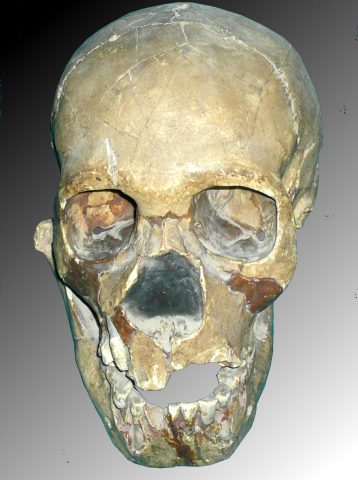
The exhibits unfold in a loose chronological order, beginning with the earliest traces of human presence in the region. Stone tools, Bronze Age pottery, and fragments of rock art from nearby mountains hint at the lives of prehistoric communities who first settled the valley. The most striking pieces here are the small clay figurines—animals and human figures shaped with a simplicity that somehow feels deeply expressive. They offer a glimpse into how these people saw the world, what they valued, and how they made sense of their place in it.
The next section jumps forward to the era when this land was part of the Greco-Bactrian Kingdom and later the Kushan Empire. Coins bearing the profiles of long-debated rulers, shards of Greek pottery, and Buddhist relics reflect the cultural exchanges that flourished along the Silk Road. The terracotta statues of deities and mythological figures are particularly compelling, their styles blending Eastern and Western traditions in ways that feel almost tangible. Some exhibits, like fragments of carved wooden panels, suggest the presence of Buddhist monasteries that once dotted the landscape, playing a key role in spreading the faith across Central Asia.
The medieval section brings visitors into the orbit of the Samanid, Khwarezmian, and Timurid dynasties. Here, everyday objects—ceramics with intricate patterns, metal mirrors inlaid with semi-precious stones, and architectural fragments from local mosques and madrasas—paint a picture of urban and rural life. The manuscripts on display, written in Arabic and Persian, include everything from scientific treatises to poetry, hinting at a society where literacy and intellectual pursuits were highly valued. These texts, some of them beautifully preserved, are among the museum’s most precious holdings.
A more recent chapter of history comes alive in the ethnographic exhibits, which focus on the 19th and 20th centuries. Traditional clothing adorned with embroidery and coins, wooden and clay household items, and tools used by craftsmen and farmers reveal the rhythms of daily life before modernity took hold. The displays of looms, pottery wheels, and cotton-processing equipment underscore the region’s long-standing agricultural traditions. These objects aren’t just relics; they’re evidence of how people adapted to their environment, how skills were passed down through generations, and how outside forces—trade, conquest, shifting borders—reshaped their world.
Beyond its permanent collection, the museum occasionally hosts temporary exhibitions that explore different facets of Surkhandarya’s history and culture. These might include photographic retrospectives, showcases of contemporary artists inspired by local traditions, or events tied to historical anniversaries. Such displays keep the museum from feeling like a static archive, grounding it instead in the living culture of the region. It’s a place where the past isn’t just preserved but actively engaged with, where new interpretations can emerge alongside old artifacts.
What makes Sherabad’s museum special is its intimacy. There are no vast halls or overwhelming crowds, just a series of rooms where each object has space to breathe. The absence of spectacle allows for a different kind of encounter—one where you might find yourself lingering over a single coin, a rusted tool, or a faded manuscript, imagining the hands that once held them. Outside the museum, the surrounding landscape is its own kind of exhibit, dotted with ancient fortresses, petroglyphs, and mausoleums. The museum acts as a guide to these sites, helping visitors connect the dots between scattered ruins and the broader story of the region.
For anyone curious about Central Asia’s layered history, Sherabad’s museum offers a perspective that textbooks can’t. It’s not about grand narratives or sweeping generalizations but about the small, human details that make history feel real. The quiet of the galleries, the weight of a clay pot in your mind’s eye, the faint scent of old paper—these are the things that stay with you. The museum doesn’t just tell you about the past; it lets you step into it, if only for a little while. And in a place where time moves differently, that’s enough.