Shanidar Cave isn’t just a dot on the map of Iraqi Kurdistan—it’s one of those rare places where human history feels tangible, almost alive beneath your feet. Tucked into the foothills of the Zagros Mountains, this limestone cavern has witnessed epochs measured in tens of thousands of years. It was here, among the rugged cliffs, that archaeologists uncovered the remains of Neanderthals who lived between 65,000 and 35,000 years ago. The discoveries at Shanidar didn’t just fill gaps in the timeline; they reshaped our understanding of early humans. These weren’t merely survivalists—they cared for their sick, buried their dead with flowers, and perhaps even pondered the mysteries of life and death. The cave stands as a bridge between the present and a time when humans were only beginning to grasp their place in the world.
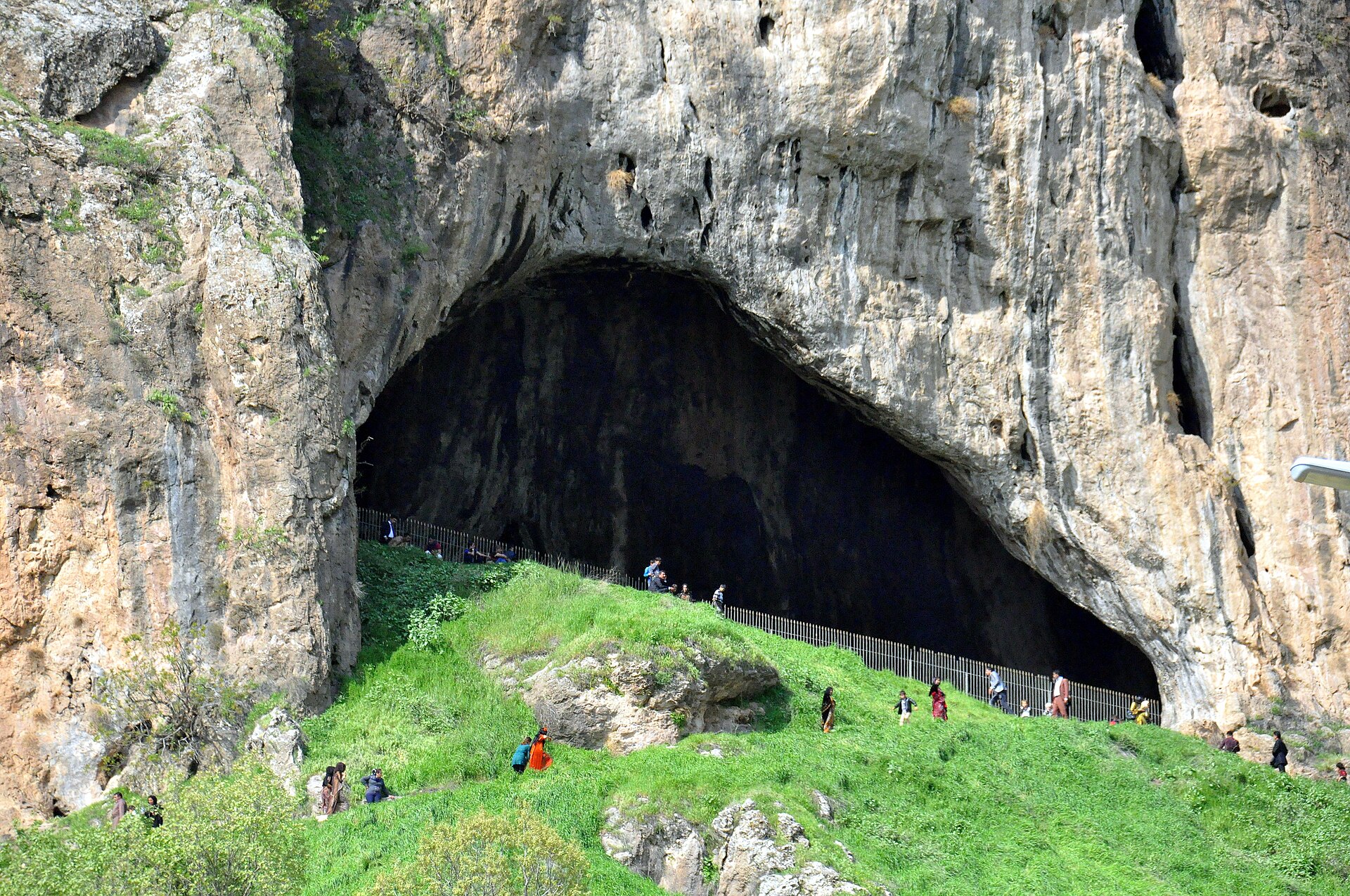
Today, Shanidar appears unassuming. It’s not a grand monument or an open-air museum, but a natural formation layered with deep cultural significance. The entrance is a wide, arching mouth leading into a spacious chamber with uneven walls and a vaulted ceiling. Inside, the air stays cool even on scorching days, and the silence is broken only by the occasional drip of water or the murmur of visitors. The landscape around it is wild and austere—jagged rocks dotted with sparse shrubs, gullies that channel rainwater into trickling streams. It’s easy to imagine Neanderthals here, huddled around fires, sharing food, and seeking shelter from the elements.
Archaeological work at Shanidar began in the mid-20th century and quickly captured global attention. The most famous discovery was Shanidar IV, a Neanderthal skeleton unearthed in 1960. Around its remains, researchers found traces of ancient pollen, suggesting a burial ritual involving flowers. Other skeletons revealed signs of healed injuries, evidence that these early humans tended to their wounded. Each find here tells a story—not just of survival, but of compassion and the first flickers of human thought.
Shanidar is deeply tied to the history of the region. The Zagros Mountains have long been a natural corridor for migrations, a crossroads for ancient hunters, traders, and armies. Over millennia, these lands have been part of empires from Assyria to the Ottomans, yet they’ve always existed on the fringes, preserving their own identity. Today, Iraqi Kurdistan is an autonomous region with its own culture, and Shanidar has become a symbol of its ancient heritage.
Visiting Shanidar isn’t a typical tourist experience. There are no signs, no souvenir stalls, and the journey itself can feel rugged—first along a paved road, then a winding dirt track through the hills. But that remoteness is part of what makes it special. Standing at the cave’s entrance, it’s impossible not to wonder how many generations have passed through this same spot. The air smells of herbs and damp earth, and in the distance, the mountain peaks remain unchanged after thousands of years.
For the local Kurdish people, Shanidar is more than an archaeological site—it’s a piece of their own story. Many take pride in the cave’s discoveries, seeing them as proof that their ancestors have lived here since time immemorial. Interest in Shanidar has grown in recent years, and while tourism is still limited, the cave is slowly becoming a pilgrimage site for those drawn to the origins of humanity.
Yet Shanidar isn’t just about the past. It remains an active site of scientific research. Archaeologists continue to work here, using modern techniques to uncover more about Neanderthal life. Every new discovery could rewrite what we know about early humans, and Shanidar still holds many secrets. It’s possible that future breakthroughs here will reshape our understanding of human evolution.
Those who visit Shanidar should come with respect. There are no amenities, no polished pathways—just the raw, untouched essence of the place. That’s what makes it extraordinary. Shanidar doesn’t need embellishment; its value lies in its authenticity, in the way it preserves a fragment of the ancient world. Standing at its entrance, you can’t help but reflect on how fragile human history is—and how vital it is to protect places where we can still touch the roots of our existence.